

A memorable journey takes shape well before the first booking. Understanding what a travel designer’s process involves means seeing how an idea moves from destination research and itinerary design to practical decisions, confirmed bookings and final travel documents. For founder Rachel Cleary, that research draws on first-hand knowledge of destinations, hotels and expedition cruises.
Travel planning is more than finding appealing places and joining them together. The finer judgement lies in understanding how a destination feels, which stays suit your travel style and whether the pace leaves room to enjoy it. Rachel’s personal research brings first-hand insight to these decisions.
This guide explains how travel designers interpret a brief, research destinations and turn ideas into a workable journey. It also covers the factors that shape a design, how bookings are confirmed and what final travel documents include, so you can see what happens between the first conversation and departure.
Key Takeaways
- A strong travel concept starts with the traveller’s priorities, then develops into an itinerary with a clear sense of pace and purpose.
- Destination research looks beyond appealing imagery to consider cultural context, audience preferences and the practical details that shape a journey.
- Timing, complexity and changes in direction can affect how an itinerary develops, so clear decisions at key stages help keep the process focused.
- Booking confirmation and final travel documents bring the agreed details together, giving travellers a useful reference for the journey ahead.
Brainstorming and developing creative concepts
Creative concepts give a journey its character by connecting a traveller’s interests with places and experiences that may suit them. Initial ideas explore the possibilities; development turns a promising direction into a considered itinerary.
Itinerary Creation and Refinement
An itinerary is a sequence of stays, connections and experiences shaped around a traveller’s priorities. The Australian Bureau of Statistics describes travel advisers as determining clients’ requirements for travel, accommodation and special interests. For example, an interest in regional food could suggest time near local producers, paired with stays that make those visits practical. Reviewing the route helps refine its pace and flow, so travel days and experiences feel connected rather than randomly assembled.
Mood Boards and Initial Mock-ups
A travel mood board brings together visual references to express a journey’s intended atmosphere. Images of a quiet lodge, a lively market and a rugged coastline, for example, can help clarify whether the concept leans towards immersion, comfort or active exploration. An initial mock-up can place these ideas on a route map, making it easier to discuss how locations and experiences fit together before the itinerary takes final shape.
Destination and Activity Research
Research compares destinations, accommodation styles and activities with a traveller’s interests and preferred pace. A designer might consider whether a small lodge or a characterful hotel better suits the journey, then explore locally guided experiences that add context. First-hand visits can reveal what photographs often miss, from the atmosphere of a property to how its activities connect with the surrounding area. These observations help make each choice purposeful.
Local creative workshops can offer an engaging way to discover a place’s craft and traditions. A textile workshop, for example, may reveal the meaning behind regional patterns and materials. A travel journal, pencil and camera can help record useful impressions, while ticket stubs or a market card preserve small reminders. The aim isn’t collecting for its own sake, but noticing details that could inform the journey’s atmosphere and creative direction.
Question | Are there factors that can impact the design process?
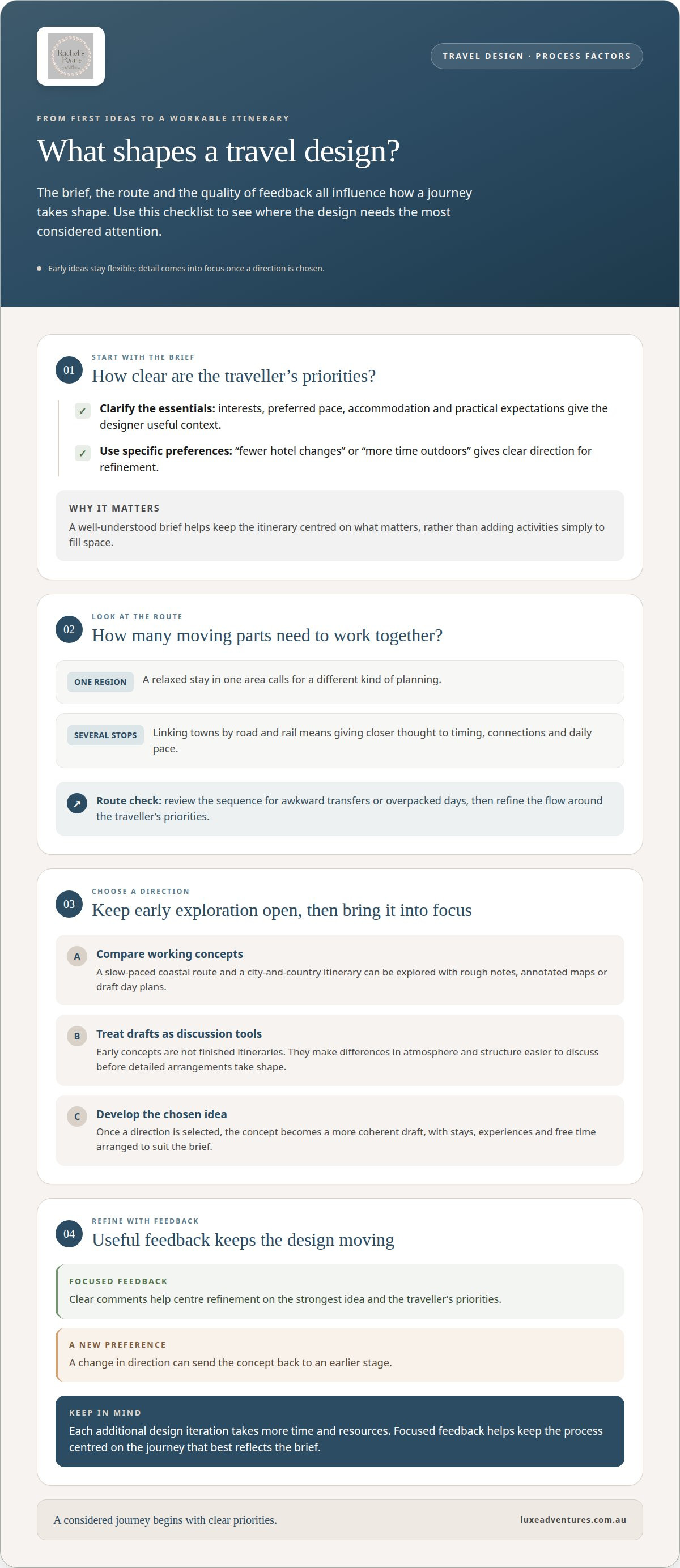
Yes. A travel design can evolve depending on how clear the brief is, how complex the route will be and what feedback comes in at each stage. A relaxed stay in one region requires different planning from an itinerary linking several towns by road and rail. The more moving parts a journey has, the more carefully its timing, connections and daily pace need to be considered.
Early exploration keeps options open. A designer might compare a slow-paced coastal route with a city-and-country itinerary, using rough notes, annotated maps or draft day plans to present each direction. These are working concepts, not finished itineraries. They make the differences clear, so the traveller can respond to the atmosphere and structure before detailed arrangements take shape.
Once a direction is chosen, the concept develops into a more coherent draft. For example, an interest in galleries and local food could shape the sequence of neighbourhood stays, meals and free time. Reviewing the draft may reveal an awkward transfer or an overpacked day. These practical observations help refine the design around the traveller’s priorities, rather than adding activities simply to fill space.
Feedback also affects the process. Clear comments such as “fewer hotel changes” or “more time outdoors” give the designer usable direction; a new preference can send the concept back to an earlier stage. Each additional design iteration takes more time and resources, while focused feedback helps keep refinement centred on the strongest idea. If you’re shaping a complex itinerary, you can share your travel design brief to begin exploring its direction.
Confirming bookings and preparing final travel documents
A travel designer shapes a tailored journey around a traveller’s priorities. A travel agent typically helps select and book travel arrangements, while a tour operator creates or runs travel products and experiences. Roles can overlap, but travel design focuses on how each element serves the traveller and the journey’s purpose.
A designer learns about clients’ preferences, budget and needs through conversations about interests, pace, accommodation and practical expectations. Questions about favourite past trips, preferred room styles or interest in guided activities provide useful context. A digital itinerary draft can then show how those priorities translate into proposed stays, transport and experiences. Client feedback helps clarify what matters most before bookings proceed.
Once the proposed arrangements match the brief, the designer presents the final itinerary for approval. Review the dates, names, accommodation, activities and travel connections against your expectations. Written approval records the agreed details and gives the designer a clear basis for confirming bookings. Final travel documents bring together booking confirmations and the itinerary in a usable format. They may also organise transfer details, activity information and relevant travel contacts, making essential information easy to find. Address any requested changes before final approval, since a change to one booking can affect connected arrangements.
Before departure, a travel designer considers visa, insurance and health requirements in light of the traveller’s nationality, route, destinations and planned activities. Visa checks include entry and transit requirements; insurance considerations include medical needs and planned activities. Health requirements can vary by destination and personal circumstances, so final itinerary preparation should account for relevant medical considerations without assuming every traveller has the same needs.
Researching the brand, competitors, trends, and audience
Good research connects a traveller’s priorities with a destination’s character, rather than relying on its most polished images. Rachel Cleary personally researches destinations, hotels and expedition cruises, looking for details that help make a journey distinctive and well matched.
Brand, Product, and Audience Research
Research brings a traveller’s interests into focus before choices are made. An interest in wildlife, for example, calls for different considerations from a focus on city culture or time at sea. Rachel’s research into safari stays and expedition cruises considers how the setting, accommodation and experience align with a traveller’s expectations. That attention to fit helps keep an itinerary personal instead of relying on a generic idea of what a destination should offer.
Market and Visual Research
Market and visual research looks at how destinations are presented and what their imagery reveals. A photograph of a lodge tells only part of the story; its setting and relationship to the surrounding landscape matter too. Local craft shops, textile markets and cultural festivals offer another perspective, showing how materials, patterns and colours express a sense of place. These references can help a designer assess whether an image reflects the experience a traveller is seeking.
Comparing similar journeys can reveal differences in emphasis, such as a route centred on accommodation or one that gives more attention to local experiences. The aim isn’t to copy another itinerary. It’s to recognise what feels familiar and consider whether a more individual balance would suit the traveller better. This can be particularly useful when a polished trend or striking image distracts from the experience itself.
Research continues as preferences become clearer. If a traveller imagines a quiet retreat but responds more strongly to cultural encounters, the designer can make adjustments before the plan advances. Revisions should follow that evolving relationship between the traveller and the destination. To begin shaping a journey around your interests, share your travel brief.
Luxe Adventures: African Safaris
Luxe Adventures helps travellers turn an African safari idea into a considered journey shaped around their interests, preferred pace and accommodation style. This is a natural next step when research has clarified what matters but the route and arrangements still need to come together.
An African safari itinerary involves choices that shape each day: where to stay, how locations connect and how much time to leave for the experience itself. A travel designer can bring these elements into one coherent plan rather than treating every booking as a separate decision. The same thoughtful approach can help travellers considering Fiji luxury resorts, expedition cruises or Scandinavia holidays.
If you’re ready to explore an African safari or discuss the shape of your journey, contact Luxe Adventures.
Give your next journey a thoughtful beginning
The most useful starting point isn’t a list of places. It’s a sense of how you want your time away to feel: unhurried, curious, restorative or richly connected to a place and its people. That intention guides decisions, from the shape of the route to the experiences worth making room for.
Understanding what a travel designer’s process involves can help you clarify your priorities while leaving room for expert insight to refine the possibilities. You don’t need a complete itinerary in mind. A few honest preferences, a destination you’re considering or a question about how different experiences might fit together can be enough to begin.
If you’re ready to explore what your next journey could become, contact Luxe Adventures to start planning. A considered conversation is a fine place to begin.
Frequently Asked Questions
What Is A Travel Designer?
A travel designer shapes a journey around the traveller instead of starting with a standard package. The work connects destination choices, accommodation and experiences into a coherent whole. For example, someone interested in wildlife and local culture might want a journey balancing time observing animals with meaningful encounters in nearby communities. The design considers how the pieces work together, not just whether each one sounds appealing.
What Happens Before You Leave?
Before departure, compare your itinerary with the booking confirmations and check that names and dates match. Keep essential documents accessible, including accommodation details, transport arrangements and travel insurance information. Save digital copies for when printed papers aren’t convenient, and note how to reach the relevant travel contacts. A final review can catch small mismatches, such as an outdated room detail or a missed transfer.
What If Everyone Travelling Wants Something Different?
Different preferences can be managed by separating shared priorities from individual interests. A family might agree that meals and accommodation should suit everyone, while some travellers choose an active outing and others enjoy a slower afternoon. Tell the designer what each person values most and what they’d rather avoid. This makes it easier to build a shared itinerary without expecting everyone to enjoy every moment in exactly the same way.
What Is a Trip Designer?
A trip designer is another term for a professional who shapes travel around a person’s interests and circumstances. The title can overlap with travel designer, and its meaning may vary between businesses. Consider the work involved: does the person shape the journey’s overall character or mainly arrange selected travel components? Understanding the difference can clarify what kind of planning support you’re looking for before discussing a particular trip.
What Does a Travel Designer Do?
A travel designer translates a traveller’s preferences into considered arrangements, bringing destination knowledge and practical coordination together. For instance, someone planning a photography-focused journey may need time at locations in suitable light, as well as stays that make those visits practical. The designer considers how the experience will feel on the ground, not just how the itinerary reads on a screen.
What Are the Steps in a Travel Designer's Process?
The process generally moves from an initial conversation to research, concept development, itinerary refinement, approval, booking and final travel documents. This sequence gives each decision a useful place: preferences shape the concept, and approval sets the agreed direction before arrangements are confirmed. If a new priority emerges, earlier choices may need revisiting. Understanding the stages helps travellers know what input is useful at each point.

Article by
Rachel Cleary
Rachel Cleary is the founder of Luxe Adventures and an endlessly curious explorer with a passion for meaningful, experience-led travel. Having visited every continent and travelled to more than 100 countries — and counting — she believes travel is one of the greatest educations for both children and adults alike.
Rachel is addicted to scuba diving and gets underwater at every opportunity. When she isn't in the office you'll find her exploring remote reefs in Fiji, drift diving in the Maldives, or scuba cruising Raja Ampat or French Polynesia.
Her second home is Fiji where she has explored all the island groups and has favourite boutique resorts she returns to every year, for the diving and the authentic Fijian hospitality.
Get her talking about kayaking in Antarctica or the Arctic, African safaris and where to find the highest density of big cats, underwater adventures, remote expedition destinations, or the science and magic behind the Northern Lights — including when and where they are most likely to dance — and you may be there a while.
Through Luxe Adventures, Rachel combines firsthand experience, global industry connections, and a deep appreciation for nature, culture, food, wildlife, and human connection to help curious travellers explore the world in a way that feels seamless, personal, and unforgettable.
Refined by experience. Defined by connection.
Disclaimer
The information in this article is intended as general travel inspiration and guidance only. Travel requirements, hotel standards, airline schedules, entry regulations, weather conditions, pricing, and experiences can change without notice.
While every effort is made to ensure accuracy at the time of publishing, Luxe Adventures recommends confirming all details relevant to your personal travel plans before booking or travelling.
Opinions, recommendations, and destination insights shared in this article are based on firsthand experience, industry knowledge, and research at the time of writing. Experiences may vary depending on season, supplier changes, local conditions, and individual travel preferences.
Some articles may reference luxury travel affiliations, preferred partner programs, or value-added amenities available through Luxe Adventures. Benefits and inclusions are always subject to availability and supplier terms at the time of booking.
Luxe Adventures strongly recommends comprehensive travel insurance for all international travel.
For personalised travel advice, tailored itinerary design, or the latest destination updates, please contact Luxe Adventures directly.


