

A trip doesn’t have to feel like a test of endurance before it even begins. A travel agent for nervous travellers can help make the journey more manageable by shaping the route, transport and accommodation around what feels comfortable, while keeping practical details clear. The aim isn’t to remove every unknown, but to make the next step easier to picture.
If airports, long flights or travelling alone bring anxiety, those concerns deserve a place in the planning. This article explains how thoughtful itinerary choices can reduce avoidable pressure, how to prepare for anxiety before and during a trip, and what support may help when travelling solo. It also explores how a travel professional can turn a daunting journey into a series of considered, manageable decisions.
Key Takeaways
- Choose routes, connections and accommodation with comfort in mind, so each stage of the journey feels easier to anticipate.
- Plan for anxiety before departure, during travel and after arrival with simple routines and appropriate support.
- Think through what would make travelling alone feel more manageable, from the airport arrival to check-in and boarding.
- Use a clear preparation plan for packing, travel documents and destination details to reduce last-minute uncertainty.
1. Planning routes, activities, transport and accommodation
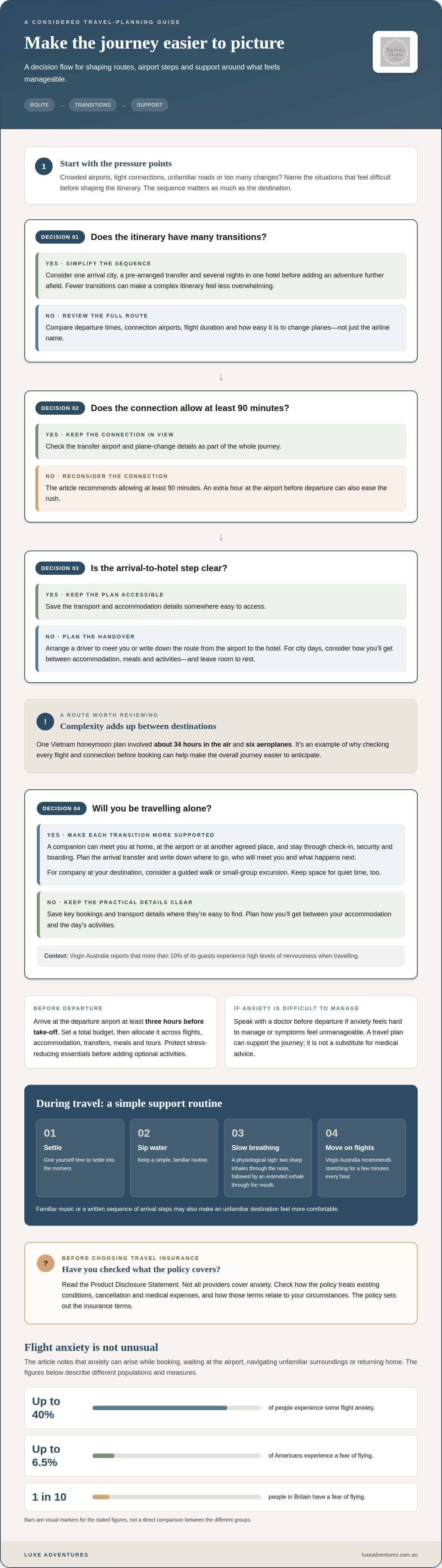
Start by discussing what triggers anxiety, whether that’s crowded airports, tight connections, unfamiliar roads or too many changes. Then shape the itinerary around those pressure points. A first international trip might include one arrival city, a pre-arranged transfer and several nights in one hotel before adding an adventure further afield. The sequence matters as much as the destination.
There’s no single best airline or flight option for nervous flyers departing Australia. Compare the full journey, including departure times, connection airports, flight duration and the ease of changing planes, rather than choosing on airline name alone. A connection should allow at least 90 minutes, and an extra hour at the airport can ease the rush before departure.
For a complex itinerary, fewer transitions can make the days feel less overwhelming. One Vietnam honeymoon plan involved about 34 hours in the air and six aeroplanes; that example shows why it helps to review each flight and connection before booking. A travel agent for nervous travellers can shape the route around comfort, realistic transfer times and accommodation close to planned activities.
Plan airport transfers and local transport alongside your flights. A driver meeting you on arrival, or a clear route from the airport to your hotel, removes one uncertain step after a long journey. For city days, consider how you’ll get between your accommodation, meals and activities, and leave room to rest instead of scheduling every hour.
Set a total budget first, then allocate it across flights, accommodation, transfers, meals and tours. Protect the essentials that reduce stress, such as a convenient hotel or direct transfer, before adding optional activities. In Australia, the cost of using a travel agent depends on the case and is given after a quote request; the itinerary, flights, hotels and tours shape the work involved. If anxiety feels difficult to manage, discuss your concerns with a doctor before departure.
2. When anxiety can arise before, during or after a trip
Travel anxiety can surface while booking flights, waiting at the airport, navigating unfamiliar surroundings or returning home. Triggers vary: turbulence, crowds, disrupted plans or uncertainty about reaching your destination may each feel difficult. Identifying the specific concern helps you plan practical support rather than treating every worry as the same problem.
Before travelling, write down what feels difficult and discuss persistent symptoms with a GP or suitable medical professional. They can consider your symptoms and concerns, including whether medication or other support may help. If anxiety is hard to manage before leaving home, seek medical advice rather than relying on travel planning alone.
During travel, use a simple routine: give yourself time to settle, sip water and practise slow breathing. A physiological sigh involves two sharp inhales through the nose, followed by an extended exhale through the mouth. On flights, Virgin Australia recommends stretching for a few minutes every hour. Familiar music or a written sequence of arrival steps can also make an unfamiliar destination feel more comfortable.
Travel insurance needs careful attention. Read the Product Disclosure Statement before purchasing, because not all providers cover anxiety. Check how the policy treats existing conditions, cancellation and medical expenses, then consider how those terms relate to your circumstances. A travel agent can help organise the trip, but the policy sets out the insurance terms.
In Australia, agent fees depend on the planning required, including flights, hotels and tours; the price is provided after a quote request. Cancellation conditions also depend on the booking and its supplier terms, so understand those conditions before committing. A travel agent can tailor an itinerary around anxiety triggers, while escorted tours offer a structured group format for travellers who prefer company. If you’d like to discuss a considered itinerary, share your travel plans and concerns.
For airport-related anxiety, arrive at the departure airport at least three hours before take-off. Up to 40% of people experience some flight anxiety, while up to 6.5% of Americans experience a fear of flying. In Britain, one in 10 people have a fear of flying, showing how common this concern can be.
If anxiety symptoms feel unmanageable before leaving home, speak to a doctor for medical advice and support. While travelling, aim for eight hours of sleep from time to time, which may help support your wellbeing on the trip.
Concerns about travelling alone
Travelling solo means making each transition yourself, from leaving home to finding your hotel after flying. For anxious travellers, uncertainty can build around airport queues, unfamiliar transport or arriving somewhere after dark. Virgin Australia reports that more than 10% of its guests experience high levels of nervousness when travelling. That feeling deserves practical planning, not a test of bravery.
Begin by identifying the situations most likely to unsettle you. Is it the departure airport, boarding alone or navigating a new destination? A travel companion can meet you at home, at the airport or at another agreed location. They can stay with you through check-in, security and boarding, making those airport steps less solitary.
Support can also be planned around the shape of your trip. For example, arrange a clear arrival transfer and accommodation with straightforward access to meals and activities. If changing trains or finding a driver feels daunting, map that transition in advance. A written arrival plan can set out where to go, who will meet you and what happens next.
Being alone doesn’t mean every moment has to be spent alone. Choose activities that offer a natural point of connection, such as a guided walk or small-group excursion, and leave space for quiet time. A familiar café, a reserved dinner or a slower morning can provide structure without turning the holiday into a timetable.
Before departure, save key bookings and transport details somewhere easy to access, and share your itinerary with someone you trust. If travel anxiety affects daily life or feels difficult to manage, discuss it with a GP or suitable medical professional before travelling. The right support depends on what makes flying or being away challenging, and whether you want company for selected stages or the whole journey.
A traveller had been diagnosed with severe anxiety and depression a little over two years before writing about her Vietnam honeymoon. Her experience highlights how concerns about a trip can coexist with broader symptoms. Travellers are advised to speak with a GP or other suitable medical professional about their symptoms and concerns before travelling, so they can discuss both the emotional and practical aspects of the journey in advance.
4. Keeping travellers informed and prepared
A written plan can make unfamiliar places easier to picture, especially for anxious travellers. Keep flight, accommodation and transfer details together, with the boarding steps and arrival connection in order. Before departure, learn the destination’s local emergency number and identify nearby hospitals. Knowing where to find this information can reduce uncertainty without turning the holiday into a safety briefing.
For an overseas trip, pack at least three days before departure to avoid a last-minute scramble. Keep medication in hand luggage and carry a doctor’s letter. Check that your passport expiry date is more than six months after your arrival date. These preparation steps give you time to resolve practical issues before reaching the airport.
Useful questions for a travel agent include: “What happens if a connection is missed?” and “How will I get from the airport to my accommodation?” Also ask how itinerary changes are handled and which booking conditions apply. Clear answers help anxious travellers understand the plan instead of having to piece it together while boarding.
It can also help to learn common words and phrases in the local language. Greetings, directions and requests for assistance give you a starting point in everyday situations. For mental health concerns that affect travel, speak with a GP or suitable medical professional before leaving. Travel planning can reduce practical uncertainty, but it isn’t treatment for anxiety.
Aircraft accidents occur in less than 1% of departures. Treat safety information as context, not a promise about any individual flight. A useful preparation file might include booking details, emergency contacts, medication information and the route from the airport. Keep a copy accessible offline, so a weak connection won’t leave you searching through messages.
If you’d like a considered itinerary with clear travel arrangements, share your travel plans and preparation needs.
Luxe Adventures: Luxury Travel Design
Luxe Adventures can shape a considered itinerary around your comfort, interests and preferred pace. Its bespoke luxury travel design suits travellers who want thoughtful guidance across the details, rather than a trip assembled from disconnected bookings.
That could mean planning an African safari with considered transitions between places, an expedition cruise with a clear journey structure, or a Fiji island stay that leaves room to settle in. For Scandinavia, the route and seasonal experiences can be arranged with the overall rhythm of the trip in mind. Sharing what feels daunting, as well as what you hope to experience, gives the planning a useful starting point.
If you’d like to discuss a journey that feels more manageable, contact Luxe Adventures to start planning.
Let the journey begin with a manageable first step
You don’t need to feel completely confident before you start planning. A more useful beginning is to identify what matters most: the pace, the experience you want or the parts of travel that feel difficult. From there, you can make decisions with greater intention and shape the journey around your priorities.
Working with a travel agent for nervous travellers can bring those preferences together in one considered plan. Luxe Adventures’ luxury travel design suits people who want a personally tailored journey, whether they’re drawn to wildlife, time by the water or an expedition cruise. The first conversation can focus on what you hope to experience and what would make each stage feel more comfortable.
Travel doesn’t need to begin with certainty. It can begin with a conversation and one clear next step. Contact Luxe Adventures to discuss your plans, and start shaping a journey that feels more manageable.
Frequently Asked Questions
How can a travel agent help with fear of flying or travel anxiety?
A travel agent can turn specific concerns into practical planning decisions, such as choosing a simpler itinerary or arranging accommodation that suits your arrival plans. Luxe Adventures creates bespoke, personally vetted journeys, including African safaris and expedition cruises. An advisor can organise travel details, but doesn’t diagnose or treat anxiety. For clinical support or advice about symptoms, speak with a GP or suitable health professional.
Article by
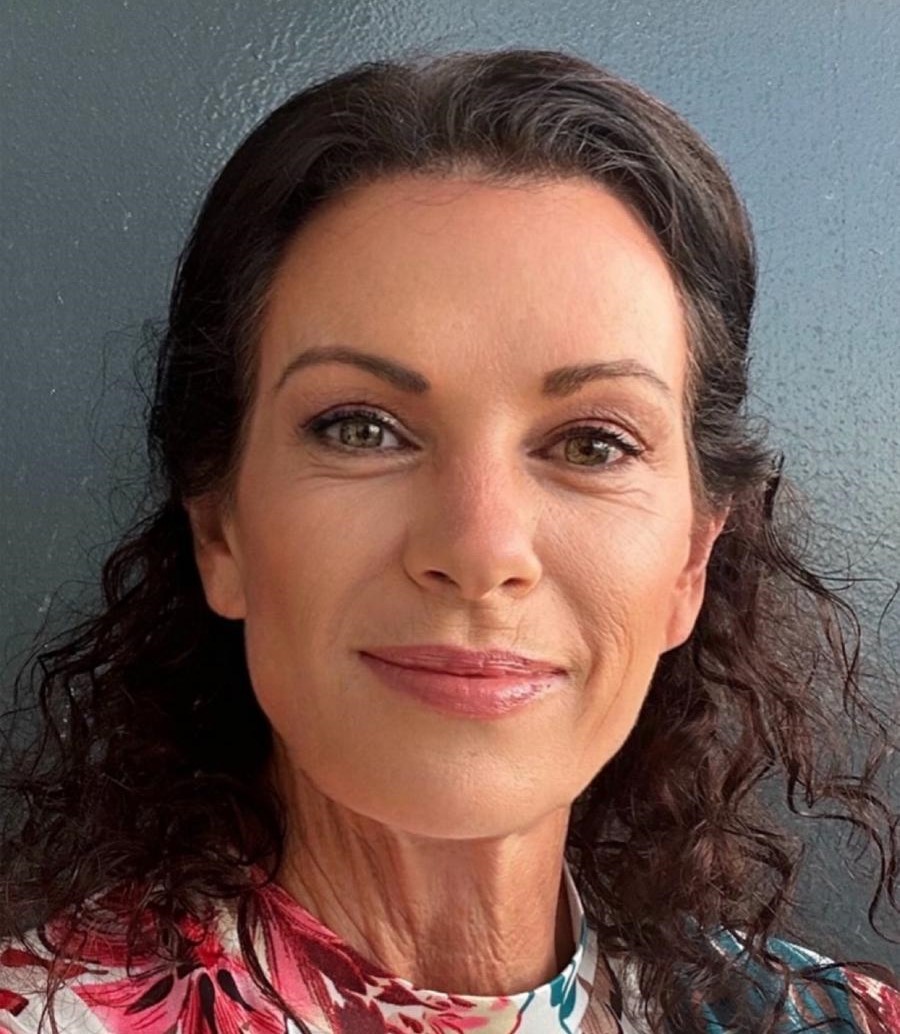
Rachel Cleary
Rachel Cleary is the founder of Luxe Adventures and an endlessly curious explorer with a passion for meaningful, experience-led travel. Having visited every continent and travelled to more than 100 countries — and counting — she believes travel is one of the greatest educations for both children and adults alike.
Rachel is addicted to scuba diving and gets underwater at every opportunity. When she isn't in the office you'll find her exploring remote reefs in Fiji, drift diving in the Maldives, or scuba cruising Raja Ampat or French Polynesia.
Her second home is Fiji where she has explored all the island groups and has favourite boutique resorts she returns to every year, for the diving and the authentic Fijian hospitality.
Get her talking about kayaking in Antarctica or the Arctic, African safaris and where to find the highest density of big cats, underwater adventures, remote expedition destinations, or the science and magic behind the Northern Lights — including when and where they are most likely to dance — and you may be there a while.
Through Luxe Adventures, Rachel combines firsthand experience, global industry connections, and a deep appreciation for nature, culture, food, wildlife, and human connection to help curious travellers explore the world in a way that feels seamless, personal, and unforgettable.
Refined by experience. Defined by connection.
Disclaimer
The information in this article is intended as general travel inspiration and guidance only. Travel requirements, hotel standards, airline schedules, entry regulations, weather conditions, pricing, and experiences can change without notice.
While every effort is made to ensure accuracy at the time of publishing, Luxe Adventures recommends confirming all details relevant to your personal travel plans before booking or travelling.
Opinions, recommendations, and destination insights shared in this article are based on firsthand experience, industry knowledge, and research at the time of writing. Experiences may vary depending on season, supplier changes, local conditions, and individual travel preferences.
Some articles may reference luxury travel affiliations, preferred partner programs, or value-added amenities available through Luxe Adventures. Benefits and inclusions are always subject to availability and supplier terms at the time of booking.
Luxe Adventures strongly recommends comprehensive travel insurance for all international travel.
For personalised travel advice, tailored itinerary design, or the latest destination updates, please contact Luxe Adventures directly.


