

A fair travel budget starts with an honest conversation, not a sales pitch: agree on what each of you can afford, then shape the trip around it. If your incomes differ, a 70/30 split may feel fairer than dividing every cost evenly. Learning how to convince a partner on a big trip budget is really about finding a plan that respects both people’s priorities.
It’s understandable if one of you is imagining a beautiful hotel and long lunches while the other is calculating the airfare. The goal isn’t to win an argument; it’s to make room for the experiences you value without leaving either person anxious about money or safety.
Here, you’ll find a practical way to talk through spending, address budget and safety concerns, and decide where to save without losing what matters most. We’ll also look at how costs can be distributed across a 10-week trip, so you can assess the shape of a longer journey before committing to it.
Key Takeaways
- Agree on a travel budget that reflects both partners’ financial realities, then choose a cost-sharing approach that feels fair to both.
- Make safety concerns part of the planning conversation, and turn a broad savings goal into a clear plan you can track together.
- Decide which parts of the trip matter most before looking for savings, so cutbacks don’t undermine the experience you’re planning together.
- Use a 10-week budget breakdown to see how accommodation, food, transport, activities and other expenses shape the overall trip.
1. I can’t afford my partner’s expensive travel style, what should I do?
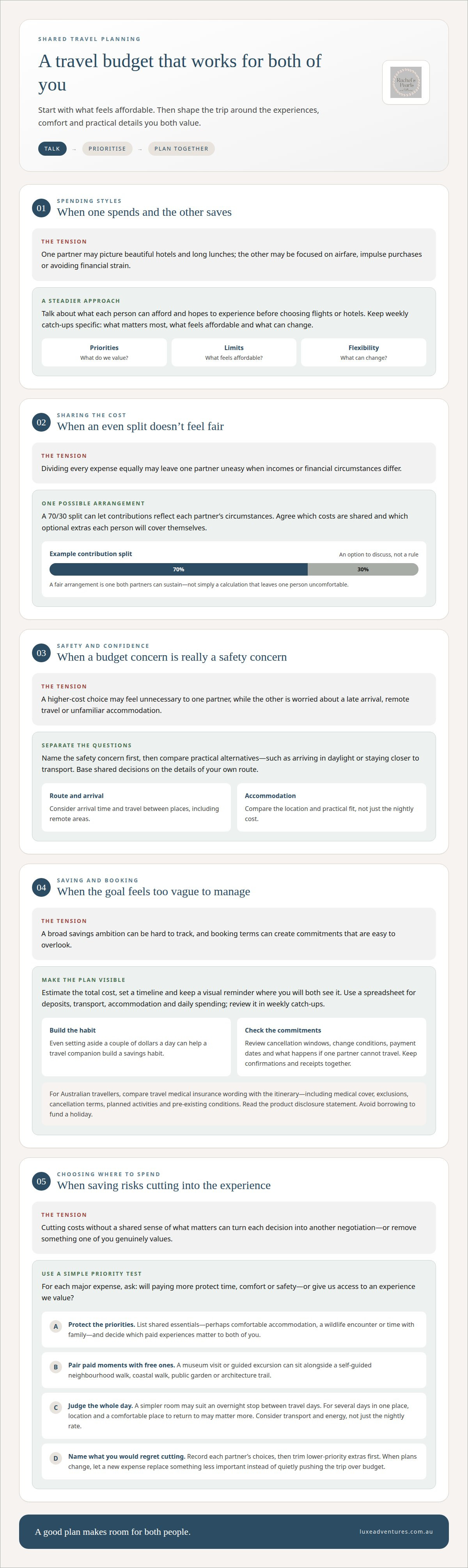
Start with a calm conversation about what each of you can afford, before choosing flights or hotels. To work out how to convince a partner on a big trip budget, explain the experiences you hope to have and the amount you can spend without financial strain. Then invite your partner to share their priorities. The trip should reflect both of you, not just whoever has the more expensive taste.
Choose a destination around interests you can enjoy together. Jordy and Logan planned a three-and-a-half-week trip to the US and Colombia, partly because Jordy hadn’t seen his family for a decade. That personal reason gave the trip meaning beyond its price tag. List each person’s priorities, such as visiting family, seeing wildlife or exploring a city, then build the itinerary around what you share.
Discuss a big travel budget by focusing on limits and choices, rather than labelling one person a spender. Jordy described himself as a spender, while Logan preferred saving and avoiding impulse purchases. Weekly catch-ups gave them time to plan the itinerary, review spending and share ideas before small disagreements grew. Keep the conversation specific: what matters most, what feels affordable and what can change?
If your incomes differ, splitting every expense evenly may not feel fair. One possible approach is a 70/30 split, with each partner contributing in proportion to their circumstances. Agree which costs are shared, and which optional extras each person will pay for themselves. A fair arrangement is one both partners can sustain, not a calculation that leaves one person uneasy.
Destination choice can also help stretch a budget. Compare local costs and exchange rates when weighing destinations, since both affect how far your money goes. Once you’ve chosen a place, balance free experiences with paid activities. For example, pair a museum visit or guided excursion with a self-guided neighbourhood walk, rather than booking a paid activity every day. Keep a short list of must-dos and make the rest flexible.
2. Addressing safety and budget concerns
Separate safety concerns from spending preferences before changing the itinerary. One partner may feel uneasy about arriving late, travelling between remote areas or staying somewhere unfamiliar, while the other may see a more expensive option as unnecessary. Name the concern, then compare practical alternatives, such as arriving in daylight or choosing accommodation closer to transport. A friend’s reassurance may help, but base shared decisions on the details of your own route.
Make the savings goal tangible before committing to bookings. Estimate the trip’s total cost, set a timeline and keep a visual reminder where you’ll both see it. A spreadsheet can track deposits, transport, accommodation and daily spending, while weekly catch-ups make it easier to adjust the plan. Even setting aside a couple of dollars a day can help a travel companion build a habit. Avoid taking out a loan to fund a holiday; debt can turn a shared experience into a longer financial strain.
For Australian travellers, travel medical insurance is an important part of trip planning. Compare the policy wording with your itinerary, including medical cover, exclusions, cancellation terms and planned activities. Check how the policy treats pre-existing conditions and whether both partners need separate cover. Read the product disclosure statement before choosing a policy, as the details that matter depend on your plans.
Before paying a deposit, read the booking terms for each hotel, tour and transport provider. Note cancellation windows, change conditions, payment dates and what happens if one partner can no longer travel. Keep confirmations and receipts together, and record who paid each shared cost. This helps you understand your commitments without assuming every booking has the same rules.
If safety questions or booking details are making the itinerary difficult to shape, you can discuss your travel plans with an adviser as part of planning a considered journey.
3. Deciding what not to economise on
Set a holiday spending limit by agreeing on the total you can afford without borrowing or disrupting essential commitments. Then list shared priorities, such as comfortable accommodation, a wildlife encounter or time with family, and protect the experiences that matter most. Treat the limit as a boundary, not a challenge to spend every dollar.
Use a simple priority test for each major expense: will paying more protect your time, comfort or safety, or give you access to an experience you value? A centrally located hotel may suit a couple keen to explore on foot, while a quieter property could matter more to travellers seeking rest. Choose what serves your actual itinerary, not the option with the most impressive description.
Keep essential and optional costs distinct. A guided visit to a historic site might be a priority for one partner, while a premium room view adds little for the other. Agree which paid experiences you’ll book together, then leave room for free alternatives, such as a coastal walk, public garden or self-guided architecture trail. This makes saving a deliberate choice instead of a daily negotiation.
Look for savings that don’t compromise the purpose of the trip. If an overnight stop is mainly for sleeping between travel days, a simpler room may make sense. If you’ll spend several days exploring one place, location and a comfortable place to return to may matter more. Compare the full day’s plan, including transport and energy, rather than judging accommodation by its nightly rate alone.
Before confirming a booking, ask each other what you’d regret cutting. One partner may choose a special meal, the other an extra night at the destination. Record those choices alongside the budget, then trim lower-priority extras first. Revisit the list when plans change, so a new expense replaces something less important instead of quietly pushing the trip beyond your agreed limit.
4. Example budget for a 10-week trip
Treat that as one couple’s past trip, not a standard price or a forecast for your itinerary. Cities, travel pace, accommodation choices and paid experiences all affect the final total.
The budget split shows where the money went: transport accounted for approximately 10%, accommodation 32%, food 33%, activities 19% and other expenses 6%. Food and accommodation together made up 65% of spending. That makes meal plans and the number of nights in each city useful places to examine first, rather than assuming transport is the only major cost.
Some accommodation costs were reduced through travel rewards: the example included five nights paid for with rewards. In the UK and France, the couple paid real money for six nights out of 21. Rewards reduced the cash paid for some stays, so a couple planning without similar rewards shouldn’t treat the figure as a like-for-like target.
How much should couples save each month? Start with your estimated trip total, subtract any savings already set aside, then divide what remains by the months before departure. If the monthly contribution feels too high, adjust the timing, route or priorities together. A spreadsheet can show which change makes the biggest difference.
Build a separate line for costs that are easy to overlook, including travel insurance, visa expenses where applicable, and currency conversion or exchange fees. Add them alongside transport, accommodation, food and activities, then review the full estimate together. For the example budget, the 6% “other” category is a reminder to leave room for expenses beyond the main headings, not a guaranteed allowance for every trip.
Planning a long itinerary? Discuss your travel plans and shape a budget around the journey you both want.
Luxe Adventures
Luxe Adventures helps couples turn different travel priorities into a considered itinerary shaped around the experiences that matter most. With Luxury Travel Design, you can consider the route, pace and style of the journey together, making trade-offs easier to discuss before plans take shape.
This can help when one partner is drawn to an African safari while the other is weighing a Fiji stay or an expedition cruise. The aim is to create a journey that reflects shared interests and gives each decision a clear place in the overall plan. A thoughtful itinerary makes priorities visible, rather than letting the budget dictate every choice.
If you’d like help shaping a journey around the budget and experiences you both value, contact Luxe Adventures to start planning.
Make room for the journey you both want
A shared trip begins with more than a destination. Think about what you want to bring home: a sense of wonder, time together or the pleasure of seeing a place through each other’s eyes. That common purpose can guide decisions when your travel styles differ.
If you’re still working out how to convince a partner on a big trip budget, shift the conversation from spending to meaning. What would make the journey worthwhile for each of you? An African safari, a restorative stay at a Fiji luxury resort or an expedition cruise each offers a different way to travel, with different choices to consider.
Luxe Adventures can help shape those possibilities into a considered journey that reflects your shared priorities. Contact Luxe Adventures to plan your trip, and take the next step towards travelling together with intention.
Frequently Asked Questions
I can’t afford my partner’s expensive travel style. What should I do?
Ask what “expensive travel style” means to your partner before assuming every part is essential. Is it privacy, attentive service, convenience or a particular experience? A local weekend away can help you discover which comforts genuinely matter to each of you before planning a longer holiday. Afterwards, discuss what felt worthwhile and what you’d happily do differently next time.
How do we compare trip costs with staying home or choosing a cheaper destination?
Look beyond the total and consider what the extra spending makes possible. Compare the experience you’d have at home, in a lower-cost destination and on your preferred itinerary: time together, cultural encounters, rest or access to a particular landscape. A cheaper option may offer a slower pace; a pricier one may make a specific experience possible. Decide which difference matters to you both.
How should we handle it if one partner wants a more expensive trip?
Separate shared commitments from personal preferences before booking. Agree that decisions affecting both travellers, especially non-refundable ones, need both partners’ consent. Then let each person choose independently when an experience doesn’t alter the other’s plans, such as an optional solo activity. This gives both partners room to travel in their own way without turning every preference into a joint negotiation.

Article by
Rachel Cleary
Rachel Cleary is the founder of Luxe Adventures and an endlessly curious explorer with a passion for meaningful, experience-led travel. Having visited every continent and travelled to more than 100 countries — and counting — she believes travel is one of the greatest educations for both children and adults alike.
Rachel is addicted to scuba diving and gets underwater at every opportunity. When she isn't in the office you'll find her exploring remote reefs in Fiji, drift diving in the Maldives, or scuba cruising Raja Ampat or French Polynesia.
Her second home is Fiji where she has explored all the island groups and has favourite boutique resorts she returns to every year, for the diving and the authentic Fijian hospitality.
Get her talking about kayaking in Antarctica or the Arctic, African safaris and where to find the highest density of big cats, underwater adventures, remote expedition destinations, or the science and magic behind the Northern Lights — including when and where they are most likely to dance — and you may be there a while.
Through Luxe Adventures, Rachel combines firsthand experience, global industry connections, and a deep appreciation for nature, culture, food, wildlife, and human connection to help curious travellers explore the world in a way that feels seamless, personal, and unforgettable.
Refined by experience. Defined by connection.
Disclaimer
The information in this article is intended as general travel inspiration and guidance only. Travel requirements, hotel standards, airline schedules, entry regulations, weather conditions, pricing, and experiences can change without notice.
While every effort is made to ensure accuracy at the time of publishing, Luxe Adventures recommends confirming all details relevant to your personal travel plans before booking or travelling.
Opinions, recommendations, and destination insights shared in this article are based on firsthand experience, industry knowledge, and research at the time of writing. Experiences may vary depending on season, supplier changes, local conditions, and individual travel preferences.
Some articles may reference luxury travel affiliations, preferred partner programs, or value-added amenities available through Luxe Adventures. Benefits and inclusions are always subject to availability and supplier terms at the time of booking.
Luxe Adventures strongly recommends comprehensive travel insurance for all international travel.
For personalised travel advice, tailored itinerary design, or the latest destination updates, please contact Luxe Adventures directly.


