
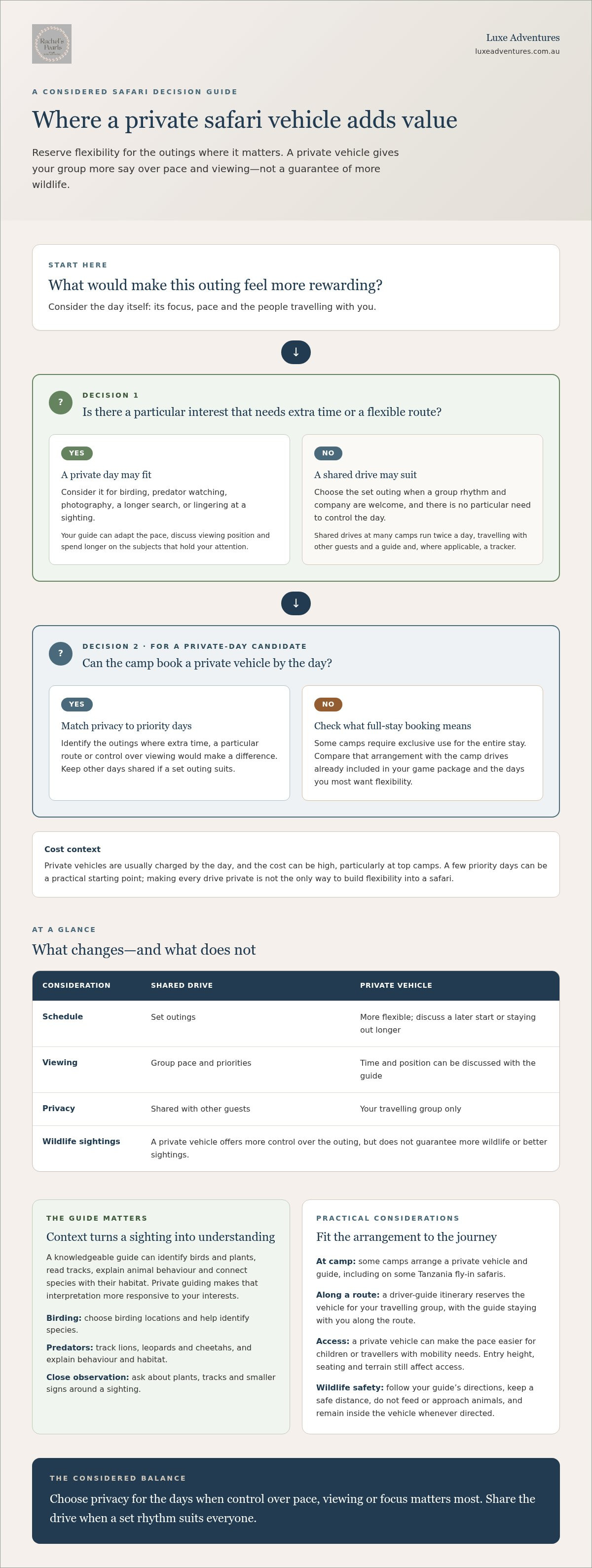
A private safari vehicle isn’t a shortcut to seeing more wildlife. Its value is the freedom to shape each day around your interests. For many travellers, a safari with a private guide and vehicle makes the most sense on a few priority days, while shared drives suit days when a set schedule and company are welcome. Either way, the guide’s knowledge matters.
It’s easy to assume a private vehicle automatically makes for a better safari. In practice, the difference is personal: you can linger at a sighting, adjust the pace and follow a particular interest without coordinating with other guests. A skilled guide can bring the landscape to life, whether you’re watching birds, reading animal behaviour or taking in the changing light.
This guide compares private and shared drives, explains what a guide contributes and helps you decide which days might benefit most from a private vehicle. The aim is a considered safari, not an over-scheduled one, with the right balance of flexibility, insight and shared experience.
Key Takeaways
- Choose a private vehicle when control over the pace and viewing position matters more than sharing a set drive.
- A knowledgeable guide can turn birds, plants and animal behaviour into a richer understanding of the ecosystem.
- Private days can be focused around your priorities, while shared drives may suit outings with a more structured rhythm.
- Compare the vehicle arrangement and guiding style as well as the itinerary to decide where privacy will add the most value.
Should You Take a Private Vehicle on Safari?
Choose a private vehicle for control over timing and viewing, or shared drives for a set routine. The better fit depends on how you want to experience each day.
Flexible Schedules and Wildlife Viewing
Shared game drives at many safari camps run twice a day, with guests travelling alongside a guide and, where applicable, a tracker. With a private vehicle, you can discuss a later start or staying out longer in the evening. If an animal is partly hidden, you can ask the guide to reposition for a clearer view. This flexibility shapes the outing, but it doesn’t guarantee more wildlife or better sightings.
Vehicle Privacy and Flexibility
A private vehicle keeps the outing within your travelling group, so everyone can settle into a preferred rhythm without coordinating with other guests. That can help when one person wants to watch a herd while another would rather move on. A private safari vehicle also lets you adjust viewing time around your interests, rather than a group’s shared priorities. For children or travellers with mobility needs, a private vehicle can make the pace easier to manage, but entry height, seating and terrain still affect access.
Operators Offering Private Guides and Vehicles
For Australians planning an African safari, private arrangements may be organised through a camp or through regional tour operators such as Steve & Richard Safaris as part of a driver-guide itinerary. On Tanzania fly-in safaris, some camps can arrange a private vehicle and guide for guests who prefer not to share. A driver-guide itinerary reserves the vehicle for your travelling group. The practical difference is where the arrangement is made and whether the guide stays with you along the route or meets you at camp.
On African wildlife tours, follow your guide’s directions, keep a safe distance from animals and don’t feed or approach them. During vehicle-based viewing, remain inside whenever the guide directs you to do so.
| Option | Schedule | Viewing | Privacy |
|---|---|---|---|
| Shared drive | Set outings | Group pace | Shared with other guests |
| Private vehicle | More flexible | Time and position can be discussed | Travelling group only |
Choose a private vehicle for control over the day; share when a set schedule suits everyone.
Guide knowledge of African wildlife and ecosystems
A skilled guide adds context to what you see across Africa, from a bird’s call to tracks crossing a national park road. Private guiding can make that interpretation more responsive: the guide can spend longer on subjects that hold your attention and move on when they don’t. The landscape becomes more than a backdrop.
Knowledge matters most when it connects species with behaviour and habitat. A guide can identify plants and birds, explain the ecosystem around them and help you notice details that are easy to miss from a vehicle. That might mean pausing over a bird’s markings or understanding what a predator’s movement suggests about its surroundings.
- For birders: guides can choose birding locations and help identify species.
- For predator watchers: guides can track lions, leopards and cheetahs while explaining their behaviour and habitat.
- For curious observers: ask about the plants, tracks and smaller signs around a sighting.
Photography benefits from the same attention. A private vehicle gives passengers room to move, take photographs and appreciate the view. You can ask the guide to reposition for a better angle or spend longer at a location that suits your composition. That freedom is useful when a changing moment matters more than covering ground.
Time at a sighting is a choice, not simply a pause between destinations. If you’re watching a leopard move through cover, you may want to stay; if your interests lie elsewhere, you can discuss moving on. A private vehicle lets the guide adapt the outing to your preferences instead of balancing several guests’ priorities.
Before travelling, note the wildlife and photography that matter most to you. Those interests can help shape an African safari itinerary around meaningful encounters. Share your safari travel plans to begin a conversation about the right guiding approach.
Booking a private vehicle for selected days
Private vehicles are usually charged by the day, and the cost can be high, particularly at top camps. Instead of reserving exclusive use for every game drive, identify the outings where control will make a difference. A few priority days can be a practical starting point, especially when a specific interest calls for extra time or a flexible route.
Choose those days around what you want to see and do. A morning focused on birding, a longer search for predators or photography across open plains may benefit from a vehicle reserved for your group. On other days, a shared drive can provide a set outing without requiring exclusive use throughout your stay. The aim is to pay for flexibility where it matters, not simply make every drive private.
Next, map the arrangements against your itinerary. Some camps allow private vehicles to be booked for individual days; others require guests to reserve one for their entire stay. On a Tanzania fly-in safari, a camp may arrange a private vehicle and guide for guests who prefer not to share. A game package commonly includes camp drives, so consider how those scheduled outings fit your priorities before adding private days.
Discuss the plan while arranging your safari, using a simple checklist:
- Mark priority outings: choose the days when longer viewing or a particular route matters most.
- Compare the arrangement: establish whether the camp permits day-by-day booking or requires the full stay.
- Match the drive to your interest: explain whether birding, predator watching or photography should shape the outing.
- Keep shared drives in the plan: use them for days when a scheduled group outing suits your pace.
This approach gives your itinerary a deliberate balance: private where choice matters, shared where it doesn’t. It also leaves room to enjoy the camp’s regular rhythm without treating every game drive as a separate production.
Private safari vehicles and dedicated guides
A private safari vehicle in Africa generally comes with a private guide, making the pairing more than exclusive transport. The guide can focus on your group’s pace, questions and interests, while the vehicle gives each passenger room to move, take photographs and enjoy the view. For a couple, that can mean quieter drives and conversation shaped by what’s unfolding outside.
Vehicle size affects the feel of a drive. Six seats are often considered the sweet spot at leading camps, while some vehicles have seven or eight seats. A nine-seat vehicle can feel less intimate on a luxury safari, particularly when passengers want space to change position or photograph from different sides. In Tanzania’s Northern Circuit, a private driver-guide vehicle carries a maximum of seven guests.
On that circuit, the vehicle is a closed 4x4 Land Cruiser with a pop-up roof and sliding windows. Those details shape how you experience a place: the roof opens the view, while sliding windows offer another way to watch wildlife. A shorter passenger may find the back row useful because its seats tend to sit higher. Small considerations, but they can matter over several drives.
A dedicated guide can also add continuity beyond game drives. Specialist guides may be hired at individual camps or accompany travellers throughout a safari. They can help manage transfers, join guests at meals and share stories around the campfire. Having one person connect the places along your journey can give each sighting more context, rather than leaving the day’s encounters as separate moments. In East Africa, specialised operators such as Deluxe Vacations Uganda arrange private driver-guides who remain with you throughout your safari itinerary.
When planning, decide whether you value a more intimate vehicle, one guide across the route, or both. Then shape your African safari around those priorities. Discuss your private safari plans and the guiding style that would suit your group.
Luxe Adventures: African Safaris
Luxe Adventures designs African safaris around the places you want to explore and the experience you want from each day. If you’re weighing a private guide and vehicle against shared game drives, your itinerary can be shaped around your interests, camp choices, route and preferred balance of flexibility and shared time.
A private vehicle may suit days focused on photography, birding or lingering at sightings; shared drives can work well when a set outing suits you. The choice also sits alongside wider planning decisions, including how you travel between safari areas and where you stay. Luxe Adventures brings these elements together through its African safari planning, helping you consider the whole journey rather than treating each drive as a separate decision.
Planning an African safari? Contact Luxe Adventures to discuss your travel plans.
Let the journey take its shape
A considered safari plan starts with the experience you want to bring home: a deeper understanding of a landscape, time for photography or the ease of moving at your own pace. Let that intention guide your choices around route, camps and guiding style. A safari with a private guide and vehicle can be part of that design, rather than a decision made in isolation.
Luxe Adventures designs African safaris, alongside Fiji luxury stays and expedition cruises for travellers considering a wider journey. Start with a conversation about what draws you to Africa and how you want each day to feel. From there, the details can fall into place with purpose, leaving room for considered planning and the unexpected moments that make a place memorable.
Contact Luxe Adventures to plan your safari, and begin shaping a journey that feels distinctly yours.
Frequently Asked Questions
What Is Included in a Guided Safari in Africa?
A guided safari includes wildlife outings led by a guide, while the itinerary sets the wider arrangements. On a Tanzania fly-in safari, the guide who meets guests at the airstrip will normally guide them during their camp stay. That continuity can help connect sightings across different drives. Review the itinerary to see how camp activities, transfers and time between destinations fit around the guided outings.
What does a private safari guide and vehicle package include?
A safari with a private guide and vehicle pairs guiding with transport along your planned route. The arrangements can differ: on a Tanzania fly-in safari, a guide may meet you at the airstrip and continue guiding during your camp stay. A driver-guide itinerary has a different rhythm, with the guide accompanying you between places. The route and transfer plan help define the package.
What is the difference between a private safari and a group wildlife tour?
A key difference is how the journey’s logistics are coordinated. On Tanzania’s Northern Circuit, a driver-guide handles park-entry permits and contacts the camp with an estimated arrival time. This gives your route a dedicated point of coordination. A group wildlife tour generally organises its movements around a shared itinerary, while private arrangements can connect guiding and travel logistics to your route.
How do I book a private safari with a guide and vehicle?
Are guide fees, park entry and transport included in private safari prices?
Inclusions depend on the itinerary, so compare the stated arrangements for guiding, park entry and transport. On Tanzania’s Northern Circuit, the driver-guide handles park-entry permits, while the route determines how transfers connect with camp arrivals. Prices depend on the route, season, camp and included arrangements. Check that each component is clearly set out in the proposed itinerary.
Article by
Rachel Cleary
Rachel Cleary is the founder of Luxe Adventures and an endlessly curious explorer with a passion for meaningful, experience-led travel. Having visited every continent and travelled to more than 100 countries — and counting — she believes travel is one of the greatest educations for both children and adults alike.
Rachel is addicted to scuba diving and gets underwater at every opportunity. When she isn't in the office you'll find her exploring remote reefs in Fiji, drift diving in the Maldives, or scuba cruising Raja Ampat or French Polynesia.
Her second home is Fiji where she has explored all the island groups and has favourite boutique resorts she returns to every year, for the diving and the authentic Fijian hospitality.
Get her talking about kayaking in Antarctica or the Arctic, African safaris and where to find the highest density of big cats, underwater adventures, remote expedition destinations, or the science and magic behind the Northern Lights — including when and where they are most likely to dance — and you may be there a while.
Through Luxe Adventures, Rachel combines firsthand experience, global industry connections, and a deep appreciation for nature, culture, food, wildlife, and human connection to help curious travellers explore the world in a way that feels seamless, personal, and unforgettable.
Refined by experience. Defined by connection.
Disclaimer
The information in this article is intended as general travel inspiration and guidance only. Travel requirements, hotel standards, airline schedules, entry regulations, weather conditions, pricing, and experiences can change without notice.
While every effort is made to ensure accuracy at the time of publishing, Luxe Adventures recommends confirming all details relevant to your personal travel plans before booking or travelling.
Opinions, recommendations, and destination insights shared in this article are based on firsthand experience, industry knowledge, and research at the time of writing. Experiences may vary depending on season, supplier changes, local conditions, and individual travel preferences.
Some articles may reference luxury travel affiliations, preferred partner programs, or value-added amenities available through Luxe Adventures. Benefits and inclusions are always subject to availability and supplier terms at the time of booking.
Luxe Adventures strongly recommends comprehensive travel insurance for all international travel.
For personalised travel advice, tailored itinerary design, or the latest destination updates, please contact Luxe Adventures directly.


