

An advisor’s fee isn’t always an extra charge on top of every booking. Some advisors charge a separate planning fee, while others earn commission from travel suppliers. The cost of a bespoke travel itinerary depends on the trip’s length, destinations and level of personalisation, not a standard rate.
It’s reasonable to want to know what you’re paying for and whether an advisor brings more than a polished document. The value lies in the planning: shaping the pace, matching stays and experiences to your priorities, and bringing the moving parts together. Here, we explain what planning can cover, how advisor-led arrangements compare with booking direct, and why personalisation matters on a luxury journey. The details make the difference when the trip is designed around how you want to travel, not a template.
Key Takeaways
- Planning fees can cover more than itinerary research: the scope of the work and level of support shape what’s included.
- Compare an advisor’s overall contribution with the convenience and responsibilities of booking direct, not just the upfront cost.
- Bespoke travel is shaped around your pace, interests and priorities, with personalisation influencing the experiences selected.
- Thoughtful planning can help turn a luxury trip from a collection of reservations into a journey with a clearer sense of place and purpose.
What bespoke itinerary planning costs include
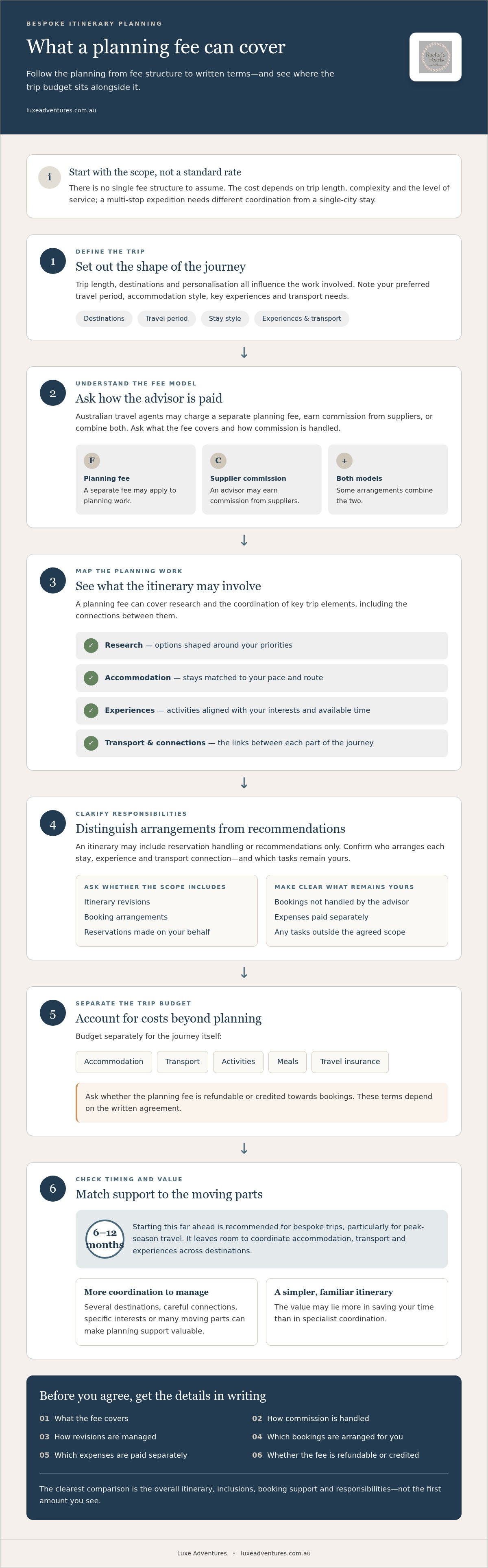
A planning fee can cover research, hotel selection, experiences, transport and the connections between each part. The scope matters: a multi-stop expedition needs different coordination from a single-city stay.
Planning Fees and Commission Models
Australian travel agents may charge a separate planning fee, earn commission from suppliers, or combine both models. There’s no single fee structure to assume; ask what the fee covers and how commission is handled. For example, clarify whether itinerary revisions and booking arrangements are included. The cost depends on trip length, complexity and service scope, with pricing provided after a quote request.
Accommodation and Experience Planning
Accommodation and experience planning matches stays and activities to your pace, interests and route. A planner might weigh a quiet lodge against a centrally located hotel, then align excursions with the time available. Clarify whether your itinerary includes reservation handling or recommendations only. This distinction shows who arranges each stay, experience and transport connection, and which tasks remain yours.
Planning Timing and Fee Value
For bespoke trips, starting six to twelve months ahead leaves room to plan, particularly for peak-season travel. That lead time can help coordinate accommodation, transport and experiences across several destinations. Planning support can be valuable when your route has complex connections, specific interests or many moving parts. For a simple, familiar itinerary, its value may lie more in saving your time than in specialist coordination.
Extra Costs and Fee Terms
Beyond the planning fee, budget for the trip itself: accommodation, transport, activities, meals and travel insurance. Australian travellers should also ask whether the fee is refundable or credited towards bookings; those terms depend on the written agreement. Before paying, clarify what’s included, how revisions are handled, whether bookings are made on your behalf, and which expenses are paid separately. Get each answer in writing.
Does using an advisor cost more than booking direct?
Not necessarily. Booking direct and using an advisor involve different work and responsibilities. Compare the full itinerary, booking support and supplier rates, not just the first amount you see.
Destination and Seasonal Differences
Destination and season shape the options for a trip, from accommodation demand to transport connections. A stay in Japan during a popular travel period may call for different choices from a visit in a quieter season. Booking well ahead gives you more time to compare suitable stays and routes. Early booking doesn’t automatically mean a discount; savings depend on the specific offers and dates available.
For bespoke travel, starting six to twelve months before departure is recommended, particularly for peak seasons. That gives you time to weigh different dates, destinations and experiences before committing. The overall price depends on the destination, season, trip length and level of booking support you want. Your quote will set out the cost for your itinerary.
Indicative and Consultation Prices
An indicative trip price is an initial estimate based on the details you provide, not a final itinerary total. Share your preferred destination, travel period, accommodation style, key experiences and transport needs to make the estimate more relevant. A single-session consultation can focus on a specific planning question or route; its price depends on the scope and is set out in a quote.
Booking direct may suit a straightforward stay if you’re comfortable comparing hotels and arranging transport yourself. An advisor can add value when your trip involves several destinations, careful connections or experiences that need to fit a particular pace. Luxury hotels may offer advisors the same public rates as direct bookings, so compare the proposed inclusions and planning support, not just the nightly rate.
Before choosing, decide which tasks you want handled and which you prefer to manage yourself. A useful comparison sets out accommodation, experiences, transport and booking responsibilities side by side. For a tailored estimate, you can share your trip details and outline the destinations and support you have in mind.
What exactly does “bespoke travel” mean in luxury vacations?
Bespoke travel starts with your priorities, then shapes the route, hotels and experiences around them. A luxury tour usually follows a pre-designed format, while a bespoke journey can adjust its pace and focus. For example, a Japan itinerary might allow more time in Kyoto for gardens and cultural visits, rather than following a fixed sequence of stops. The difference is personal fit, not simply the hotel category.
Travel agents and bespoke tour operators can both help arrange a trip, but their roles differ. An agent typically coordinates bookings across travel suppliers, while a tour operator designs and sells a trip, often combining its components—much like how destination specialists such as Saigon Star Travel structure complete travel itineraries. Clarify who is responsible for each hotel, transfer and experience. This matters when an itinerary includes several destinations or a missed connection affects the next part of the journey.
Consider a couple choosing between a fixed European tour and a tailored route through Paris and Provence. The package may include scheduled transfers and group activities, while the tailored plan might prioritise private time, independent hotel choices and longer stays. Either format can offer better value, depending on what the travellers want included. Review the full itinerary and total trip spend before deciding; savings are clear only when you compare the same components.
For Australian travellers, the useful question isn’t whether “bespoke” automatically costs less. It’s whether the added choice and tailored pace justify the overall spend. List the experiences you value, the hotels you prefer and the parts of a journey you’re happy to keep standard. Then compare those priorities with a luxury tour’s inclusions. The right fit matters more than the label.
Personalisation and exclusive experiences
Personalisation turns reservations into a holiday shaped around your interests, energy and preferred pace. In a planning conversation, explain what matters: perhaps an unhurried morning in Kyoto’s neighbouring Kanazawa, time with local craftspeople, or fewer hotel changes. Those details guide recommendations, making room for meaningful moments instead of filling each day with another appointment. The itinerary should reflect how you like to travel, not an idealised version of it.
Exclusive experiences matter most when they deepen your connection to a place. In Florence, that could mean a specialist-led visit focused on Renaissance art rather than another general sightseeing stop. In the Kimberley, an expedition experience might be chosen for its emphasis on landscape, wildlife or cultural context. Ask whether each detail adds something distinctive to your journey, not just whether it sounds impressive in a proposal.
Good recommendations also account for the people travelling. A family spanning generations may need a gentler daily rhythm than two friends seeking long walking days. A couple celebrating an anniversary might prefer an unhurried dinner and a quiet hotel setting to a packed schedule. Sharing these priorities early gives the planner direction and makes it easier to assess the reasoning behind each suggested stay or experience.
Some hotel booking programmes can add benefits such as breakfast, a possible room upgrade or VIP recognition. Treat these as extras, not substitutes for choosing a hotel that suits your travel style. Consider its location, atmosphere and fit with your plans first. Then weigh any additional privileges as a welcome inclusion, not the sole reason to stay.
A useful test is to ask what each day offers that a standard itinerary might not. A private guide could provide context you care about, while a longer stay may let you settle into a destination. If an experience feels interchangeable, redirect the focus. Share your travel priorities to start shaping a journey around what matters to you.
Luxe Adventures: African Safaris
Luxe Adventures can shape an African safari around the landscapes, wildlife and style of travel you want to experience. Consider tailored planning when choosing between regions, camps and the pace of your days feels as important as selecting the destination. A safari brings distinct elements together, from time in the bush to transitions between stays, so the details deserve careful attention.
Think about what draws you most: tracking wildlife, spending time in one region, or pairing safari days with a different kind of journey. Clear priorities help focus recommendations and create a trip with a stronger sense of rhythm. Luxe Adventures also plans Fiji luxury resort stays, expedition cruises and Scandinavia holidays for travellers considering other styles of escape.
To discuss an African safari shaped around your interests, contact Luxe Adventures.
Shape the journey around what matters most
The cost of a bespoke travel itinerary is only one part of deciding how you want to travel. Begin with the feeling you want to carry home: a deeper understanding of a place, time in wild landscapes, or unhurried days with people you love. That intention gives the planning conversation direction and helps distinguish meaningful details from attractive extras.
Before settling on a route, decide what you’re willing to leave unscheduled. A little breathing room can make space for an unexpected conversation, a longer lunch or simply watching the light change. Those choices are personal and offer a useful starting point for turning an idea into a considered journey.
Luxe Adventures can help explore possibilities for an African safari, Fiji stay or expedition cruise, with the itinerary shaped around your interests. Discuss your trip with Luxe Adventures and take the next step towards a journey that feels distinctly yours.
Frequently Asked Questions
Do luxury travel advisors charge a fee?
Some luxury travel advisors charge a separate planning fee; others earn commission from travel suppliers, and some use both. The arrangement varies, so consider how the advisor is compensated alongside the work included. For example, distinguish a fee for designing a route from charges for booking changes or extra research. This makes it easier to compare the service with how you prefer to plan.
How do I get a price for my trip?
Share a clear outline of your plans and request a quote for your trip. Include your intended destination, approximate travel dates, who’s travelling and any essential experiences. It also helps to name one or two priorities, such as a particular lodge style or a slower pace. These details help the estimate reflect your preferences rather than a generic itinerary that needs substantial revision.
How does custom trip planning work?
Custom trip planning starts by clarifying what you want from the journey, then turning those priorities into a workable itinerary. You might tell the planner that wildlife viewing matters more than frequent hotel changes. They can use that preference to shape the route and accommodation choices—an approach taken by dedicated specialists like Tamu Adventures when structuring personalized safari itineraries. You can then review the proposed plan, discuss adjustments and decide which arrangements to proceed with.
How much does a custom luxury trip cost?
The cost of a bespoke travel itinerary depends on the destination, travel dates, accommodation, transport and experiences selected. A safari with several lodge stays, for instance, has different cost drivers from a resort-based holiday. Separate the planning fee from the trip’s overall budget, then review what the quote includes. Your quote should reflect your itinerary and set out the cost.
Is a travel advisor more expensive than booking online?
Not automatically; the comparison depends on the trip details and what each option includes. Compare equivalent hotels, dates, room types and experiences, then account for the time you’ll spend arranging the itinerary yourself. An online booking may suit a single hotel stay. A multi-stop journey can require more coordination, so consider whether you’d value having that work handled for you.
What is typically included in a custom travel itinerary fee?
A fee may cover research and itinerary design, but the agreed scope determines the actual deliverables. Before proceeding, establish whether you’ll receive a day-by-day plan, hotel recommendations, booking coordination or revisions. A route proposal without reservations, for example, differs from a plan where the advisor arranges selected bookings. Knowing the distinction helps you see what remains yours to organise.

Article by
Rachel Cleary
Rachel Cleary is the founder of Luxe Adventures and an endlessly curious explorer with a passion for meaningful, experience-led travel. Having visited every continent and travelled to more than 100 countries — and counting — she believes travel is one of the greatest educations for both children and adults alike.
Rachel is addicted to scuba diving and gets underwater at every opportunity. When she isn't in the office you'll find her exploring remote reefs in Fiji, drift diving in the Maldives, or scuba cruising Raja Ampat or French Polynesia.
Her second home is Fiji where she has explored all the island groups and has favourite boutique resorts she returns to every year, for the diving and the authentic Fijian hospitality.
Get her talking about kayaking in Antarctica or the Arctic, African safaris and where to find the highest density of big cats, underwater adventures, remote expedition destinations, or the science and magic behind the Northern Lights — including when and where they are most likely to dance — and you may be there a while.
Through Luxe Adventures, Rachel combines firsthand experience, global industry connections, and a deep appreciation for nature, culture, food, wildlife, and human connection to help curious travellers explore the world in a way that feels seamless, personal, and unforgettable.
Refined by experience. Defined by connection.
Disclaimer
The information in this article is intended as general travel inspiration and guidance only. Travel requirements, hotel standards, airline schedules, entry regulations, weather conditions, pricing, and experiences can change without notice.
While every effort is made to ensure accuracy at the time of publishing, Luxe Adventures recommends confirming all details relevant to your personal travel plans before booking or travelling.
Opinions, recommendations, and destination insights shared in this article are based on firsthand experience, industry knowledge, and research at the time of writing. Experiences may vary depending on season, supplier changes, local conditions, and individual travel preferences.
Some articles may reference luxury travel affiliations, preferred partner programs, or value-added amenities available through Luxe Adventures. Benefits and inclusions are always subject to availability and supplier terms at the time of booking.
Luxe Adventures strongly recommends comprehensive travel insurance for all international travel.
For personalised travel advice, tailored itinerary design, or the latest destination updates, please contact Luxe Adventures directly.


