

More destinations can make a round-the-world trip feel smaller, not richer. There’s no ideal number of stops for everyone. A useful rule of thumb is to allow two to three days at each destination, then shape the route around your time and priorities. A thoughtful around the world trip planning service starts with that balance, not a race to collect pins on a map.
It’s tempting to include every place you’ve imagined, especially when the journey spans continents. But the best route leaves room for the experiences that matter to you, whether that means lingering over a long lunch, travelling between regions by rail or setting aside time for an expedition cruise. This guide will help you choose destinations, plan accommodation and ground transport, and build a round-the-world itinerary around your travel dreams. Learn how to set a sensible pace, connect each stop and turn a big, beautifully unruly idea into a journey that works in practice.
Key Takeaways
- Choose between an alliance ticket and a custom multi-stop route by weighing itinerary flexibility against how you want your flights connected.
- Set a comfortable pace for each destination, then shape the route around the experiences that matter most to you.
- Plan accommodation and ground transport together so transfers, location and time on the ground work as one considered itinerary.
- Turn your round-the-world idea into a practical journey by giving it a clear purpose and prioritising the places that best express it.
What is a Round the World Trip?
A round-the-world trip links destinations across continents in one planned journey. Airline tickets for these itineraries must last between 10 days and one year.
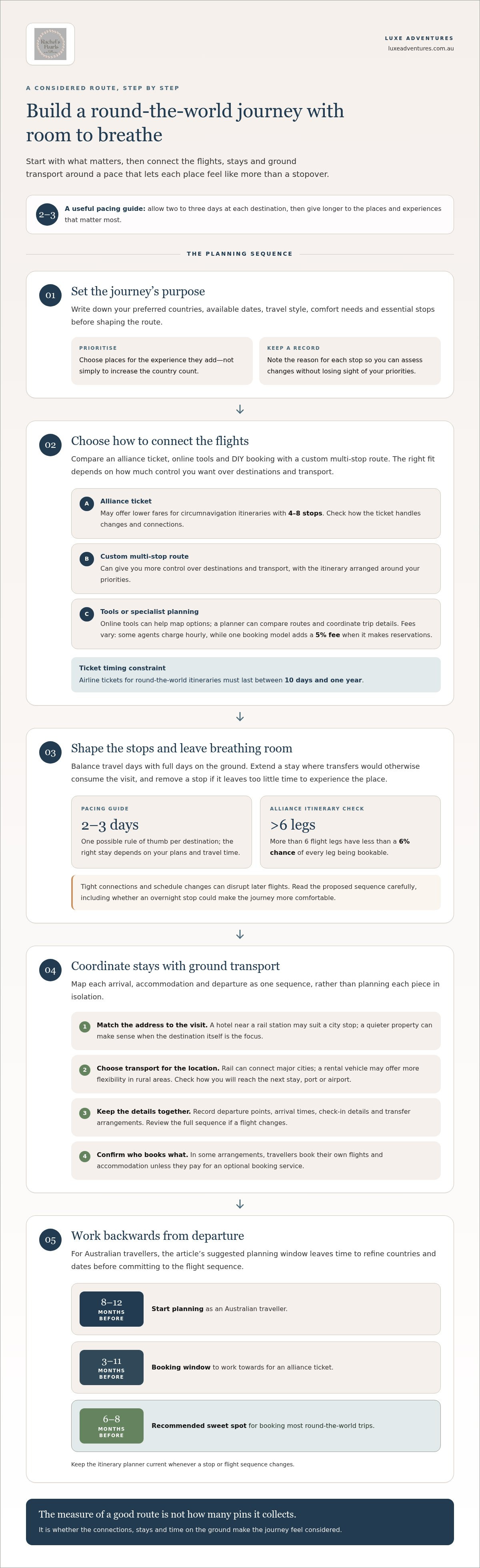
- Compare an alliance ticket, online tools and DIY booking before choosing your route. Alliance tickets may offer lower fares for circumnavigation itineraries with 4-8 stops, while a custom multi-stop itinerary can give you more control over destinations and transport. Online tools help map options; a planner can shape the itinerary around your priorities. Complete a planner with your preferred countries, dates, travel style and comfort needs. Fees vary: some agents charge an hourly rate, while one booking model adds a 5% fee when it makes reservations.
Develop the Around-the-World Itinerary
Before a consultation by email, video conference or phone, write down your priorities, available dates and essential stops. A planner can use these details to develop a route, compare alliance and custom options, and organise the itinerary around your preferred pace. Planners may also coordinate accommodation, transport and other trip details. Read each proposed flight sequence carefully, including whether an overnight stop could make the adventure more comfortable.
Select Stops and Allow for Flexibility
Choose stops for the experience they add, not simply to increase the country count. Allowing two to three days at each destination is one possible rule of thumb, while longer stays suit places that matter most to you. Check how the alliance ticket handles changes and connections: itineraries with more than 6 flight legs have less than a 6% chance of every leg being bookable. Tight connections and schedule changes can disrupt later flights, so leave breathing room.
- Start planning 8 to 12 months before departure as an Australian traveller, then work towards booking an alliance ticket 3-11 months ahead. The recommended booking sweet spot for most round-the-world trips is 6-8 months before departure. These stages leave time to refine countries and dates before committing; keep the itinerary planner current whenever a stop or flight sequence changes.
Custom-designed trips in international destinations
- Start by listing the experiences you want from each destination, then group them by geography. For example, a 10-day Paris trip can centre on galleries, neighbourhood restaurants and time to explore without rushing between regions. Match accommodation to those interests: a quiet address near museums suits a different rhythm from a hotel beside transport links. This first edit gives your global itinerary a clear purpose, rather than a string of places chosen simply because they appear on a map.
- Set the pace before adding more countries. Two to three days at each destination is one possible rule of thumb, but the right length of stay depends on what you plan to do and how far you need to travel. Allow more time for a major city or remote region if transfers would otherwise consume your visit. Compare travel days with full days on the ground, then remove a stop if it leaves too little time to experience the place.
- Decide which parts you’ll plan yourself and where specialist input could help. Independent research can work well for familiar destinations, straightforward transport and accommodation you can compare confidently. A custom itinerary can connect less familiar places, match stays to your interests and bring flights, ground transport and activities into one coherent sequence. Keep a personal record of dates, confirmation details and the reason for each stop. It makes changes easier to assess without losing sight of your priorities.
- Ask for a destination-specific information pack that keeps practical details together. Final planning materials can include a custom travel guide, itinerary, supporting documents and map, giving you one reference for each stage. Read the sequence against your confirmed dates and note where you’ll need local transport or a slower day. Travel information can arrive 1-2 weeks prior to departure. If you’d like a considered hand with a complex route, discuss your international travel plans.
Accommodation and ground transport planning
- Map each arrival, stay and departure before booking accommodation. A hotel near a rail station may suit a city stop, while a quieter property can make sense when the destination itself is the focus. For New Zealand’s South Island, for example, consider how your chosen base connects with the places you plan to explore. Check arrival times against check-in arrangements, especially after a long international flight.
- Choose ground transport to suit each location, rather than relying on one method everywhere. Rail can connect major cities, while a rental vehicle may offer more flexibility in rural areas. On an island itinerary, check how you’ll reach the port, airport or next accommodation before confirming your stay. Allow time between connections, and avoid planning a full day of exploring immediately after a long transfer.
- Keep flights, accommodation and local transfers in one itinerary. Record each departure point, arrival time, check-in detail and transfer arrangement, then review the sequence from start to finish. If a flight changes, you can quickly see which hotel night or onward journey may be affected. Keep booking confirmations together, and note whether each transfer is arranged or still needs your attention.
- Confirm who makes each reservation before finalising the plan. In some arrangements, travellers book their own flights and accommodation unless they pay for an optional booking service. That distinction matters: be prepared to manage those reservations yourself when booking support isn’t included. Before departure, compare the final itinerary with your confirmations, including hotel dates, transport connections and the location of each stay.
Planning a fantasy around-the-world trip
- Give the fantasy a purpose before drawing a route. Choose one guiding idea, such as tracing historic railways through Europe or pairing wildlife encounters with time in remote landscapes. A clear purpose helps you decide which places belong and which are simply tempting additions. List the experiences you most want, then use them to shape the route across continents instead of letting flight connections dictate the entire adventure.
- Set a time frame, then build the itinerary backwards from your priorities. A round-the-world trip might run anywhere from two weeks to two months, while travellers commonly spend three weeks to six months on the road. These different time frames change what feels enjoyable: a shorter journey calls for fewer regions, while a longer one can allow deeper stays and slower transport. Keep travel days visible beside your destination days.
- Give every proposed stop a reason to stay. One four-week round-the-world itinerary included 15 stops, but that pace leaves little room for an unplanned afternoon or a lingering meal. Sort your places into essentials and optional additions, then remove stops that contribute only another airport transfer. Consider how flights connect, how each arrival affects the next day, and whether the route allows you to experience a place beyond its arrival lounge.
- Prepare for the practical side alongside the imaginative one. Add travel insurance to your planning checklist, and compare the journey’s transport, accommodation and activities against your priorities before making commitments. Keep a flexible version of the route, with alternatives for a destination or flight sequence that no longer suits the trip. If you’re ready to turn your ideas into a considered itinerary, start planning your round-the-world journey.
Luxe Adventures: African Safaris
Luxe Adventures can shape an African Safari into a considered part of your wider journey, pairing time in the bush with cities, coastlines or quieter interludes to make the route your own. This specialist planning is a natural fit when wildlife encounters are central to your travel dream and you want the surrounding logistics and destinations to work together, rather than feel like separate bookings.
The same thoughtful approach can help travellers whose round-the-world plans include an expedition cruise, a stay at a Fiji luxury resort or a journey through Scandinavia. Each calls for a different rhythm and practical decisions. The aim is to make those choices serve the experience you want, with room for both discovery and rest.
To discuss an African Safari or a wider itinerary, contact Luxe Adventures or visit luxeadventures.com.au.
Shape a journey that feels like yours
The most rewarding route isn’t necessarily the one that covers the most ground. It’s the one that gives your interests room to lead, whether that means a quiet stretch between major journeys or a deeper connection with a place you’ve long wanted to understand. An around the world trip planning service can help turn those preferences into a route with a clear personal thread.
If your plans call for a distinctive experience along the way, Luxe Adventures offers African Safaris, Fiji luxury resorts and Expedition Cruises. Each can become a defining chapter in a wider itinerary, rather than another stop to squeeze in. The next decision is yours: which experience would you most like your journey to make room for?
Contact Luxe Adventures to plan your trip, and take the first step towards a journey shaped around what matters to you.
Frequently Asked Questions
What does a travel planning service do?
An around the world trip planning service can help turn your priorities into a joined-up itinerary, including specialist experiences and the stays around them. Luxe Adventures designs personally vetted luxury travel, including African Safaris and Expedition Cruises. This approach suits travellers who want expert curation across several components, rather than a list of disconnected bookings.
What else do I need to know for a round-the-world trip?
Check baggage allowances separately for each flight, especially when an itinerary combines different airlines. A generous allowance on the long-haul sector doesn’t automatically apply to a regional connection. Keep essentials, medication and a change of clothes in your cabin bag, and save offline copies of booking details in case mobile coverage is patchy during a transfer.
Where can I go?
Choose destinations across continents according to your interests, preferred pace and the experiences you want from the journey. Start with a short list of places that genuinely matter to you, then consider how they connect by air or ground transport. A route can combine major cities, quieter regions and time on the water, provided each stop earns its place.
What steps are involved in planning an around-the-world trip from Australia?
Start by deciding how you want the journey to feel, then note your essential experiences and any dates that can’t move. From Australia, consider the first long-haul flight as the route’s anchor, then arrange the remaining destinations around it. Keep a working record of decisions and confirmations so you can see the impact of any change before adjusting other arrangements.
What visa, passport and entry requirements apply to an around-the-world trip?
Visa and entry requirements depend on your passport and every destination or transit country on your route. Check the rules for each stop before finalising travel arrangements, including any conditions for transiting without leaving the airport. Your passport should remain valid for at least six months after your planned return date. Keep relevant entry documents accessible throughout the journey.

Article by
Rachel Cleary
Rachel Cleary is the founder of Luxe Adventures and an endlessly curious explorer with a passion for meaningful, experience-led travel. Having visited every continent and travelled to more than 100 countries — and counting — she believes travel is one of the greatest educations for both children and adults alike.
Rachel is addicted to scuba diving and gets underwater at every opportunity. When she isn't in the office you'll find her exploring remote reefs in Fiji, drift diving in the Maldives, or scuba cruising Raja Ampat or French Polynesia.
Her second home is Fiji where she has explored all the island groups and has favourite boutique resorts she returns to every year, for the diving and the authentic Fijian hospitality.
Get her talking about kayaking in Antarctica or the Arctic, African safaris and where to find the highest density of big cats, underwater adventures, remote expedition destinations, or the science and magic behind the Northern Lights — including when and where they are most likely to dance — and you may be there a while.
Through Luxe Adventures, Rachel combines firsthand experience, global industry connections, and a deep appreciation for nature, culture, food, wildlife, and human connection to help curious travellers explore the world in a way that feels seamless, personal, and unforgettable.
Refined by experience. Defined by connection.
Disclaimer
The information in this article is intended as general travel inspiration and guidance only. Travel requirements, hotel standards, airline schedules, entry regulations, weather conditions, pricing, and experiences can change without notice.
While every effort is made to ensure accuracy at the time of publishing, Luxe Adventures recommends confirming all details relevant to your personal travel plans before booking or travelling.
Opinions, recommendations, and destination insights shared in this article are based on firsthand experience, industry knowledge, and research at the time of writing. Experiences may vary depending on season, supplier changes, local conditions, and individual travel preferences.
Some articles may reference luxury travel affiliations, preferred partner programs, or value-added amenities available through Luxe Adventures. Benefits and inclusions are always subject to availability and supplier terms at the time of booking.
Luxe Adventures strongly recommends comprehensive travel insurance for all international travel.
For personalised travel advice, tailored itinerary design, or the latest destination updates, please contact Luxe Adventures directly.


