

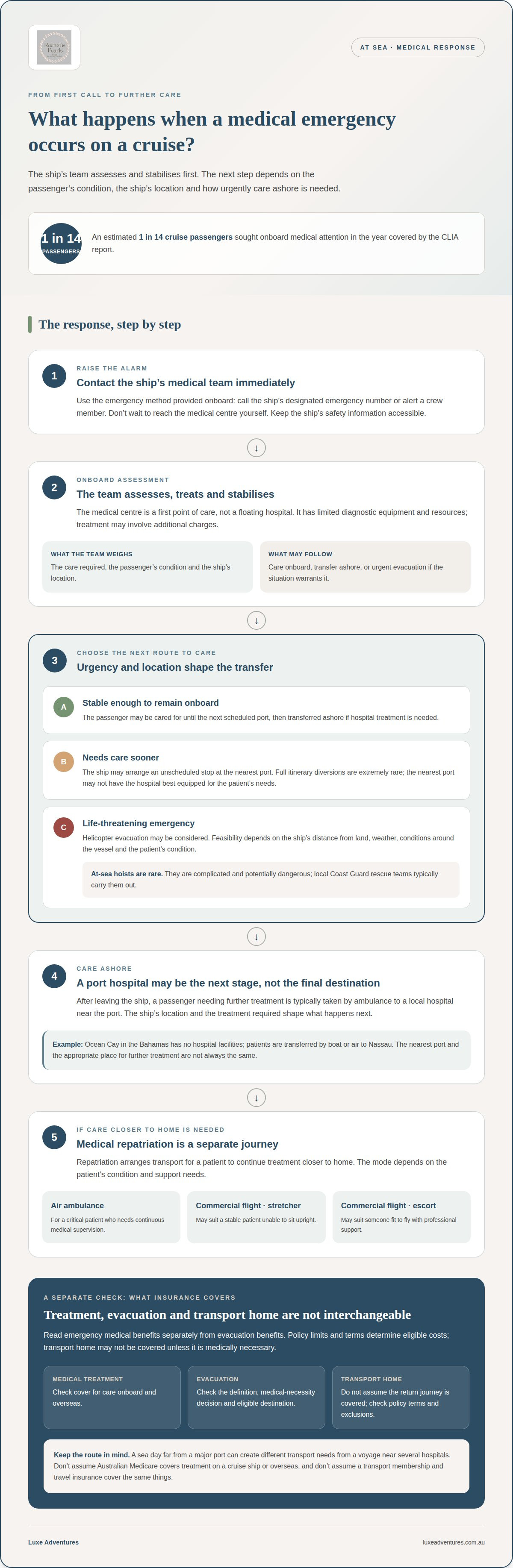
The ship’s medical centre is a first point of care, not a floating hospital. If you’re wondering what happens if you have a medical emergency on a cruise, the onboard team assesses and treats you, then stabilises you or arranges care ashore if your condition needs more than the ship can provide. Depending on your condition and the ship’s location, that may mean a transfer at port or, in a life-threatening emergency, evacuation.
It’s natural to assume medical help is close at hand once you’re on board. A medical team is available, but the centre has limited diagnostic equipment and resources, and treatment can involve additional costs. The next step depends on the care you need, the ship’s location, and whether you can wait for a scheduled port or need an urgent transfer.
This guide explains how onboard care works, what may happen when you’re taken ashore, and when an evacuation could be considered. It also covers the limits of travel insurance, including why evacuation cover may not pay for every transfer or for transport home.
Key Takeaways
- The ship’s medical centre can assess, treat and stabilise passengers, but it has limited resources and isn’t a full hospital.
- If care ashore is needed, a passenger may be transferred at the next scheduled port or, when their condition warrants it, at an unscheduled stop.
- Helicopter evacuation is generally considered for life-threatening emergencies, with the ship’s location, weather and the patient’s condition shaping what’s possible.
- Evacuation cover may not pay for every transfer, particularly transport home if it isn’t medically necessary; policy terms determine what is covered.
Why Are Medical Emergencies While Cruising a Concern?
In the year covered by the CLIA report, an estimated 1 in 14 cruise passengers sought onboard medical attention. At sea, distance from a hospital can make the next step a transfer rather than treatment on the ship.
Contacting the Ship’s Medical Team
To reach the ship’s medical team, use the emergency method provided onboard. In an emergency, call the ship’s designated emergency number or alert a crew member immediately. Don’t wait to reach the medical centre yourself. The crew can direct your call to medical staff, who can assess the urgency and respond. Keep the ship’s safety information accessible so you don’t have to rely on memory in a stressful moment.
Helicopter Emergency Evacuations
A helicopter evacuation transfers a passenger from the ship to shore for urgent medical care. It may be considered for a life-threatening emergency, depending on the ship’s location, weather and the patient’s condition. A hoist at sea is extremely complicated, potentially dangerous and rarely performed. Local Coast Guard rescue teams typically carry out at-sea hoists. The distance from land and conditions around the vessel determine whether an air transfer is feasible.
At-Sea Medical Evacuations and Transport
An at-sea medical evacuation moves a passenger from a vessel to a place where further treatment is available. The ship’s team assesses the patient and coordinates a transfer suited to their condition. This can involve a hoist, but that option is rare. Transport arrangements depend on the vessel’s location and how urgently care is needed. A passenger stable enough to travel with professional support may be accompanied by a medical escort on a commercial flight. Each transfer depends on the patient’s needs and the practical route to care.
Evacuation is not the only concern. NSW Health notes that cruise medical care may involve significant additional costs and charges. A serious illness can require treatment at sea, transport ashore and further care after arrival. Knowing how the ship’s emergency contact system works, and that a hoist is not routine, helps clarify the decisions involved.
Medical evacuation coverage limits
Medical evacuation cover pays for eligible transport to medical care, but the policy limit and terms determine what it will pay. A high limit matters because a transfer from a ship can involve specialist transport and coordination, not simply a trip to the nearest clinic.
Read emergency medical benefits separately from evacuation benefits. Look for the policy’s definition of evacuation, who decides whether it is medically necessary, and whether transport to a hospital at home is covered. Policies may exclude the return journey unless it is medically necessary.
Don’t assume Australian Medicare covers treatment on a cruise ship or overseas. Shipboard care and evacuation can generate separate charges, so assess the policy’s medical and transport benefits rather than treating Medicare as a substitute.
Medjet is a name travellers may encounter when considering medical transport. Don’t assume a transport membership and travel insurance cover the same things: medical treatment, evacuation to a suitable facility, and transport home are distinct needs. Compare the written terms for eligibility, destination, medical necessity and exclusions before relying on either arrangement. The key question is not just the maximum benefit, but which journey and care it applies to.
For a cruise, weigh the itinerary and remoteness alongside the limit. A sea day far from a major port can create different transport needs from a voyage near several hospitals. If you’re planning a cruise and want to discuss how the route shapes your preparations, talk through your travel plans.
Transfer to a hospital at a scheduled or nearest port
A passenger stable enough to remain onboard may be cared for until the next scheduled port, then transferred ashore. The ship’s medical staff and captain assess whether onboard care is suitable or hospital treatment is needed.
Cruise medical treatment can involve charges beyond the fare. NSW Health says medical care on a cruise may involve significant additional costs and charges. The amount depends on the care provided, so there isn’t one standard bill for every passenger.
If a passenger needs faster care, the ship’s team may arrange an unscheduled stop at the nearest port. Full itinerary diversions are extremely rare because cruise schedules are tightly managed. The next port is often the practical route to treatment, although its hospital may not be best equipped for the patient’s needs.
After leaving the ship, patients who need further treatment are typically taken by ambulance to a local hospital near the port. That hospital provides the next stage of care, but may not be the passenger’s final destination. The ship’s location and the treatment required shape what happens next.
Medical repatriation means arranging transport for a patient to continue treatment closer to home. An air ambulance can carry a critical patient who needs continuous medical supervision. A stable patient unable to sit upright may travel on a commercial flight using a stretcher. A medical escort can accompany someone who is fit to fly with professional support.
Repatriation is different from the initial transfer to a port hospital. Travel insurance may not cover transport to a hospital at home unless it’s medically necessary. For example, Ocean Cay in the Bahamas has no hospital facilities; patients are transferred by boat or air to Nassau, where regional providers like Tropic Air Rescue facilitate emergency and interhospital transport. This illustrates why the nearest port and the appropriate place for further treatment aren’t always the same.
Cruise ship medical facilities and their limitations
Onboard medical support works best when the team has clear information from you. If you have an ongoing condition, carry a concise medical summary with relevant details about your health and current treatment. It can provide important context if you’re unwell or find it difficult to explain your medical history in the moment.
Before departure, declare pre-existing medical conditions and bring enough medication for the voyage, plus extra. Keep a written record of your medicines and usual schedule with your summary. If symptoms disrupt your routine, this information can help you or a companion explain what you normally take. Extra supplies are especially useful on itineraries where ports are far apart.
Include shore activities in your health planning for a cruise. Match excursions to your mobility needs, not just the time ashore or the destination. A walking tour, tender transfer or uneven path may make an otherwise appealing outing less suitable. Considering these practical details when choosing activities can help you plan for each port.
Sun exposure is another detail worth planning for. High-factor sunscreen can reduce the risk of sun-related illness, particularly when you’re outdoors on deck or ashore. Carrying it with your other essentials is a simple measure that complements your medical preparation before sailing.
For a voyage with shore activities, consider how your health and mobility needs fit the itinerary, then discuss your cruise plans.
Luxe Adventures: African Safaris
Luxe Adventures can design an expedition cruise around the destinations and experiences that matter to you. If an itinerary spends time far from major ports, the route is an important part of the planning conversation. Remote settings bring different practical considerations from voyages closer to shore. Understanding how shipboard care and transfers work can help you weigh those details alongside the experience you want.
Luxe Adventures also plans African safaris, Fiji luxury resorts and Scandinavia holidays for travellers considering a different kind of journey. For cruise planning, its expedition cruises are a natural place to start. Travel insurance is also important: review the policy’s medical and evacuation terms alongside your itinerary.
To discuss your travel plans, contact Luxe Adventures or visit luxeadventures.com.au.
Make your next voyage feel considered
Knowing what happens if you have a medical emergency on a cruise can influence more than your insurance choices. It can help you consider what kind of itinerary suits your health, mobility and appetite for remote travel. A voyage is not defined by contingency planning, but thoughtful preparation can make the experience feel more considered from the outset.
Before choosing a route, reflect on what matters most: time in smaller ports, days far from shore, or a particular style of expedition. Those preferences can guide a conversation about the whole journey, including how its pace and destinations fit your circumstances. If you’re travelling with someone, make room for their priorities too. Shared expectations matter well before the ship leaves port.
Luxe Adventures can help you explore cruise options with those personal considerations in view. Contact Luxe Adventures to discuss cruise planning, and begin shaping a voyage that feels right for you.
Frequently Asked Questions
What Happens If You Get Sick on a Cruise?
Tell the ship’s medical team what you’re experiencing and whether it differs from your usual health. If you have an ongoing condition, declare it before travelling and carry a medical summary. Bring enough regular medication for the voyage, plus extra. These details can help the team understand your health context and consider the care you may need.
How Do Patients Get Home After Falling Ill on a Cruise?
Getting home after an illness depends on the patient’s fitness to travel and the level of medical support required. A patient who can travel with professional support may fly commercially with a medical escort; someone needing continuous supervision may require an air ambulance. Before travelling, understand how your policy covers repatriation, since transport home may depend on medical necessity.
What Happens If You Experience a Medical Emergency?
Alert the crew immediately and clearly explain what happened, including any known medical conditions and medication taken. If you’re with the passenger, stay available to share relevant information and help the crew understand what has changed. Keep the ship’s emergency instructions accessible during the voyage so you’re not searching for them under pressure.
Who Does What?
The passenger or companion raises the alarm and shares relevant health details. Shipboard medical staff handle clinical assessment and care, while the captain and medical team consider whether the passenger can remain onboard or needs care ashore. For a helicopter hoist at sea, local Coast Guard rescue teams typically carry out the operation. Each role is distinct, even when decisions must be made quickly.
What Medical Services and Facilities Are Available on a Cruise Ship?
Large ocean-going cruise ships have medical centres staffed by licensed physicians and nurses. Available care can include assessment, medication, stabilisation and minor surgery. These services can address some immediate needs, while limited diagnostic resources affect what the team can investigate onboard. Treatment is private and can involve additional charges, so review your travel insurance’s medical benefits before departure.
What Happens When a Passenger Has a Medical Emergency on a Cruise Ship?
The passenger is assessed, and the response depends on the care needed and the vessel’s position. If the patient can wait, the next scheduled port may provide access to a shoreside facility; a condition requiring faster attention may prompt an unscheduled stop. When planning excursions, consider mobility needs and use high-factor sunscreen to reduce the risk of sun-related illness.

Article by
Rachel Cleary
Rachel Cleary is the founder of Luxe Adventures and an endlessly curious explorer with a passion for meaningful, experience-led travel. Having visited every continent and travelled to more than 100 countries — and counting — she believes travel is one of the greatest educations for both children and adults alike.
Rachel is addicted to scuba diving and gets underwater at every opportunity. When she isn't in the office you'll find her exploring remote reefs in Fiji, drift diving in the Maldives, or scuba cruising Raja Ampat or French Polynesia.
Her second home is Fiji where she has explored all the island groups and has favourite boutique resorts she returns to every year, for the diving and the authentic Fijian hospitality.
Get her talking about kayaking in Antarctica or the Arctic, African safaris and where to find the highest density of big cats, underwater adventures, remote expedition destinations, or the science and magic behind the Northern Lights — including when and where they are most likely to dance — and you may be there a while.
Through Luxe Adventures, Rachel combines firsthand experience, global industry connections, and a deep appreciation for nature, culture, food, wildlife, and human connection to help curious travellers explore the world in a way that feels seamless, personal, and unforgettable.
Refined by experience. Defined by connection.
Disclaimer
The information in this article is intended as general travel inspiration and guidance only. Travel requirements, hotel standards, airline schedules, entry regulations, weather conditions, pricing, and experiences can change without notice.
While every effort is made to ensure accuracy at the time of publishing, Luxe Adventures recommends confirming all details relevant to your personal travel plans before booking or travelling.
Opinions, recommendations, and destination insights shared in this article are based on firsthand experience, industry knowledge, and research at the time of writing. Experiences may vary depending on season, supplier changes, local conditions, and individual travel preferences.
Some articles may reference luxury travel affiliations, preferred partner programs, or value-added amenities available through Luxe Adventures. Benefits and inclusions are always subject to availability and supplier terms at the time of booking.
Luxe Adventures strongly recommends comprehensive travel insurance for all international travel.
For personalised travel advice, tailored itinerary design, or the latest destination updates, please contact Luxe Adventures directly.


