

The most profound wildlife encounters aren't found on a crowded deck with three hundred other lenses; they're found in the silence of the pack ice. You likely already know that a generic itinerary won't cut it when your goal is a meaningful connection with the High Arctic. If you are researching the best way of seeing polar bears in svalbard cruise options can often feel overwhelming, frequently promising luxury while delivering a cookie-cutter experience that misses the mark on timing and intimacy.
This guide cuts through the noise to help you navigate the nuances of ship size, seasonal ice movements, and the essential curation required for a truly transformative expedition. We'll explore why the vessel you choose dictates the depth of your experience, how to align your travel dates with the shifting Arctic geography, and what to expect from the 2025 and 2026 environmental regulations. From vetting the best expedition partners to ensuring your logistics are handled with an insider's touch, you'll discover how to secure an encounter that is as ethical as it is awe-inspiring.
Key Takeaways
- Understand the unique geographical confluence of the Gulf Stream and the 80th parallel that makes Svalbard the ultimate habitat for the King of the Arctic.
- Navigate the seasonal nuances of the High Arctic to ensure your journey aligns with the shifting pack ice, which is critical for seeing polar bears in svalbard cruise itineraries.
- Learn why vessel size and manoeuvrability are the most significant factors in moving beyond standard tourist routes and into the silent realms of the pack ice.
- Gain clarity on the latest environmental regulations and ethical viewing standards to ensure your presence in this fragile ecosystem is one of stewardship.
- Discover the value of bespoke curation and firsthand vetting in selecting an expedition that balances high-end comfort with raw, unscripted exploration.
The Silent Realm: Why Svalbard is the Epicentre of Polar Bear Encounters
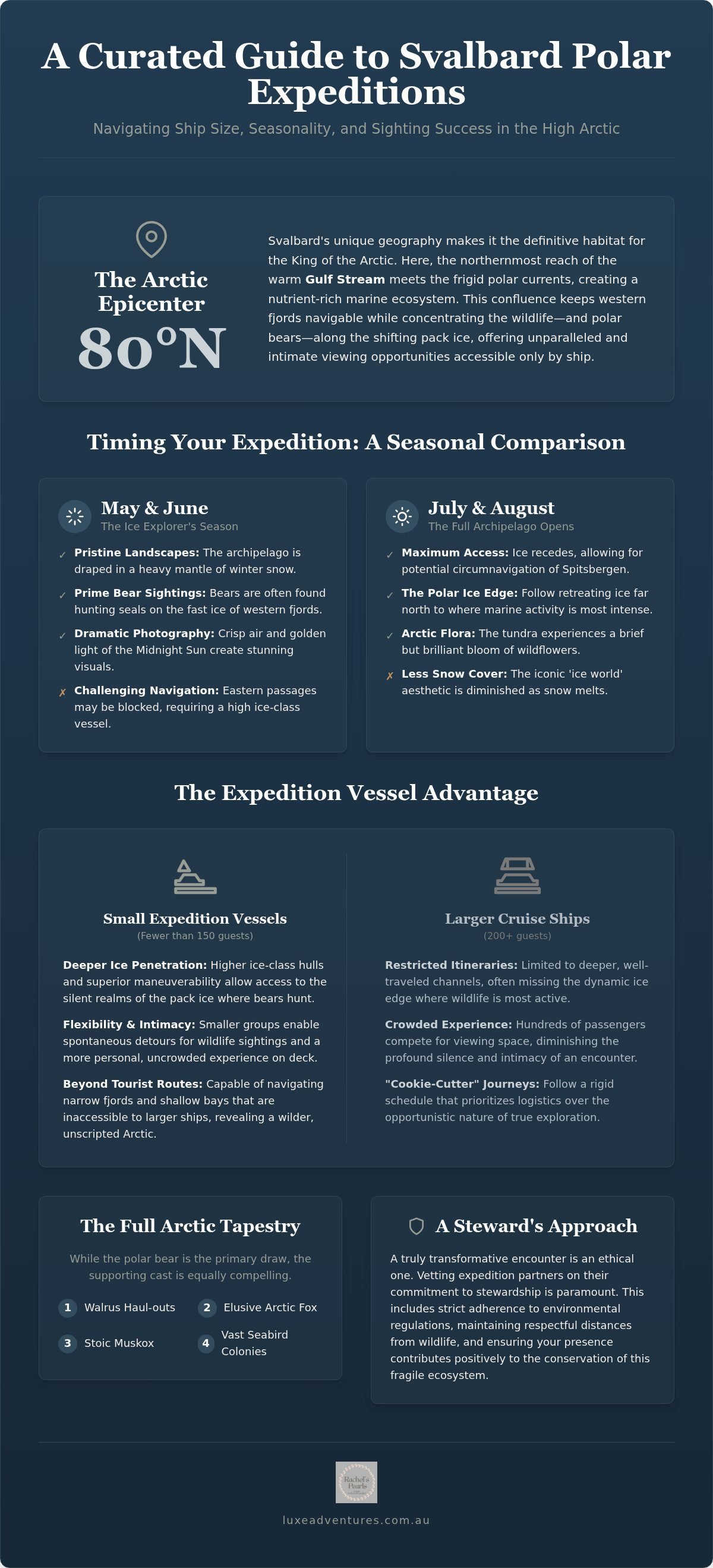
Svalbard is a landscape of extremes, where the 80th parallel marks the boundary between the known world and the true High Arctic. It is the definitive habitat of the King of the Arctic, a creature that relies on the shifting pack ice for its very survival. Gaining an insight into Polar bear biology and conservation is the first step in appreciating why this archipelago is so unique. This isn't a predictable safari park. It is a fragile, frozen wilderness where the northernmost reach of the Gulf Stream meets the frigid currents of the North Pole. This thermal collision keeps the western fjords navigable while supporting a nutrient-rich marine ecosystem that draws predators and prey alike into a delicate, seasonal dance.
When you're committed to seeing polar bears in svalbard cruise journeys are the only way to access the remote northern ice edge. The experience is defined by its sensory texture. There is the rhythmic crackle of brash ice against the hull, a sound like thousands of tiny glass bells breaking. Then, there is the silence. It is a heavy, profound quiet that forces you to listen to the wind and the distant, thunderous groan of calving glaciers. Simply spotting a bear through a long lens is secondary to the feeling of standing on a deck in their world, breathing the same crisp, ancient air.
The Atmosphere of the High Arctic
The light here is unlike anything else on Earth. During the summer months, the Midnight Sun hangs suspended in the sky, casting a perpetual, golden glow that softens the jagged peaks of Spitsbergen. This constant light creates an ethereal texture for photography, turning vast glaciers into canvases of blue and white. Many travellers find themselves gripped by 'Polar Fever', which is an inexplicable pull to return to these high latitudes where the scale of nature makes human concerns feel beautifully insignificant.
Wildlife Beyond the Bear
While the bear is the primary draw, the supporting cast is equally compelling. You might encounter walrus haul-outs, where these massive, tusked creatures lounge with a prehistoric indifference to your presence. On the tundra, the muskox grazes with a stoic, shaggy grace. The bird cliffs of Alkefjellet offer a different kind of intensity. Thousands of Brünnich’s guillemots create a dizzying cacophony against the basalt spires. Nearby, the elusive Arctic fox often shadows the bears, scavenging with a tenacity that defines life in the north.
Timing the Tundra: Navigating the Seasonal Nuances of the High Arctic
In the High Arctic, the calendar isn't a suggestion; it's a hard boundary set by the ice. Choosing the right month for your journey is the difference between witnessing a dramatic hunt on a frozen fjord and seeing a bear resting on a rocky shoreline. While the Svalbard polar bear population remains relatively stable across the archipelago, their distribution shifts profoundly as the summer sun takes hold. Understanding these rhythms is essential for anyone serious about seeing polar bears in svalbard cruise expeditions.
May and June: The Ice Explorer’s Choice
This is the season of the spring thaw. The landscape is at its most pristine, draped in a heavy mantle of winter snow that hasn't yet turned to the slush of late summer. We love this window for its sheer drama. It's the best time for iconic photography, as bears are often found stalking seals on the fast ice of the western fjords. However, nature demands a trade-off. Navigation is challenging. Some eastern passages remain locked, and only vessels with superior ice-class hulls can push through the frozen barriers. It’s a period defined by the return of migratory birds and a crispness in the air that feels entirely new.
July and August: The Full Archipelago
As the ice retreats, the map of Svalbard opens up. By July, circumnavigating the main island of Spitsbergen becomes a reality, allowing access to the wilder eastern islands like Barentsøya and Edgeøya. The temperatures rise, and the tundra erupts in a brief, brilliant display of Arctic flora. This is the time of the 'Polar Ice Edge'. Ships often head far north, following the retreating ice to the very limits of the archipelago. It's here, where the ice meets the open sea, that the most intense wildlife activity occurs. If you're unsure which window aligns with your specific interests, speaking with an expedition specialist can help clarify the nuances of the 2026 sailing season.
By late August and September, the pack ice has receded to its northernmost point. This allows for deep exploration into areas rarely visited by humans. While the snowscapes of June are gone, the late-season light is gold and low, providing a different, more melancholic beauty. The bears are often more mobile now, frequently spotted on land or swimming between ice floes. Every month offers a distinct version of the Arctic. Your choice depends on whether you value the frozen architecture of spring or the limitless access of the late summer.
Size Matters: Selecting the Right Expedition Vessel for Intimate Sightings
In the High Arctic, the scale of your vessel dictates the intimacy of your experience. There is a critical, often overlooked difference between a ship carrying five hundred passengers and one designed for just over one hundred. In a landscape defined by its fragility, a smaller ship is not just a preference; it is a functional necessity. Small expedition ships, typically hosting 100 to 114 guests, possess the manoeuvrability to nudge into the pack ice or navigate narrow fjords where larger ships simply cannot venture. This agility is the deciding factor in seeing polar bears in svalbard cruise itineraries, as it allows the captain to position the vessel safely at the ice edge without disturbing the natural behaviour of the wildlife.
The 'Zodiac factor' is equally vital. Environmental regulations often limit the number of people allowed on shore at any one time. On a smaller ship, every guest can board a Zodiac and head out for a landing or a cruise simultaneously. On larger vessels, you are often relegated to a rotation system, spending hours waiting for your turn while the best light fades. Your connection to the environment is further deepened by the expedition team. These naturalists, historians, and photographers aren't just guides. They are the intellectual bridge between you and the tundra, providing the context that turns a sighting into a profound educational moment.
Luxury vs. Expedition: Finding the Balance
We often describe the modern Arctic journey as 'soft adventure'. It is a space where high-thread-count sheets and fine dining meet rugged shore landings and salty spray. A well-designed ship features a dedicated 'mudroom', a logistical hub where your polar gear is stored and prepared, ensuring that the transition from the warmth of the lounge to the chill of the Zodiac is seamless. For the discerning explorer, we personally recommend partners like Ponant or Swan Hellenic. These operators have mastered the art of providing a refined sanctuary without compromising the raw, unscripted nature of a true expedition.
The Australian Perspective on Polar Cruising
For our clients travelling from Australia, the journey to the Arctic Circle is a significant undertaking involving multiple flights and gateway cities like Oslo or Longyearbyen. This is where the value of a vetted travel designer becomes clear. We manage the complex logistics of multi-leg connections and secure Virtuoso benefits, such as room upgrades or VIP access, to ensure the transit is as comfortable as the cruise itself. For those new to this style of travel, our guide on What is Expedition Cruising? provides broader context on why this immersive approach is the future of meaningful exploration.
The Ethics of the Encounter: Responsible Viewing in a Changing Climate
The Arctic is not a stage, and its inhabitants are not performers. As we witness the rapid transformation of the High Arctic, the responsibility of the traveller has never been more significant. The Svalbard bear population faces the dual challenge of receding sea ice and increased human interest. This is why we exclusively partner with operators who are members of the Association of Arctic Expedition Cruise Operators (AECO). These organisations don't just follow the rules; they set the standard for stewardship, ensuring that the act of seeing polar bears in svalbard cruise journeys remains a force for conservation rather than a source of stress for the wildlife. A professional naturalist is the linchpin of this experience. They possess the expertise to read a bear's body language, knowing exactly when to retreat before the animal shows signs of agitation.
Distance and Disturbance
A truly profound encounter is one where the animal doesn't even know you're there. New regulations, which came into effect on 1 January 2025, mandate a minimum distance of 300 metres from polar bears. This distance increases to 500 metres between March 1st and June 30th to protect mothers and cubs during their most vulnerable months. If a bear approaches the ship, the protocol is to move away. A 'good' sighting is defined by the bear continuing its natural behaviour, whether that’s hunting or resting, undisturbed by our presence. To ensure you don't miss the nuance of these moments, we recommend vessels that provide high-quality Leica or Swarovski optics on deck, allowing for intimate observation without the need for physical proximity.
Citizen Science on Board
The modern expedition ship serves as a vital platform for real-time Arctic research. Many of our vetted partners invite guests to participate in citizen science projects, turning a passive holiday into a meaningful contribution to science. You might find yourself assisting naturalists with cloud observations for NASA or tracking whale fluke patterns for regional databases. These data points help scientists track the effects of climate change in regions that are otherwise difficult to monitor. This shift from observer to active steward is what defines the Luxe Adventures philosophy. It’s about understanding the 'why' behind the journey. If you're ready to plan a journey that prioritises these ethical standards, connect with us to discuss our vetted partners.
Designing the Journey: Why Bespoke Curation Trumps Standard Itineraries
At Luxe Adventures, our philosophy is simple: refined by experience, defined by connection. When you're dreaming of seeing polar bears in svalbard cruise options shouldn't be picked from a glossy brochure. They require firsthand validation. We spend our time vetting expedition partners like Ponant and Swan Hellenic to ensure that the luxury promised in the marketing matches the adventure delivered on the ice. By leveraging our Virtuoso membership, we secure exclusive perks for our clients, such as room upgrades, daily breakfast, and VIP access in gateway cities like Oslo. This isn't just about the benefits. It's about the security of knowing every detail has been scrutinised by an expert who has been there before.
The Gateway Cities: Oslo and Longyearbyen
The journey to the 80th parallel is as much about the transition as the destination. We strongly recommend spending at least two nights in Longyearbyen before embarking. This allows you to adjust to the Arctic rhythm and explore the town's unique history without feeling rushed, ensuring your experience of seeing polar bears in svalbard cruise expeditions is focused entirely on the wildlife. Our hand-picked hotel recommendations in both Oslo and Longyearbyen reflect a sense of quiet luxury, prioritising atmosphere and service over ostentation. You can read more about how we select these specific elements in our piece on Beyond the Itinerary.
The Value of the Travel Designer
Arctic travel involves layers of complexity that a standard booking engine cannot handle. We manage the Polar Wardrobe, advising you on what high-performance gear is essential and what you can leave at home. Beyond packing, we coordinate the intricate logistics of Arctic-specific travel insurance and necessary medical clearances. A curated expedition is an investment in awe, and our role is to ensure that your focus remains on the horizon, not the paperwork. Whether you're extending your stay to the fjords of Norway or the glass igloos of Finland, we ensure the transition is seamless and meaningful.
Beyond the Horizon: Your Arctic Legacy
Svalbard is a destination that demands more than just a booking; it requires an intention. We have explored how the interplay of vessel size and seasonal ice dictates the quality of your encounter. By choosing a small, nimble ship and adhering to the 2025 distance regulations, you ensure that your presence supports the conservation of this fragile realm rather than disrupting it.
When you are serious about seeing polar bears in svalbard cruise planning becomes a creative process. As a CLIA Master Accredited Advisor, I personally vet every polar partner, such as Ponant and Swan Hellenic, to ensure they meet our standards for both luxury and stewardship. Through our Virtuoso membership, we add those refined touches, from room upgrades to VIP access in gateway cities, that turn a complex journey into a seamless experience.
The High Arctic is waiting to challenge your perspectives and reward your curiosity. It is a landscape that stays with you long after the ice has faded from view. Design your bespoke Arctic expedition with Luxe Adventures and step into the silence of the north.
Frequently Asked Questions
When is the absolute best month to see polar bears in Svalbard?
June is often cited as the prime month for witnessing bears on the sea ice. During this period, the pack ice is still substantial enough to support hunting activity, providing the most iconic photography opportunities. If you prefer a full circumnavigation of Spitsbergen, July and August offer better access to the eastern islands as the ice retreats. Every window offers a different texture of the Arctic landscape and unique lighting conditions.
Do I need to be physically fit for a Svalbard expedition cruise?
You don't need to be an elite athlete, but a reasonable level of mobility is essential for a safe and enjoyable journey. Most activities involve boarding and disembarking Zodiacs from a moving platform, which requires steady footing and balance. Once on shore, walks are usually split into groups based on intensity, ranging from leisurely beach strolls to more vigorous tundra hikes. We suggest discussing any specific mobility needs with us during the design phase.
What is the difference between a polar icebreaker and an ice-strengthened ship?
A polar icebreaker is a heavy-duty vessel designed to actively ram and break through thick, multi-year ice. In contrast, the modern expedition ships we vet are ice-strengthened vessels, typically with a PC6 or PC7 rating. These ships are designed to navigate through seasonal pack ice and loose floes comfortably. They offer a much smoother and quieter experience, which is far more conducive to the quiet luxury our clients value during their journey.
Will I see polar bears on every Svalbard cruise?
While wildlife is unscripted and no sighting can be 100% guaranteed, the probability of seeing polar bears in svalbard cruise itineraries is exceptionally high. Success depends largely on the captain’s expertise and the ship’s ability to reach the ice edge safely. Smaller vessels have a distinct advantage here, as they can linger in remote fjords where bears are frequently spotted. Our focus is always on positioning you in the right place at the right time.
What should I pack for a High Arctic summer cruise from Australia?
The secret to Arctic comfort is a sophisticated layering system that can be adjusted as conditions shift. Start with high-quality merino wool base layers and add an insulating mid-layer, such as a down vest or heavy fleece. Most of our preferred partners provide a professional-grade expedition parka for you to keep, along with waterproof boots for use during the voyage. We provide a detailed, personalised packing list to ensure you are prepared for the transition.
How do I choose between a Svalbard cruise and an Antarctica cruise?
Choose Svalbard if your priority is terrestrial predators, tundra flora, and the historical intrigue of the North. It feels more intimate and accessible than the southern continent. Antarctica is a place of staggering scale, dominated by massive icebergs and vast colonies of penguins. Svalbard offers a more nuanced wildlife experience, including the muskox and Arctic fox, whereas Antarctica is defined by its sheer, desolate grandeur. Both are transformative, yet they serve very different emotional registers.
Is there internet access while cruising in the High Arctic?
Most modern expedition ships are now equipped with Starlink, providing surprisingly reliable internet access even at high latitudes. However, you should expect occasional black zones when the ship is deep within narrow fjords or at the extreme 80th parallel. We often encourage our clients to view this as an opportunity to disconnect from the noise of the digital world and reconnect with the profound silence of the Arctic environment. It is a rare luxury to be truly unreachable.
What kind of luxury amenities can I expect on a small expedition ship?
The small ships we recommend, such as those from Ponant or Swan Hellenic, are essentially floating boutique hotels. You can expect heated outdoor pools, full-service spas, and world-class dining that rivals any metropolitan establishment. Most suites feature private balconies, allowing you to observe the passing ice from the comfort of your room. It is a refined sanctuary that provides a necessary counterpoint to the raw, rugged exploration happening outside on the tundra and the pack ice.

Article by
Rachel Cleary
Rachel Cleary is the founder of Luxe Adventures and an endlessly curious explorer with a passion for meaningful, experience-led travel. Having visited every continent and travelled to more than 100 countries — and counting — she believes travel is one of the greatest educations for both children and adults alike.
Rachel is addicted to scuba diving and gets underwater at every opportunity. When she isn't in the office you'll find her exploring remote reefs in Fiji, drift diving in the Maldives, or scuba cruising Raja Ampat or French Polynesia.
Her second home is Fiji where she has explored all the island groups and has favourite boutique resorts she returns to every year, for the diving and the authentic Fijian hospitality.
Get her talking about kayaking in Antarctica or the Arctic, African safaris and where to find the highest density of big cats, underwater adventures, remote expedition destinations, or the science and magic behind the Northern Lights — including when and where they are most likely to dance — and you may be there a while.
Through Luxe Adventures, Rachel combines firsthand experience, global industry connections, and a deep appreciation for nature, culture, food, wildlife, and human connection to help curious travellers explore the world in a way that feels seamless, personal, and unforgettable.
Refined by experience. Defined by connection.
Disclaimer
The information in this article is intended as general travel inspiration and guidance only. Travel requirements, hotel standards, airline schedules, entry regulations, weather conditions, pricing, and experiences can change without notice.
While every effort is made to ensure accuracy at the time of publishing, Luxe Adventures recommends confirming all details relevant to your personal travel plans before booking or travelling.
Opinions, recommendations, and destination insights shared in this article are based on firsthand experience, industry knowledge, and research at the time of writing. Experiences may vary depending on season, supplier changes, local conditions, and individual travel preferences.
Some articles may reference luxury travel affiliations, preferred partner programs, or value-added amenities available through Luxe Adventures. Benefits and inclusions are always subject to availability and supplier terms at the time of booking.
Luxe Adventures strongly recommends comprehensive travel insurance for all international travel.
For personalised travel advice, tailored itinerary design, or the latest destination updates, please contact Luxe Adventures directly.


