

What if the best alternative to a familiar luxury destination isn’t a similar-looking place, but one that gives you the feeling you were hoping to find? If the usual itinerary feels crowded or predictable, alternatives to popular luxury destinations can offer a different rhythm, deeper cultural encounters or more room to pause.
The challenge is knowing what you’re really seeking. Botswana and Zimbabwe may appeal if you’re drawn to safari, while Oman may suit those captivated by desert landscapes. But scenery is only part of the decision. Season, travel time, access and the pace of each journey matter just as much.
Here, we match familiar favourites with destinations that share their essential appeal, then look at the trade-offs photographs can’t show. You’ll find ideas for choosing between a celebrated coastline and a slower island stay, or a classic safari and a different kind of wilderness experience. The aim isn’t to chase what’s new. It’s to shape a journey around what matters to you.
Key Takeaways
- Choose alternatives to popular luxury destinations by identifying the feeling you want, rather than searching for a near-identical itinerary.
- Compare options by atmosphere, access, season and the experiences you value most, from food and wildlife to solitude and cultural connection.
- Use familiar favourites as a starting point for considering island stays with a different character and pace.
- Build a shortlist around your priorities, then compare timing and routes before settling on a journey.
- Consider how complementary experiences can create a more rewarding itinerary than simply adding more destinations.
Alternatives to popular luxury destinations: start with the feeling, not the name
A destination’s reputation can set a particular expectation: a certain view, a celebrated hotel, a table everyone seems to know. Yet the experience that stays with you may have little to do with ticking off the famous address. Perhaps you’re after a sense of space, a strong connection to local culture or the pleasure of moving at an unhurried pace. Start there, before choosing the place.
A destination alternative offers a comparable feeling in a different setting; a substitute simply tries to replicate the original. The distinction matters. An alternative might preserve the qualities you value while changing the landscape, pace or way you encounter a place. It needn’t look the same, and it certainly doesn’t need to follow the same itinerary. That is the point of alternatives to popular luxury destinations.
Popularity tells you that a place resonates with many travellers; it doesn’t tell you whether it suits your style. A destination can be acclaimed for its energy when you’re seeking stillness, or its scenery when what you value most is conversation and cultural connection. Even “luxury” means different things to different travellers. The International Luxury Hotel Association, a non-profit organisation focused on the luxury hospitality industry, offers useful context for an evolving field. For your own plans, personal fit is the more useful measure.
What makes a destination alternative genuinely appealing?
Look beyond a recognisable landscape. Ask what sits beneath the image: is it the feeling of being close to nature, the pleasure of excellent food, the chance to learn from local perspectives, or the quiet of having time to yourself? A compelling alternative may share one or two of these qualities without matching the original’s scenery or style.
Then consider the practical details behind the mood. How much time will you spend in transit? Does the route allow for the experiences you care about? What changes between the season you have in mind and another time of year? Privacy also depends on where and when you travel. No destination is quiet by default, and season can change the character of a stay.
Why familiar favourites can inspire a different itinerary
Established destinations earn their appeal. A celebrated coastline, a storied city or a much-loved wilderness may offer atmosphere and a sense of occasion that are difficult to dismiss. The point isn’t to replace these favourites on principle. It’s to notice what draws you to them, then consider whether a different setting could bring that style of travel into sharper focus. A new landscape can make a familiar pleasure feel fresh, without promising fewer visitors or a better experience for everyone.
Try describing your ideal day without naming a destination. What would you hear, taste or spend time doing? That small shift gives your shortlist something more reliable than reputation to work with. The place is the setting. The feeling is the reason to go.
Luxury destination alternatives matched to the experience you want
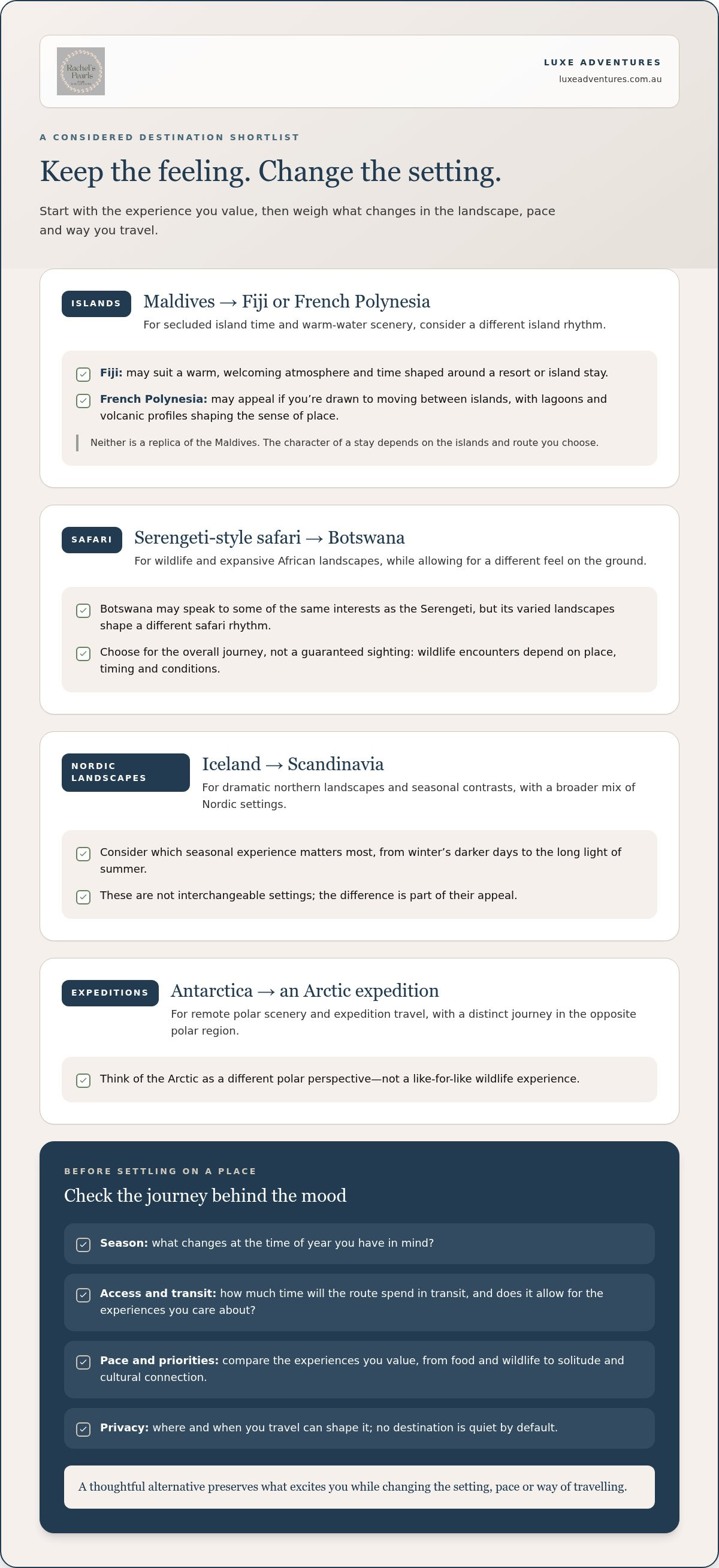
A useful comparison begins with the quality you want to carry into the journey, not a promise that another place will be the same. These pairings are starting points. Access, season and the style of experience can differ, even where the appeal feels familiar.
| Familiar favourite | Defining appeal | Considered alternatives |
|---|---|---|
| Maldives | Secluded island time and warm-water scenery | Fiji or French Polynesia |
| Serengeti-style safari | Wildlife and expansive African landscapes | Botswana, for a different landscape and safari rhythm |
| Iceland | Dramatic northern landscapes and seasonal contrasts | Scandinavia, for varied Nordic settings and experiences |
| Antarctica | Remote polar scenery and expedition travel | An Arctic expedition, a distinct journey in the opposite polar region |
Island escapes beyond the Maldives
Fiji and French Polynesia both invite a slower island journey, but the character of a stay depends on the islands and route you choose. Fiji may suit travellers seeking a warm, welcoming atmosphere and time shaped around a resort or island stay. French Polynesia may appeal if you’re drawn to moving between islands, with lagoons and volcanic profiles shaping the sense of place. Neither is a replica of the Maldives; each has its own pace and texture. For a closer look at Fiji, explore our Fiji resort journey options.
Polar and safari journeys beyond familiar names
If you’re drawn to the scale and remoteness of Antarctica, an Arctic expedition offers a different polar perspective, not a like-for-like wildlife experience. For safari, Botswana may speak to some of the same interests as the Serengeti, but its varied landscapes shape a different feel on the ground. Wildlife encounters depend on place, timing and conditions, so choose for the overall journey, not a guaranteed sighting.
Scandinavia can also offer a northern alternative to Iceland, particularly if you want to explore a broader mix of Nordic landscapes. The best fit depends on which seasonal experience matters to you, from winter’s darker days to the long light of summer. These are not interchangeable settings; that difference is part of their appeal. For more ideas, browse our African safari and Antarctica expedition inspiration.
The most useful alternatives to popular luxury destinations preserve what excites you while changing the setting, pace or way of travelling. A considered route might pair a wildlife journey with restorative time by the water, rather than trying to fit in another headline destination. If you’re weighing up which combination suits your priorities, shape a more personal journey around the experiences you value most.
How to compare alternatives to popular luxury destinations
A shortlist becomes more useful when you compare what a journey feels like, not just what it looks like. Similar coastlines or mountain views can conceal very different travel rhythms, levels of access and opportunities to connect with local culture. Use four lenses to weigh each option, then rank what matters most. This turns alternatives to popular luxury destinations into a personal decision, rather than a contest between glossy photographs.
- Atmosphere: Consider whether you want lively evenings, quiet surroundings, a sense of wilderness or a strong connection to local life.
- Access: Look at how the journey unfolds, including transfers and time spent moving between places. A remote setting may reward patience, but the route needs to suit your appetite for travel.
- Season: Check how the time of year could affect activities, access and the overall character of your stay.
- Experience: Decide what you most want to make room for, whether that’s wildlife, food, cultural encounters, solitude or restoration.
The right alternative is the one that fits your priorities, not the one that most closely resembles someone else’s favourite. Put your priorities in order. If solitude matters more than variety, for instance, a focused stay may suit you better than a route that changes setting every few days. Ranking your preferences also makes the trade-offs clearer: you can see what a destination offers, and what it asks you to compromise.
Match the destination to your pace and purpose
Some journeys are best suited to active exploration, with a full programme and frequent changes of scene. Others come into their own when there’s time between experiences: a slow morning, an unhurried meal, a chance to return to a place that caught your attention. Decide whether the trip is centred on wildlife, landscape, culture or restoration, then favour experiences that deepen that focus. For instance, remote coastal retreats like Los Buzos shape an entire stay around ocean adventures and offshore fishing rather than standard resort itineraries. A checklist can show what’s nearby; it can’t tell you how a day will feel.
Use timing as part of the comparison
Season is part of the destination, not a footnote. It can shape the activities available, the practicalities of getting around and the atmosphere you encounter. Before settling on an option, compare current seasonal patterns and travel conditions for your intended dates, using up-to-date destination guidance. Avoid assuming that a particular month guarantees ideal weather or fewer visitors. Conditions vary, and broad seasonal labels can conceal meaningful local differences.
Finally, picture an ordinary day in each place, not only its most dramatic moment. How much time will you spend travelling? Is there room for the experience you value most? That practical test often reveals whether a destination’s appeal will suit you beyond the first impression.
Plan a more considered journey beyond the usual luxury circuit
A destination shortlist is only the beginning. The next task is shaping a journey that feels connected, with enough time to settle into each place rather than collecting names on an itinerary. For Australian travellers, that can mean weighing the appeal of a long-haul journey against how much time is available to enjoy it once there. Put purpose first, then let the route support it.
Use this sequence to move from inspiration to a workable plan:
- Name the feeling. Write down what you want the journey to offer, such as quiet, discovery, wildlife or cultural connection.
- Shortlist places. Choose a small group of destinations that speak to that intention, rather than keeping every appealing option in play.
- Compare timing. Check current seasonal patterns, access and travel conditions for your preferred dates. These details can affect both the experience and the shape of the route.
- Shape the route. Consider how the places work together, where a slower stay belongs and what transitions the journey requires.
Turn a shortlist into a coherent itinerary
Resist the temptation to add another stop simply because it’s nearby on a map. A manageable number of places, with meaningful time in each, often gives a trip more texture than a rapid succession of check-ins. A journey might balance active exploration with a quieter setting for rest, or pair a landscape-focused stay with time spent engaging with local culture. Contrast can be rewarding, provided the transitions don’t dominate the experience.
Leave breathing room around changes of setting. Unstructured time makes space for an unexpected conversation, a return to a place you enjoyed or simply an afternoon without a plan. The itinerary should have shape, not a timetable for proving you were there.
Keep stewardship and local connection in view
Consider how your visit relates to the people and places that make it distinctive. Seek experiences that respect local perspectives, and look for clear, credible information about conservation when it’s relevant to your plans. The details vary by destination, so avoid relying on broad labels alone. Responsible travel is less about a reassuring phrase in a brochure and more about approaching a place with attention and care.
Thoughtful design can bring these choices together, from pacing and transitions to personally vetted experiences. If you’re ready to turn your shortlist into a journey shaped around your interests, start planning a personally designed itinerary. The best alternatives to popular luxury destinations aren’t just different places; they’re part of a route that makes sense for you.
Create your own alternative to the expected luxury escape
The most rewarding alternative doesn’t try to recreate a famous destination. It preserves the feeling you’re seeking, whether that’s space, discovery, time in nature or a stronger sense of connection, then finds a setting where that feeling can take a different shape. A new landscape may change the pace; a different style of stay—such as gathering friends and family at an exclusive private retreat like The Kanini Estate—may bring you closer to the experience you value. The aim isn’t novelty for its own sake. It’s a journey that feels considered and distinctly yours.
That’s where firsthand research and careful pacing make a difference. An attractive description can introduce a place, but it can’t convey every nuance of a stay or how one experience might sit alongside another. The best alternatives to popular luxury destinations emerge from looking beyond surface similarities to consider the full journey: what happens between highlights, where there’s room to pause and which experiences feel meaningful to you.
What personal travel design adds to the decision
A travel advisor can translate your preferences into a shortlist shaped around how you want to spend your time, rather than simply matching one destination name to another. Luxe Adventures’ travel advisors personally research destinations, hotels and expedition cruises, bringing informed perspective to the details that distinguish one experience from the next. That insight helps connect complementary places and shape an itinerary around your interests, season and preferred pace, with the focus on fit rather than fashion.
A considered next step
Begin with what you hope to feel and do. Is it quiet mornings, time among wildlife, a deeper understanding of local culture, or the contrast between wilderness and water? A few honest preferences can be more useful than a long list of destinations. From there, bespoke travel design can turn those priorities into a coherent route, with space for the journey to unfold.
Luxe Adventures creates personally vetted, bespoke journeys for travellers who want depth as well as comfort. If you’d like to explore how your preferred experiences might shape a more personal escape, share the journey you have in mind. A familiar feeling can lead somewhere unexpected, and sometimes that’s exactly the point.
Let your next journey take its own shape
A well-chosen alternative doesn’t need to be more remote, more fashionable or more dramatic. It needs to feel right for the way you want to travel now. Perhaps your priorities have shifted towards deeper cultural encounters, more time outdoors or a gentler pace between experiences. Let those preferences guide the destination, rather than asking your plans to follow someone else’s idea of the perfect escape.
The most compelling alternatives to popular luxury destinations often begin with a simple question: what would make this journey meaningful to you? The answer can change with the season of life, the people travelling with you and the time you have available. There’s no need to settle on a famous name before you know what you want the days to hold.
Luxe Adventures brings destination knowledge and tailored travel design to that decision, with dedicated industry accreditation and expert guidance. If you’re ready to give your ideas a sense of direction, share the journey you have in mind. Your next favourite place may be one you hadn’t thought to look for.
Frequently Asked Questions
What are good alternatives to popular luxury destinations?
Good alternatives depend on the experience you want. Namibia or Oman may appeal to travellers drawn to desert landscapes, while Puglia or Ischia offer a different setting for an Italian coastal escape. Treat these as starting points, then compare current access and travel conditions for your dates.
Is Fiji a good alternative to the Maldives?
Yes. Fiji may suit travellers seeking an island stay with resort time, warm-water activities and opportunities for cultural connection. Compare the specific islands, accommodation style and activities with the kind of holiday you have in mind. The two destinations offer distinct experiences, rather than interchangeable versions of the same trip.
Can I find a luxury alternative to an Iceland or Scandinavia trip?
Yes. Scandinavia can offer a broader Nordic journey if you’d like to explore beyond one country. Think about whether you prefer a focused landscape experience or a varied route, and check seasonal conditions for your dates, especially if northern lights are a priority.
Are alternatives to popular luxury destinations less crowded?
Not automatically. Visitor levels vary by location, season and attraction, so a less familiar destination may still be busy at particular times. Compare your dates and planned activities, and consider whether the places you’ll spend time in match your preference for privacy or a livelier atmosphere.
How do I choose between two luxury destination alternatives?
Imagine an ordinary day in each place. Which activities, surroundings and pace appeal most, and what would you be willing to miss? This practical comparison can clarify the choice more than hotel images alone. Check that the destination suits your priorities as well as your travel dates.
Can I combine alternative destinations in one luxury itinerary?
Yes, if the route and timing leave enough room to enjoy each place. A river cruise paired with time exploring on land can offer contrasting perspectives. Consider the transitions between stops and whether each addition brings a distinct experience, rather than simply adding more logistics.

Article by
Rachel Cleary
Rachel Cleary is the founder of Luxe Adventures and an endlessly curious explorer with a passion for meaningful, experience-led travel. Having visited every continent and travelled to more than 100 countries — and counting — she believes travel is one of the greatest educations for both children and adults alike.
Rachel is addicted to scuba diving and gets underwater at every opportunity. When she isn't in the office you'll find her exploring remote reefs in Fiji, drift diving in the Maldives, or scuba cruising Raja Ampat or French Polynesia.
Her second home is Fiji where she has explored all the island groups and has favourite boutique resorts she returns to every year, for the diving and the authentic Fijian hospitality.
Get her talking about kayaking in Antarctica or the Arctic, African safaris and where to find the highest density of big cats, underwater adventures, remote expedition destinations, or the science and magic behind the Northern Lights — including when and where they are most likely to dance — and you may be there a while.
Through Luxe Adventures, Rachel combines firsthand experience, global industry connections, and a deep appreciation for nature, culture, food, wildlife, and human connection to help curious travellers explore the world in a way that feels seamless, personal, and unforgettable.
Refined by experience. Defined by connection.
Disclaimer
The information in this article is intended as general travel inspiration and guidance only. Travel requirements, hotel standards, airline schedules, entry regulations, weather conditions, pricing, and experiences can change without notice.
While every effort is made to ensure accuracy at the time of publishing, Luxe Adventures recommends confirming all details relevant to your personal travel plans before booking or travelling.
Opinions, recommendations, and destination insights shared in this article are based on firsthand experience, industry knowledge, and research at the time of writing. Experiences may vary depending on season, supplier changes, local conditions, and individual travel preferences.
Some articles may reference luxury travel affiliations, preferred partner programs, or value-added amenities available through Luxe Adventures. Benefits and inclusions are always subject to availability and supplier terms at the time of booking.
Luxe Adventures strongly recommends comprehensive travel insurance for all international travel.
For personalised travel advice, tailored itinerary design, or the latest destination updates, please contact Luxe Adventures directly.


