
What makes the right tour safari Africa experience? Often, it isn’t the number of stops but the time and space to appreciate each place. Choosing can feel complicated: destinations offer different landscapes and wildlife experiences, while the pace, comfort and time spent travelling between them can shape the journey just as much as the map.
The answer isn’t to fit in more. It’s to find a safari style that suits the way you like to travel, whether that means settling into one remarkable region or thoughtfully combining contrasting landscapes. This guide explores how destination, pace and atmosphere influence a safari, with practical ways to compare your options without turning the trip into a checklist.
From the character of different regions to the balance between game viewing and time to absorb your surroundings, you’ll see what makes one route distinct from another. Luxe Adventures designs bespoke African safaris, bringing destination, accommodation and travel rhythm together around your interests. The aim is a cohesive journey, with each decision contributing to the experience you want.
Key Takeaways
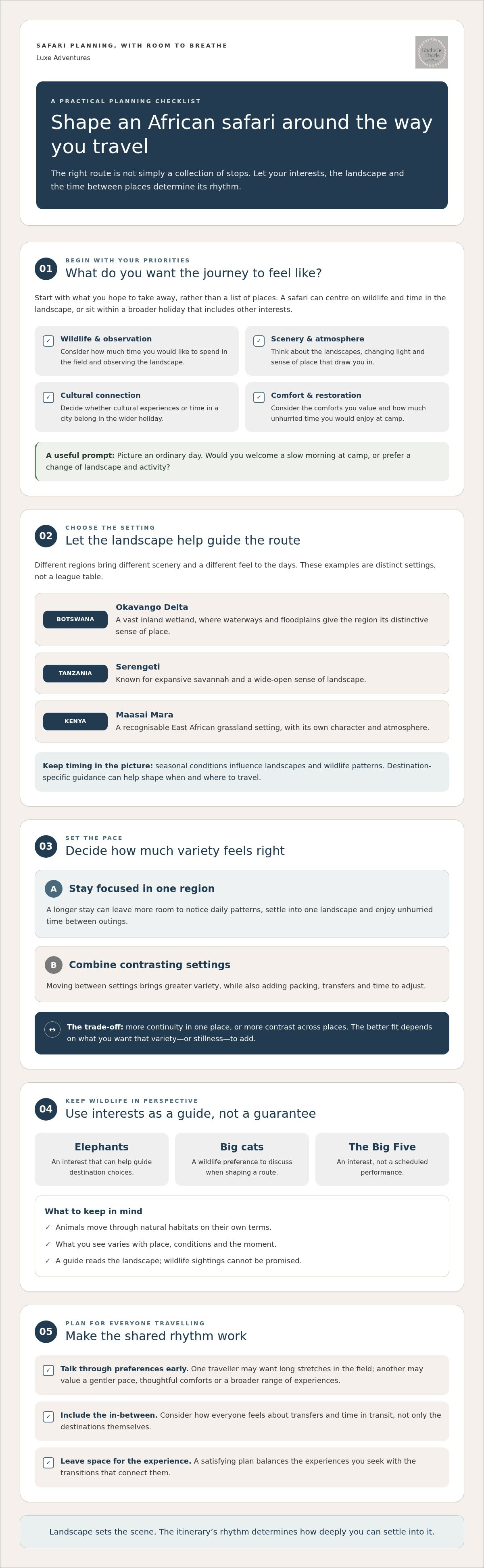
- Choose a tour safari Africa itinerary by starting with the wildlife, landscapes and atmosphere you most want to experience.
- Compare destinations for their distinct character; the Okavango Delta, Serengeti and Maasai Mara each offer a different sense of place.
- Weigh a focused, single-region safari against a broader multi-country route by considering pace, transitions and variety.
- Use a clear planning sequence to align your priorities, settings, pace and connections between destinations.
- Thoughtful safari design can bring route, accommodation and travel rhythm together around your preferences.
African safari tours begin with the experience you want
A safari brings together wildlife experiences, accommodation and travel between settings. The right itinerary depends on what draws you to Africa, how you like to spend your days, the comfort you value and how often you want to move. There’s no single template to follow, which is rather the point.
A safari-focused journey gives wildlife and time in the landscape the central role. A broader Africa holiday might combine a safari with other interests, such as cultural experiences or time in a city. Neither approach is inherently better. Ask what you want the journey to feel like, then consider how much variety you’ll enjoy before changing settings starts to feel like another task on the itinerary.
Destinations set the scene; the itinerary’s rhythm determines how deeply you can settle into it. A satisfying plan makes space for the experiences you’re seeking and the transitions that connect them.
What makes an African safari tour feel distinctive?
Landscape, wildlife and the atmosphere of camp work together. The changing light around camp, the anticipation of heading out with a guide and the quiet return at day’s end all contribute to a safari’s character. For a general introduction to the history and meaning of safari, see African Safari: An Overview.
A longer stay in one setting leaves more room to notice its daily patterns and enjoy unhurried time between outings. An itinerary that moves between several settings brings greater variety, but also more packing, transfers and adjustment. Consider which trade-off sounds more appealing. Wildlife sightings aren’t scheduled; the setting and pace shape the experience, but can’t promise what you’ll see.
Start with your reasons for travelling
Before settling on a route, consider what you most hope to take away: time observing wildlife, striking scenery, cultural connection, restorative comfort or a mix. Then picture an ordinary day. Would you welcome a slow morning at camp, or prefer a change of landscape and activity? Your answer can be more revealing than a list of places.
Companions matter, too. One traveller may want long stretches in the field; another may value a gentler pace, thoughtful comforts or a broader range of experiences. Talk through everyone’s preferences early, including how they feel about transfers and time in transit. The goal isn’t to make every moment suit every person. It’s to shape a shared journey with enough balance for everyone to enjoy it.
African safari destinations offer different landscapes and wildlife rhythms
Africa isn’t one safari setting with different names on the map. Wetlands, open grasslands and other varied regional landscapes each bring their own atmosphere, shape the way days unfold and influence how much time is spent travelling between experiences. Choosing a destination is less about finding a universal favourite and more about deciding which setting speaks to you.
The landscape doesn’t just frame a safari; it helps determine the pace and character of the experience. That’s why a thoughtful tour safari Africa itinerary considers what you want to feel and observe, not simply how many countries it can include.
How landscape can guide your safari route
The Okavango Delta in Botswana is a vast inland wetland, with waterways and floodplains giving the region a distinctive sense of place. The Serengeti in Tanzania is known for expansive savannah, while the Maasai Mara in Kenya offers another recognisable East African grassland setting. These are examples, not a league table: each can shape a different balance of wildlife time, scenery and movement.
Consider whether you’re drawn to water and open horizons, or to a route with contrasting landscapes. A single region may allow more time to settle into its surroundings; combining settings can broaden the experience, while adding transitions. Seasonal conditions also influence landscapes and wildlife patterns, so destination-specific guidance should inform the timing and shape of a route.
Choose wildlife interests without treating sightings as guaranteed
Perhaps you’re interested in elephants, big cats or the Big Five. Those interests can help guide destination choices, but they can’t turn wildlife into a scheduled performance. Animals move through natural habitats on their own terms, and what’s seen varies with place, conditions and the moment. Even an expert guide reads a landscape; they don’t control it.
Rather than building the entire route around a checklist, think about the wider experience you’d value: changing light across grassland, the quiet of camp between outings, or the chance to understand a landscape through time and observation. That perspective can make a safari rewarding even when a particular animal stays out of view. It also gives the itinerary room to reflect your interests without relying on a promised encounter.
To bring the landscapes and wildlife that interest you together with a comfortable travel rhythm, you can share your safari preferences with Luxe Adventures.
Compare African safari tour styles by pace, comfort and sense of place
A safari’s shape is more than a line between camps. The number of settings, time spent in each and character of the accommodation all affect how the days feel. A focused regional journey can offer room to settle into one landscape; a multi-country route can introduce greater contrast. The better fit depends on what you want that contrast, or continuity, to add.
Focused, single-region journey
Pace: Often more settled, with fewer changes of base.
Time in each setting: More opportunity to become familiar with one area.
Variety: A deeper experience of a particular region and its atmosphere.
Broader, multi-country route
Pace: More movement between destinations and travel transitions.
Time in each setting: Divided across different regions.
Variety: Greater contrast in landscapes and the character of each stay.
A focused safari versus a multi-country itinerary
Staying within one region may suit travellers who value depth and a consistent rhythm. A multi-country route can make sense when the differences between settings are central to the experience, not simply additions to the map. Each extra stop brings a transition, so it should add a clear new perspective or interest. The aim isn’t to maximise the itinerary; it’s to make each move earn its place.
Comfort is part of that rhythm. A long transfer can make a change of setting feel more consequential, while a well-considered sequence can help the journey flow. When weighing options, look beyond destination names and consider how arrival, time at camp and onward travel work together. A tour safari Africa plan should feel coherent from one stay to the next, rather than like separate pieces assembled because they were available.
What comfort means beyond the accommodation name
A property’s name or category can’t tell you everything about how it will feel to stay there. Consider its atmosphere, location, service and relationship to the surrounding landscape. Some travellers prize a quiet sense of retreat; others may prefer a setting that keeps the day’s activities close at hand. Neither preference is more refined. Comfort is personal, and the best choice supports the way you want to experience a place.
Think about each stay as part of a sequence. Does it offer a different mood from the previous stop, or reinforce the kind of experience you’re seeking? Does its location make sense for the route, or does reaching it add movement without much return? These are useful questions when comparing an itinerary, especially when accommodation choices look equally appealing on paper.
The most rewarding safari isn’t necessarily the one with the greatest number of stops. A well-shaped route gives each setting time to matter, each transition a purpose and each stay a role in the larger experience.
Plan an African safari tour around timing, transitions and travel style
A well-shaped safari begins with preferences, then lets the practical details support them. Timing affects the conditions you may encounter, while the order of destinations influences how much of the trip is spent arriving, settling in and moving on. A considered tour safari Africa itinerary makes these choices together, rather than treating each booking as a separate decision.
Set priorities before choosing the route
Start by asking what you most want to feel, see and spend time doing. Is the draw wildlife observation, dramatic scenery, cultural connection, quiet comfort or a thoughtful mix? Consider your companions’ preferences too, including their appetite for transfers and how much stillness they enjoy. Then turn your answers into a short brief: the experiences that matter most, the pace you prefer and what you’re happy to leave out.
- Define priorities. Describe the moments and atmosphere you hope the journey will make space for.
- Select settings. Choose regions that support those interests, rather than collecting destinations for their names alone.
- Shape the pace. Decide where you’d like to linger and where a change of scenery adds real value.
- Refine transitions. Review how arrivals, onward travel and rest fit into the sequence.
Season and regional conditions matter because landscapes and wildlife patterns change over time. The best timing depends on the specific destinations and experiences in your plan, so use current, destination-specific guidance when making decisions. Avoid assuming that one calendar window works equally well across different regions. A travel designer can bring these factors together with accommodation and the rhythm you prefer.
Make every transition earn its place
Transfers take time and energy, even when they’re necessary to reach a new landscape. A coherent route considers what each move adds, how it fits with the arrival before it and whether there’s enough breathing room to enjoy the next setting. Rest matters, too: arriving late and departing early can make an appealing stay feel like little more than a bed between journeys.
Think of the trip as a connected experience, not a string of reservations. A bespoke itinerary can account for personal priorities while giving each transition a reason to be there. For a deeper look at the role thoughtful planning can play, read this guide to bespoke travel design.
If you’re ready to turn your preferences into a considered safari plan, share your travel ideas with Luxe Adventures.
Shape a bespoke African safari with Luxe Adventures
Luxe Adventures is a boutique travel design studio specialising in African safaris. Planning starts with your priorities, then considers how destination, accommodation and the connections between stays can work together. The result is an individually designed journey, rather than a ready-made route with a few details changed at the edges.
What personal curation brings to the planning
Personal curation helps turn preferences into decisions. If privacy matters more than variety, for instance, that can shape how many settings the itinerary includes. If a particular atmosphere or style of accommodation appeals, it can help guide where to stay and how the route unfolds. The value lies in weighing those choices together, so each has a clear purpose.
Luxe Adventures brings deep industry expertise and dedicated travel design to every tour safari africa experience. These professional strengths complement the studio’s travel design work, while the itinerary itself remains centred on your needs. No credential can promise a particular wildlife encounter; considered planning can make the experience more coherent and personal.
A considered next step for your safari
Start with the details that matter to you: the experiences you’re drawn to, the pace you prefer, the accommodation atmosphere you enjoy and who’ll be travelling alongside you. You don’t need a finished route. A few clear preferences can give the planning a useful direction.
For more perspective on shaping an individual safari, explore this guide to bespoke African safaris. When you’re ready, begin a conversation about your safari and share what you’d like the journey to make room for.
Let your safari take shape around what matters
The most meaningful next step isn’t choosing every detail at once. It’s finding the thread that will make the journey feel like yours: a particular landscape, a wish for unhurried days, or the balance of wildlife and cultural connection you’d like to experience. From that starting point, the right route can take shape without turning every possibility into a stop.
A thoughtfully designed tour safari africa journey leaves room for both intention and discovery. You can begin with a clear preference, even if the finer details are still taking shape. The planning conversation can help reveal what belongs in the itinerary, what can wait and where a little more space might make all the difference.
If you’re ready to explore the possibilities, outline the African safari you have in mind. A few early thoughts are a good place to begin, and the journey can grow from there.
Frequently Asked Questions
Is an African safari tour suitable for a first-time visitor to Africa?
Yes. A first visit can be designed around your comfort with travel, interests and preferred pace. You might focus on one region and allow time to adjust after the journey from Australia.
Can I combine an African safari with time at the beach?
Yes, provided the destinations and connections fit your available time. A safari in Tanzania, for instance, may be paired with a beach stay in Zanzibar. Allow time for the travel between them.
How much time should I allow for an African safari?
It depends on the regions you plan to visit and whether you’re adding other experiences. Factor in international travel and recovery, then leave enough time to enjoy each stay without rushing between settings.
Are wildlife sightings guaranteed on an African safari?
No. Wildlife moves according to natural conditions, so specific sightings can’t be promised. Guides use their knowledge of the area, but the landscape and its quieter details are part of the experience, too.
What does a luxury African safari tour usually include?
Inclusions vary, but may cover accommodation, guiding, safari activities, meals and transport between settings. Review what’s included and excluded in your itinerary so you understand how each part is arranged.
Can an African safari itinerary be tailored to my interests?
Yes. A bespoke itinerary can reflect your interests, pace, accommodation preferences and travel companions. Share what you’d like more time for, such as photography or cultural experiences, and what you’d prefer to leave out.
Is a multi-country African safari better than staying in one region?
Neither is inherently better. Multiple countries can add variety but require more transitions; one region may offer a simpler, more settled journey. Choose based on what each option adds to your experience.

Article by
Rachel Cleary
Rachel Cleary is the founder of Luxe Adventures and an endlessly curious explorer with a passion for meaningful, experience-led travel. Having visited every continent and travelled to more than 100 countries — and counting — she believes travel is one of the greatest educations for both children and adults alike.
Rachel is addicted to scuba diving and gets underwater at every opportunity. When she isn't in the office you'll find her exploring remote reefs in Fiji, drift diving in the Maldives, or scuba cruising Raja Ampat or French Polynesia.
Her second home is Fiji where she has explored all the island groups and has favourite boutique resorts she returns to every year, for the diving and the authentic Fijian hospitality.
Get her talking about kayaking in Antarctica or the Arctic, African safaris and where to find the highest density of big cats, underwater adventures, remote expedition destinations, or the science and magic behind the Northern Lights — including when and where they are most likely to dance — and you may be there a while.
Through Luxe Adventures, Rachel combines firsthand experience, global industry connections, and a deep appreciation for nature, culture, food, wildlife, and human connection to help curious travellers explore the world in a way that feels seamless, personal, and unforgettable.
Refined by experience. Defined by connection.
Disclaimer
The information in this article is intended as general travel inspiration and guidance only. Travel requirements, hotel standards, airline schedules, entry regulations, weather conditions, pricing, and experiences can change without notice.
While every effort is made to ensure accuracy at the time of publishing, Luxe Adventures recommends confirming all details relevant to your personal travel plans before booking or travelling.
Opinions, recommendations, and destination insights shared in this article are based on firsthand experience, industry knowledge, and research at the time of writing. Experiences may vary depending on season, supplier changes, local conditions, and individual travel preferences.
Some articles may reference luxury travel affiliations, preferred partner programs, or value-added amenities available through Luxe Adventures. Benefits and inclusions are always subject to availability and supplier terms at the time of booking.
Luxe Adventures strongly recommends comprehensive travel insurance for all international travel.
For personalised travel advice, tailored itinerary design, or the latest destination updates, please contact Luxe Adventures directly.


