
The heaviest coat in your wardrobe is almost certainly the wrong choice for the Great White Continent. While it's instinctive to pack for a permanent blizzard, the secret to mastering the Seventh Continent lies in the quiet sophistication of technical layering rather than sheer bulk. Deciding what to pack for antarctica cruise in 2026 requires a shift in perspective; it's an exercise in intentionality where high-performance fabrics meet a refined expedition aesthetic.
I know the quiet hum of uncertainty that precedes a journey across the Drake Passage, particularly when trying to reconcile rugged outdoor gear with the polished atmosphere of a luxury ship. You shouldn't have to choose between staying dry on a Zodiac and looking composed at dinner. This guide offers a vetted, experience-led checklist that balances the latest 2026 IAATO biosecurity regulations with the comfort you expect. We'll delve into the specific "why" behind every fabric choice, from merino wool foundations to the new satellite tech essentials, ensuring you step onto the ice with absolute confidence and style.
Key Takeaways
- Master the three-layer system to manage moisture and maintain core warmth without the unnecessary bulk of traditional winter coats.
- Learn exactly what to pack for antarctica cruise landings, specifically why truly waterproof trousers are non-negotiable for wet Zodiac arrivals.
- Navigate the "Expedition Casual" dress code to ensure your shipboard attire remains polished and comfortable during evening briefings and captain's dinners.
- Prepare for the 2026 biosecurity protocols, ensuring your wardrobe is "Antarctica Clean" to meet updated IAATO stewardship standards.
- Identify the essential technology, from personal Leica optics to the latest satellite communicators, that will elevate your sensory experience of the ice.
The Philosophy of Polar Layering: More Than Just Warmth
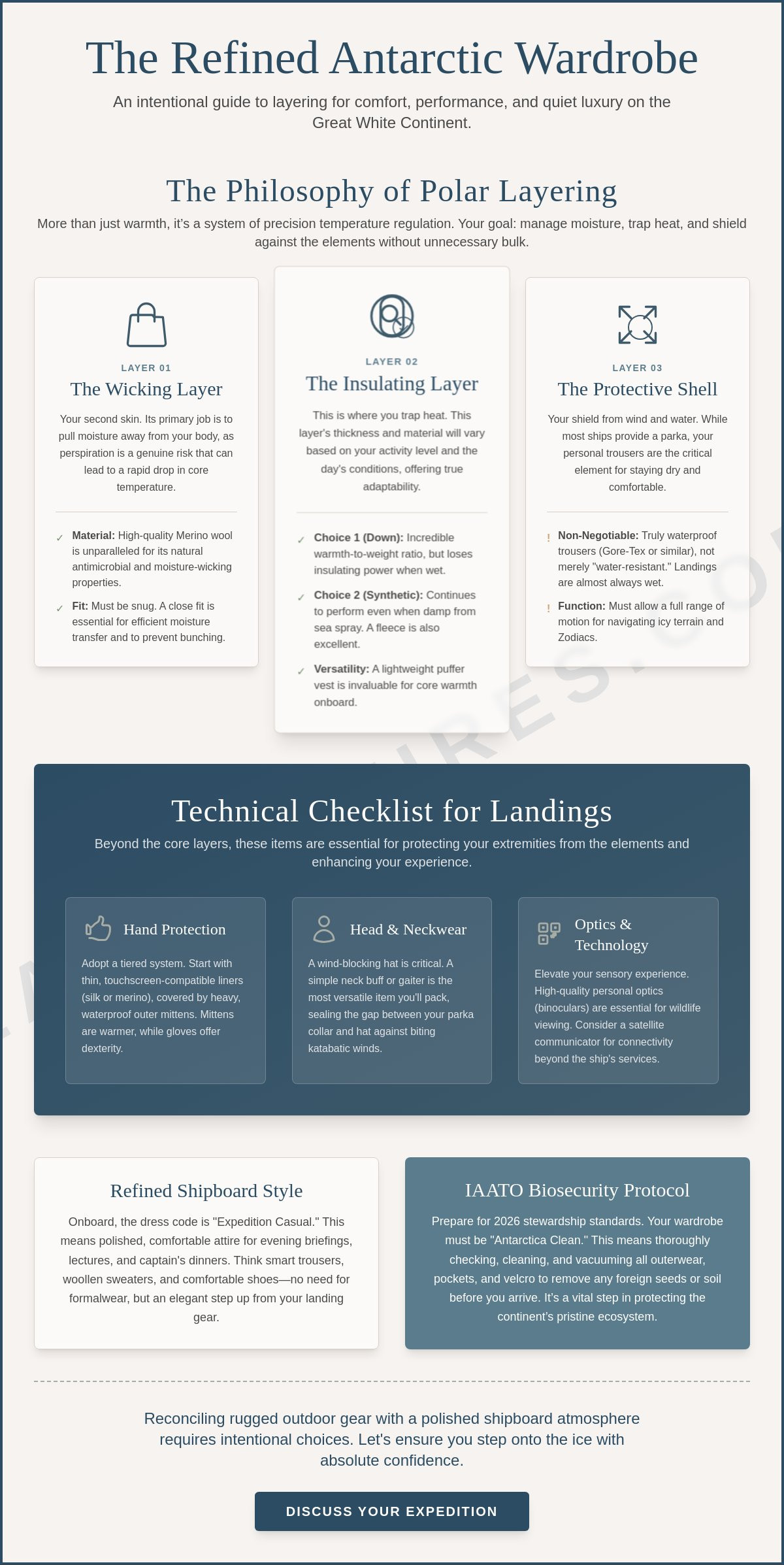
The secret to staying comfortable at the edge of the world isn't a single, heavy garment. It's a system. When considering what to pack for antarctica cruise expeditions, the concept of the polar layering system is your most vital asset. This isn't merely about warmth; it's about the precision of temperature regulation. In the polar regions, your activity levels fluctuate wildly. One moment you're hiking a snowy ridge on Cuverville Island, and the next you're sitting perfectly still in a Zodiac, watching a humpback whale breach. A rigid, bulky coat cannot adapt to these shifts, but a curated system of layers can.
Moisture is your silent adversary. While it sounds counterintuitive, sweating is a genuine risk in sub-zero temperatures. If your clothing traps perspiration against your skin, that moisture will eventually cool, leading to a rapid drop in core body temperature. High-performance, lightweight fabrics allow your body to breathe while trapping pockets of warm air between layers. This approach provides a sensory lightness that heavy woollen overcoats simply can't match. For many Australians, our domestic winter wardrobe revolves around style over technical performance. While your favourite cashmere sweater is lovely for a Melbourne afternoon, an Antarctic journey requires an upgrade to materials that actively manage your microclimate.
The Wicking Layer: Your Second Skin
The foundation of your wardrobe should be high-quality Merino wool. As Australians, we're fortunate to have access to some of the world's finest woollen tech, and it remains the undisputed king of base layers. Merino is naturally antimicrobial, meaning it won't retain odours after a long day of exploration, and it excels at pulling moisture away from the skin. If you have sensitive skin, modern synthetic liners offer a smooth alternative, though they lack the natural thermal regulation of wool. Ensure these pieces fit snugly. A close fit is essential for efficient moisture transfer and ensures that your circulation isn't restricted by bunching fabric.
The Mid-Layer: Regulating the Core
This is where you trap the heat. When deciding what to pack for antarctica cruise landings, you'll need to choose between down and synthetic insulation. Down offers an incredible warmth-to-weight ratio and feels like a cloud, but it loses its insulating power if it gets wet. Synthetic insulation, while slightly bulkier, continues to perform even when damp from sea spray. A mid-weight fleece is also an excellent companion for higher-intensity walks. Onboard the ship, a lightweight puffer vest is often the most versatile piece you'll own, providing just enough core warmth for a quick dash onto the observation deck when a pod of Orcas is spotted.
The Technical Checklist: Essential Gear for Landings
Landings in Antarctica are almost always "wet," meaning you'll step out of a Zodiac into calf-deep icy water. This reality dictates your technical choices. While your ship will likely provide a heavy-duty parka, it's often a shell designed for durability. You're responsible for the warmth beneath it. When refining your list of what to pack for antarctica cruise excursions, prioritise a high-quality pair of waterproof trousers. Generic "water-resistant" ski pants won't suffice here. Look for Gore-Tex or a similar membrane with a high hydrostatic head rating. If water can seep through during a ten-minute ride on a spray-lashed Zodiac, your afternoon on land is effectively over.
The UK Antarctic Heritage Trust packing list is an excellent resource for cross-referencing these essentials. Beyond the trousers, consider the mechanics of your movements. You need gear that allows for a full range of motion as you navigate slippery cobbles and icy slopes. If you're still weighing up which expedition vessel offers the best gear inclusive packages, I'm always happy to discuss the nuances of different operators to find your perfect fit.
Protecting the Extremities
Your hands are your primary tools for photography, yet they're the first to feel the bite of the katabatic winds. A tiered system is the only logical solution. Start with a thin, touchscreen-compatible liner in silk or merino. Over these, wear a heavy, waterproof mitten or glove. Mittens are warmer because they allow your fingers to share heat, but gloves offer better dexterity for adjusting binoculars. Don't forget a neck buff. It's a simple tube of fabric, but it's the most versatile item you'll pack, sealing the gap between your parka and your hat. Headwear must block the wind; an insulated beanie that covers your ears is non-negotiable for the open-air Zodiac transits.
Socks and Foot Health
The "two-pair" rule is the gold standard for polar foot health. A thin liner sock helps wick moisture away, while a thick, wool-blend expedition sock provides the cushion and warmth. Never wear cotton. It absorbs moisture, loses its shape, and stays cold. When trying on your socks, ensure they don't make your boots too tight. Air is the actual insulator; if your feet are compressed, the blood flow is restricted and you'll be cold regardless of the sock's thickness. This balance of insulation and space is what defines a successful day on the ice.
Refined Shipboard Style: Comfort Meets Quiet Luxury
Stepping back through the mudroom and shedding your technical layers is a ritual of restoration. Determining what to pack for antarctica cruise voyages often focuses heavily on the ice, but the hours spent within the sanctuary of the ship deserve equal consideration. Modern expedition vessels are masterpieces of design, offering an environment that is sophisticated yet fundamentally grounded. The prevailing dress code is "Expedition Casual." It isn't about formality; it's about a curated ease that respects the environment while valuing the social rhythm of the voyage. You'll want pieces that feel as appropriate for a scientific lecture in the theatre as they do for a glass of wine in the observation lounge.
The evening transition is subtle. While you won't see black ties or evening gowns, there is a collective move toward a more polished silhouette for the captain’s dinner or farewell drinks. A crisp tailored shirt, a fine knit, or a structured blazer provides the right note of intentionality. For women, elegant separates or a knit midi dress offer the perfect balance of warmth and style. Footwear on deck requires a cautious approach. While the ship's interior is stable, the outer decks can be damp or icy. Choose shoes with a reliable rubber sole that don't compromise your aesthetic. Loafers with grip or refined leather sneakers are excellent choices for moving between the lounge and the library.
The Onboard Palette
- Cohesive Tones: Stick to a palette of neutrals like navy, slate, cream, and charcoal. This allows for effortless mixing and matching, ensuring you never feel underdressed or overpacked.
- Tactile Comfort: Prioritise textures that feel indulgent against the skin after a day in rugged synthetics. Cashmere sweaters, silk-blend wraps, and fine-gauge wool knits provide warmth without the bulk.
- Elevated Loungewear: High-end loungewear is the secret to a relaxed experience. It's perfect for those early mornings spent on your private balcony with a coffee, watching the first icebergs glide past.
Practical Ship Essentials
The wellness spaces are a vital part of the polar experience. You'll need swimwear for the heated outdoor pools and the sauna, but also for the iconic polar plunge if you're feeling particularly brave. Most guests find that bringing two swimsuits is wise, allowing one to dry while the other is in use. Don't forget lightweight indoor shoes or slippers; getting out of your heavy expedition boots is the first thing you'll want to do upon returning to your suite. If you plan to maintain your fitness routine during sea days on the Drake Passage, a set of breathable gym attire is essential for the onboard fitness centre, which often boasts some of the best views on the ship.
Optics and Tech: Capturing the Sensory Expedition
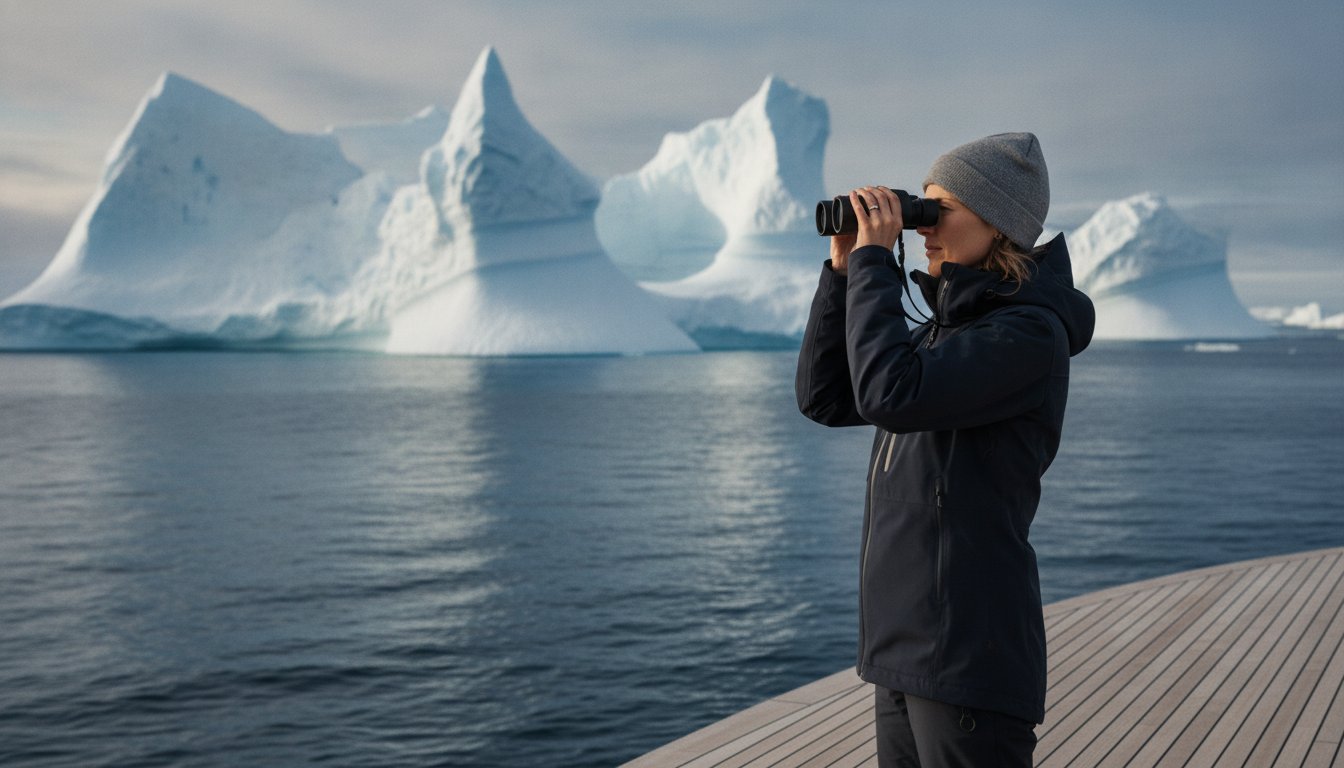
The scale of the Antarctic landscape is famously difficult to comprehend. To truly bridge the distance between the ship's rail and a leopard seal on an ice floe, your choice of optics is paramount. While some vessels provide loaner binoculars, they rarely match the clarity of a personal pair of Leica or Swarovski optics. High-end glass doesn't just zoom; it renders the world with a luminous fidelity that reveals the subtle textures of ice and the nuanced blues of the Southern Ocean. It's an investment in your own perception that pays dividends during every hour spent on the observation deck.
Refining your selection of what to pack for antarctica cruise photography requires a focus on weight and utility. Enthusiasts often carry two bodies to avoid changing lenses in the salt spray, while amateurs might find a high-quality bridge camera or even a recent-model smartphone more than sufficient. Regardless of your choice, battery management is a critical science. Lithium-ion batteries drain significantly faster in sub-zero temperatures. Keep your spares in an internal pocket, close to your body heat, and only swap them when absolutely necessary. If you're unsure which camera system will best capture your specific itinerary, I can help you curate your expedition kit list based on my own field experience.
The Essential Accessory Kit
The Antarctic sun is a formidable presence. With 24-hour daylight and the reflective power of the snow, the UV intensity often exceeds what we experience during an Australian summer. Quality polarised sunglasses are essential to prevent snow blindness and eye fatigue. Complement this with a high-SPF lip balm and sunscreen; the dry polar air is remarkably efficient at chapping skin. For your electronics, a rugged dry bag is your most important insurance policy. Salt spray is corrosive, and a single splash during a Zodiac transfer can end a camera's life. A 10-to-15 litre bag is usually the ideal size for a camera body and a spare lens.
Capturing the Wildlife
Your choice of lens will define your gallery. A versatile 100-400mm lens is the goldilocks choice for most, offering enough reach for distant whales without the cumbersome weight of a prime telephoto. For those using smartphones, a simple tether or lanyard is a critical safety item. It's surprisingly easy to lose your grip while leaning over the side of a Zodiac to capture a perfect reflection. To understand the behaviours you'll be documenting, refer to our guide on Antarctica wildlife viewing. Seeing a penguin is one thing; knowing why it's porpoising through the water adds a profound layer of meaning to every frame you take.
Logistics and the Gateway Transition
The transition to the ice is often marked by a sharp climatic whiplash. Most travellers begin their journey in the vibrant, spring warmth of Buenos Aires or Santiago, where temperatures frequently hover around 25 degrees. Reconciling this with the sub-zero reality of the South Shetland Islands is a logistical puzzle. Your strategy for what to pack for antarctica cruise departures should include a dedicated "gateway outfit" that is breathable and sophisticated enough for a late dinner in Palermo, yet easily stowed once you board your charter flight to Ushuaia or Punta Arenas.
Luggage choice is equally strategic. While a structured hard-shell suitcase offers protection, a high-quality, water-resistant soft-sided duffel is the preferred choice of seasoned expeditioners. Space in expedition cabins is premium; a soft bag can be compressed and tucked away under a bed or in a wardrobe, whereas a rigid case often becomes a permanent obstacle in your living space. For the Drake Passage, keep a small "reach kit" accessible. This should include your preferred motion-sickness remedies, a pair of comfortable slip-on shoes, and a light fleece. The Southern Ocean is unpredictable, and having these essentials at hand ensures you remain composed regardless of the sea state.
Biosecurity and Stewardship
Antarctica is one of the last pristine wildernesses, and our presence there requires a commitment to rigorous stewardship. Before you even set foot on the ship, your gear must be "Antarctica Clean." This means meticulously vacuuming every pocket, cuff, and Velcro strip of your technical clothing to remove seeds or organic matter. IAATO guidelines are stringent for a reason; we are guests in a fragile ecosystem. This focus on impact is precisely why Luxe Adventures advocates for small ship expedition cruises, which naturally facilitate more intimate exploration while maintaining a smaller environmental footprint.
The Final Polish
The most critical item in your luggage isn't physical gear, but comprehensive travel insurance. Most operators require a minimum of $100,000 for emergency medical evacuation, a figure that reflects the complexity of polar logistics. Beyond the big-ticket items, don't overlook the small comforts that define a journey's ease. High-fidelity earplugs are essential for masking the hum of the ship's engines, and a contoured eye mask is a necessity for sleeping through the 24-hour austral summer light. If you are ready to move from the checklist to the cabin, I invite you to begin planning a trip to Antarctica with our team, ensuring every detail of your 2026 departure is as refined as the destination itself.
Stepping onto the Seventh Continent with Confidence
Mastering the art of polar packing is about more than simply enduring the cold; it's about the intentionality of your experience. By prioritising a technical layering system, respecting biosecurity protocols, and curating a shipboard wardrobe that reflects quiet luxury, you ensure your focus remains exactly where it should be: on the breathtaking scale of the ice. Understanding exactly what to pack for antarctica cruise expeditions allows you to transition seamlessly from a spray-lashed Zodiac to a refined evening briefing without a second thought.
As a CLIA Master and Virtuoso Member, I personally vet our expedition partners to ensure they meet the highest standards of service and stewardship. We specialise in small ship luxury cruising, where the connection to the destination is as profound as the comfort of the vessel. We're here to translate our first-hand insights into a journey that's as meticulously planned as it is transformative. Let us curate your perfect Polar expedition. Contact Luxe Adventures today.
The White Continent is waiting for you. Step forward with the confidence that only experience can provide.
Frequently Asked Questions
Do I need to buy a heavy polar parka before I leave Australia?
No, you generally don't need to purchase your own heavy outer shell. Most luxury expedition ships provide a high-performance parka specifically designed for the Antarctic climate, often as a gift for you to keep. Your focus should remain on the technical base and mid-layers that sit beneath this shell. These personal layers are what truly manage your body temperature and moisture during active landings.
What kind of footwear is best for walking on the ship’s deck?
Choose closed-toe shoes with reliable, non-slip rubber soles. While the ship's interior is a sanctuary of stability, the outer observation decks can become damp from sea spray or light snow. A pair of refined leather sneakers or sturdy loafers with excellent grip will allow you to move safely between the lounge and the railing when a whale is spotted, all while maintaining a polished aesthetic.
How many pairs of socks should I realistically pack for a 10-day cruise?
Pack at least six pairs of thick wool-blend expedition socks and a matching number of thin liners. This allows for a fresh change every second day, or more frequently if you find your feet sweating during long hikes. When deciding what to pack for antarctica cruise excursions, remember that dry feet are warm feet. Having an ample supply ensures you never have to pull on a damp pair.
Is it necessary to bring formal wear for dinners on a luxury expedition cruise?
No, formal wear like tuxedos or evening gowns is not required in the polar regions. The atmosphere on a luxury expedition ship is one of "Expedition Casual." Polished separates, such as a fine cashmere knit, a tailored shirt, or smart trousers, are perfectly appropriate for the captain's dinner. The focus remains on shared discovery and comfort rather than the rigid dress codes of traditional cruising.
Can I use my regular Australian ski jacket for Antarctica landings?
Probably not, as most Australian ski jackets are designed for drier, alpine conditions rather than the maritime Antarctic environment. Zodiac landings involve significant exposure to salt spray and wind, requiring a shell with a high waterproof rating. Additionally, any personal gear must be meticulously cleaned of seeds and organic matter to meet strict IAATO biosecurity standards before you are permitted to go ashore.
What is the best way to protect my camera from salt spray and cold?
Utilise a dedicated dry bag for every Zodiac transfer and keep your spare batteries in an inner pocket close to your body. Salt spray is remarkably corrosive to sensitive electronics, and a single splash can be terminal for a camera. Body heat is also essential for maintaining lithium-ion battery life, which can drop by half in the sub-zero temperatures of the Seventh Continent.
Are there laundry services available on small ship expedition cruises?
Yes, almost all luxury expedition vessels offer professional laundry services to their guests. This is a vital consideration for those who wish to avoid overpacking. Knowing you can have your woollen base layers and mid-layers laundered mid-voyage allows you to bring fewer items and travel more lightly. It's a practical luxury that simplifies the logistics of your journey across the Drake Passage.
What should I pack for the 24-hour daylight "Midnight Sun" conditions?
Pack a high-quality, contoured eye mask and category 3 or 4 polarised sunglasses. The persistent daylight of the austral summer can easily disrupt your circadian rhythm, making a total blackout mask essential for a restful night's sleep. Your list of what to pack for antarctica cruise essentials must include superior eye protection to prevent strain and snow blindness caused by the intense UV glare reflecting off the ice.

Article by
Rachel Cleary
Rachel Cleary is the founder of Luxe Adventures and an endlessly curious explorer with a passion for meaningful, experience-led travel. Having visited every continent and travelled to more than 100 countries — and counting — she believes travel is one of the greatest educations for both children and adults alike.
Rachel is addicted to scuba diving and gets underwater at every opportunity. When she isn't in the office you'll find her exploring remote reefs in Fiji, drift diving in the Maldives, or scuba cruising Raja Ampat or French Polynesia.
Her second home is Fiji where she has explored all the island groups and has favourite boutique resorts she returns to every year, for the diving and the authentic Fijian hospitality.
Get her talking about kayaking in Antarctica or the Arctic, African safaris and where to find the highest density of big cats, underwater adventures, remote expedition destinations, or the science and magic behind the Northern Lights — including when and where they are most likely to dance — and you may be there a while.
Through Luxe Adventures, Rachel combines firsthand experience, global industry connections, and a deep appreciation for nature, culture, food, wildlife, and human connection to help curious travellers explore the world in a way that feels seamless, personal, and unforgettable.
Refined by experience. Defined by connection.
Disclaimer
The information in this article is intended as general travel inspiration and guidance only. Travel requirements, hotel standards, airline schedules, entry regulations, weather conditions, pricing, and experiences can change without notice.
While every effort is made to ensure accuracy at the time of publishing, Luxe Adventures recommends confirming all details relevant to your personal travel plans before booking or travelling.
Opinions, recommendations, and destination insights shared in this article are based on firsthand experience, industry knowledge, and research at the time of writing. Experiences may vary depending on season, supplier changes, local conditions, and individual travel preferences.
Some articles may reference luxury travel affiliations, preferred partner programs, or value-added amenities available through Luxe Adventures. Benefits and inclusions are always subject to availability and supplier terms at the time of booking.
Luxe Adventures strongly recommends comprehensive travel insurance for all international travel.
For personalised travel advice, tailored itinerary design, or the latest destination updates, please contact Luxe Adventures directly.


