
The Okavango Delta is not a destination you simply visit; it is a living, breathing masterpiece that rewrites its own geography every season. For the discerning traveller, the challenge isn't merely reaching Botswana, but synchronising an Okavango Delta safari with the delta's temperamental pulse. You likely suspect that a generic, one-size-fits-all itinerary is the quickest way to miss the quiet soul of this landscape. Between the shifting flood cycles and the complex web of private concessions, the fear of choosing the wrong camp at the wrong time is a valid concern. This guide is designed to replace that anxiety with the certainty of a masterclass.
We'll explore how to navigate this wilderness with the precision of an insider, ensuring your journey is defined by exclusive wildlife encounters and a deep, unhurried connection to the land. I'll share the nuances of the 2026 high-water season and how to select a concession that aligns with your specific interests. We are moving beyond the surface to discover the textures of a truly curated escape, where luxury is felt in the silence of a mokoro glide rather than the volume of a crowd.
Key Takeaways
- Understand the counter-intuitive flood cycle to ensure you witness the Delta’s peak transformation when the desert truly meets the water.
- Discern the critical differences between national parks and private concessions to secure the exclusivity of night drives and off-road wildlife viewing.
- Learn why silent, water-based exploration via mokoro is essential for a deep, sensory connection that traditional vehicle safaris cannot replicate.
- Master the art of planning an Okavango Delta safari by leveraging expert insights to navigate the region’s complex seasonal shifts and concession systems.
- Discover how a bespoke travel designer mitigates the logistical risks of remote travel, ensuring every detail of your journey is refined by firsthand experience.
The Soul of the Delta: Understanding Botswana’s Liquid Heart
Geologically, the Okavango Delta is a profound anomaly. It is an endorheic basin where the Okavango River, instead of seeking the ocean, spills its lifeblood into the thirsty Kalahari Desert. This creates a vast, alluvial fan that defies the arid logic of the surrounding landscape. It's a place where parched earth is resurrected by water that has travelled over a thousand kilometres from the Angolan Highlands. The atmosphere is one of profound, unhurried abundance. You don't just see the delta; you experience it through every sense. The air carries the sharp, clean scent of wild sage. The evening is soundtracked by the metallic, rhythmic tinkling of millions of tiny reed frogs.
Its status as a UNESCO World Heritage site is a testament to a unique model of stewardship. This isn't about passive preservation. It is about an active commitment to conservation that ensures the delta remains a sanctuary for the future. For the traveller, this means an Okavango Delta safari feels remarkably private, where the footprint of man is intentionally kept to a minimum. Every lodge and concession operates under a philosophy of high-value, low-volume tourism, ensuring the wild remains truly wild.
A Landscape in Constant Flux
This environment is in a state of perpetual becoming. It is never the same trip twice. The transition from the white sands of the Kalahari to the deep, indigo lagoons is a study in dramatic contrast. This is the definition of ephemeral luxury. The water carves new channels, creates temporary islands, and then reclaims them with the next season's pulse. Navigating these waterways requires an intimate knowledge of the land's current mood. It's this fluidity that provides a sense of raw, authentic exploration, even within the most refined camp settings.
The Wildlife Labyrinth
Water dictates a different kind of wildlife encounter, one that is more intimate and often more dramatic. Here, you'll find one of the highest concentrations of African Wild Dogs on the continent, alongside big cats that have developed surprising adaptations. The lions of the delta are famous for their willingness to swim, a necessary skill when hunting across such a fragmented, watery landscape. This adaptability is a core part of the Okavango Delta safari experience.
- Dense populations of leopard and cheetah patrolling the woodland fringes.
- Over 400 bird species, including the rare Pel's Fishing Owl and the vibrant malachite kingfisher.
- Specialised antelope like the red lechwe and the sitatunga, which thrive in the marshlands.
The birdlife provides a constant, intricate layer of texture to the destination. Whether it's the haunting call of the African fish eagle or the sudden flash of a carmine bee-eater, the labyrinth is always alive with movement and sound. These details are what transform a simple game drive into a masterclass in natural history.
The Pulse of the Flood: Timing Your Journey for Maximum Impact
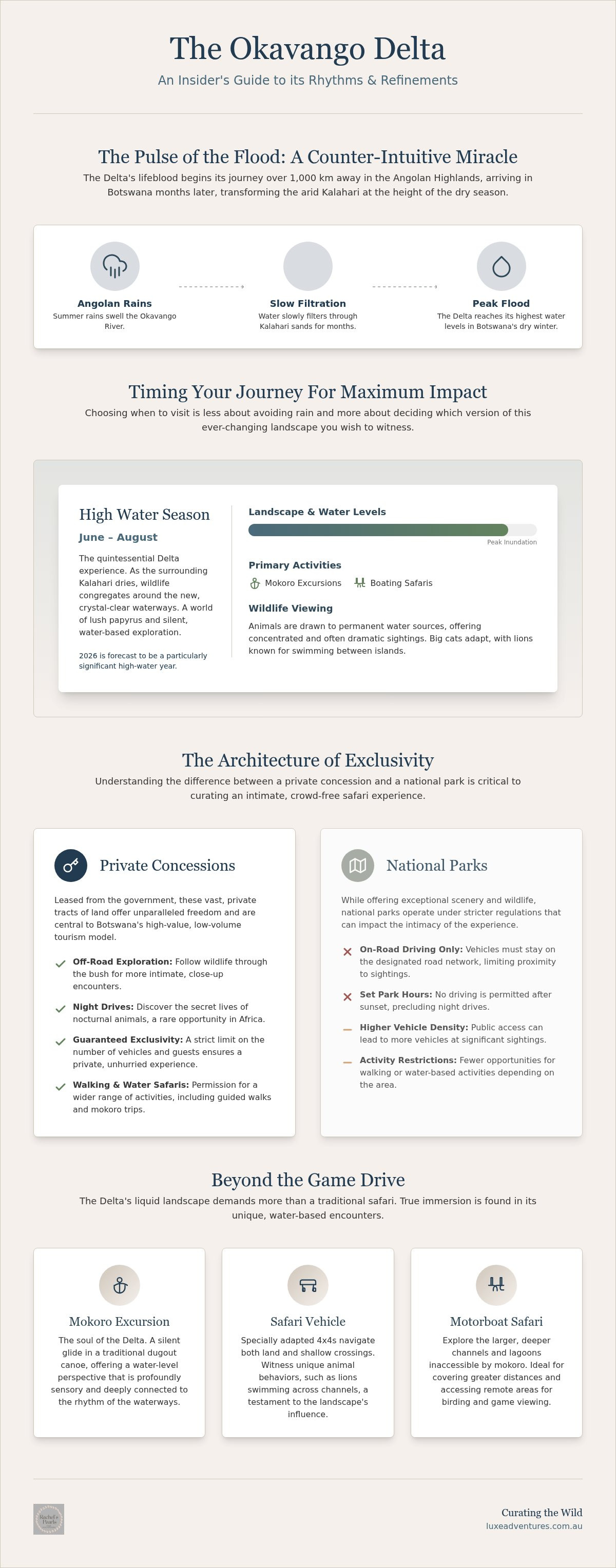
The Okavango Delta's rhythm is beautifully illogical. While much of Southern Africa remains parched during the winter months, the delta begins its transformation. This occurs because the flood waters originate in the Angolan highlands, taking months to filter through the Kalahari sands before reaching Botswana. It's a counter-intuitive phenomenon where life flourishes in the height of the dry season. This unique hydrological cycle is a primary reason for its status as a UNESCO World Heritage Site. Choosing the right window for your Okavango Delta safari is less about avoiding rain and more about deciding which version of this landscape you wish to witness.
We often speak of the "Investment of Awe" when discussing peak season. From June to August, the demand for premium camps is at its highest, and for good reason. The sensory shift is staggering. You move from the dusty, cracked earth of the savannah into a world of crystal-clear waterways and lush papyrus. The air cools, the visibility for big game increases, and the delta's liquid heart beats at its strongest. 2026 is proving to be a particularly significant high-water year, with channels previously dry now navigable for the first time in several seasons.
The High Water Season (June to August)
This is the quintessential time for water-based exploration. Boating safaris and mokoro excursions become the primary mode of transport, allowing for a silent approach to wildlife. As the surrounding Kalahari dries out, animals are drawn to the delta's permanent water sources in massive concentrations. The floodwaters, having travelled over a thousand kilometres from their source in Angola, create a labyrinth of navigable channels that simply don't exist at other times of the year. It's the peak of the aquatic experience, where the boundary between land and water almost entirely dissolves.
The Emerald Season: A Discerning Alternative
For the traveller who values texture and solitude, the period from November to March offers a compelling alternative. Often called the "Green Season," this time of year is defined by dramatic summer skies, afternoon thunderstorms, and an explosion of new life. It's a photographer's dream, as the air is scrubbed clean of dust and the colours are vibrantly saturated. Beyond the aesthetic, this season offers exceptional value and a sense of exclusivity that is harder to find during the winter rush. If you are looking for a more intimate connection with the landscape, starting a conversation about a tailored itinerary can help you find the perfect balance between wildlife viewing and seasonal beauty. The Emerald Season offers a different, more nuanced perspective on an Okavango Delta safari.
Private Concessions vs. National Parks: The Architecture of Exclusivity
Choosing where to lay your head in the Okavango Delta UNESCO World Heritage Site is a decision that dictates the very texture of your encounters. While the Moremi Game Reserve offers spectacular scenery, it is a public space. This means you share the tracks with self-drive vehicles and larger tour groups. In contrast, private concessions like Jao, Vumbura, or Khwai operate on a lease system that prioritises solitude. Here, the quiet luxury isn't just in the fine linens; it's in the absence of other vehicles at a sighting. You aren't just a spectator; you're an invited guest in a vast, private wilderness.
The architecture of exclusivity is built on low-density tourism. In a private concession, only a handful of camps have the right to traverse thousands of hectares. This ensures an authentic connection to the land that is often lost in more crowded parks. It's the difference between watching a leopard from a distance with five other cars and sitting in silence as that same cat moves past your vehicle, completely undisturbed by your presence. This solitude is the most valuable commodity on an Okavango Delta safari.
Why Private Concessions Matter
The true value of a private concession lies in the freedom it affords your guide. In national parks, vehicles must stick to designated roads and return to camp by sunset. On a private lease, we track predators wherever they lead, moving off-path to witness a hunt or a quiet moment with a cub. Night safaris are another privilege reserved for these areas. Seeing the bush through the beam of a spotlight reveals a nocturnal world of aardvarks, honey badgers, and big cats on the prowl. This high-value, low-volume model is the ethical backbone of Botswana’s conservation strategy, ensuring that tourism revenue supports the land without overcrowding it.
Choosing Your Base: Land, Water, or Mixed?
The hydrology of the delta creates three distinct camp styles, each offering a different version of an Okavango Delta safari. Understanding these is critical to matching the experience to your interests.
- Water Camps: Situated in areas of permanent flood, these camps focus on the mokoro and boating. They offer a serene, contemplative experience but often have limited big-game viewing from a vehicle.
- Land Camps: Located on the delta's fringes or large islands, these specialise in traditional game drives. They are excellent for those seeking high-density predator action, though the water experience may be seasonal.
- Mixed Camps: These provide the most balanced perspective, offering both land and water activities depending on the time of year. For a first-time visitor, a mixed camp ensures you don't have to choose between the drama of a lion hunt and the stillness of the channels.
Beyond the Game Drive: Immersive Encounters in the Labyrinth
While the traditional game drive provides the adrenaline of the chase, the true intimacy of an Okavango Delta safari is found when you leave the Land Cruiser behind. In the labyrinth of the delta, luxury is measured by the depth of your immersion. It is found in the cool touch of the water against the hull, the sudden, piercing call of an African Fish Eagle, and the deliberate, unhurried pace of the wilderness. These moments aren't about ticking boxes; they are about recalibrating your senses to a world where the clock is irrelevant. Recalibrating your perspective is what transforms a holiday into a meaningful journey.
The Mokoro: The Delta’s Signature
The mokoro is more than just a vessel; it is a silent, sensory bridge into the heart of the papyrus. Traditionally carved from sausage trees or ebony, modern versions are now sustainably crafted from fibreglass to preserve the delta's ancient canopy. Sitting just inches above the water line, your perspective shifts entirely. You're at eye-level with painted reed frogs and iridescent dragonflies. There is a quiet authority in your local poler, who navigates these shifting channels with an inherited intuition. It's a journey where the only sound is the rhythmic drip of the pole and the occasional sigh of the breeze through the reeds.
Aerial Perspectives: The Ultimate Reveal
If the mokoro offers the soul, a doors-off helicopter flight provides the logic. From the air, the delta’s vast geometry finally makes sense. You see the elephant highways, ancient, sunken paths carved through the sediment by generations of migrating herds. The transition from the scorched Kalahari earth to the intricate blue veins of the delta is a visual masterclass in hydrology. For photographers, this perspective is essential. It captures the raw scale of the landscape, revealing how the water breathes life into the desert in a way that is impossible to grasp from the ground.
Walking safaris invite you to engage with the rhythm of the earth itself. Led by expert trackers, you focus on the small things, such as the architecture of a termite mound, the medicinal uses of wild sage, or the story told by a fresh track in the sand. It is a vulnerable and profoundly rewarding way to experience the bush, where every snapped twig and shifting wind carries meaning. To ensure these sensory layers are woven into your journey, enquire about a bespoke safari design that balances land, water, and air. These experiences represent the hallmark of a truly refined Okavango Delta safari.
Curating the Wild: Why Expert Design is the Ultimate Luxury
Luxury in the Botswana bush is often misunderstood. It isn't merely the presence of a copper bathtub or a vintage gin trolley; it is the intelligence of the plan. At Luxe Adventures, our philosophy is simple: refined by experience, defined by connection. In an environment as temperamental as this, an Okavango Delta safari requires more than a booking; it requires an architect. Engaging a bespoke travel designer ensures that the invisible threads of your journey, from private charter timings to seasonal wildlife movements, are managed with professional precision.
As a Virtuoso member, we provide more than just preferred access. We weave in tangible benefits that enhance the texture of your stay, such as room upgrades, breakfast credits, and VIP status at the world's most exclusive lodges. However, the true value lies in our direct relationships with camp managers and local guides. These connections ensure you aren't just another guest, but a valued traveller whose specific interests are known before you even step off the light aircraft. It is this level of intentionality that mitigates the risks of remote travel and replaces anxiety with certainty.
The Vetted Difference
I personally research the camps we recommend, looking beyond the glossy brochures to find the authentic soul of a property. This firsthand validation is critical because the personality of a camp must match your own. Some travellers seek the high-octane drama of a predator-heavy land camp, while others crave the quiet, restorative stillness of a permanent water site. We navigate the complex logistics of multiple remote airstrips and luggage restrictions so you don't have to. By avoiding generic hype and focusing on personally vetted locations, we ensure your journey is as seamless as it is spectacular.
Your Journey Starts with a Conversation
We don't believe in off-the-shelf itineraries. Instead, we invite you to co-create a luxury african safari package that prioritises atmosphere and emotion over simple feature lists. We look at the "why" behind your travel, whether it's a milestone celebration or a need for deep disconnection from a fast-paced professional life. The result is a highly personalised Okavango Delta safari that feels like a shared vision rather than a transaction. Travel, when executed with this level of care, becomes a transformative investment in your own perspective. If you are ready to move beyond the generic and discover the nuanced rhythms of Botswana, reach out for a private consultation today.
Designing Your Legacy in the Delta
The Okavango Delta is a place of profound transformation, where the desert's silence meets the flood's vitality. Navigating this landscape requires more than just a map; it requires an understanding of the delta's nuanced rhythms and the architecture of its private concessions. By selecting the right camp and timing your visit to align with the flood's pulse, you move beyond the generic and into a realm of genuine connection. This isn't just travel; it's a recalibration of your senses.
As a Virtuoso Preferred Partner, Luxe Adventures brings a level of specialist expertise that ensures your journey is refined by experience. Every lodge we recommend is personally vetted to ensure it aligns with the standards of quiet luxury you expect. Designing an Okavango Delta safari is an art form, and we act as your visionary architects to ensure every detail is intentional. It's time to move beyond the itinerary and discover the soul of Botswana. We invite you to begin your curated journey with Luxe Adventures. Your next chapter in the wild is waiting to be written.
Frequently Asked Questions
What is the best month for an Okavango Delta safari?
July to October represents the peak window for an Okavango Delta safari, as the annual floodwaters from Angola reach their maximum extent during the dry winter months. This counter-intuitive timing ensures exceptional wildlife viewing because animals concentrate around permanent water sources. For those seeking the lush, vibrant colours of the Emerald Season, November to March offers dramatic summer skies and fewer travellers, providing a different but equally compelling texture to the landscape.
Is the Okavango Delta safe for mature travellers?
Botswana is exceptionally safe and well-suited for mature professionals who value quiet luxury and seamless logistics. Most high-end lodges are designed with comfort in mind, offering accessible walkways and private charter flights that bypass long, dusty road transfers. The level of personal care provided by camp staff is exemplary, ensuring that every encounter with the wilderness is secure and restorative. We personally vet every property to confirm they meet these exacting standards.
Do I need a yellow fever vaccination for Botswana?
Botswana doesn't currently require a yellow fever vaccination certificate for entry unless you're arriving from a country where the disease is endemic. This includes transit through certain African or South American nations for more than twelve hours. Because health regulations can shift, we always recommend a consultation with your travel doctor well in advance. It's a small but necessary step to ensure your journey remains as unhurried and effortless as possible.
What is the difference between a land-based and water-based camp?
The distinction lies primarily in the activities offered and the surrounding hydrology. Water-based camps are located in areas of permanent flood, focusing on silent mokoro excursions and boating through deep channels. Land-based camps sit on larger islands or concession fringes, prioritising traditional game drives to track big game and predators. For a masterfully curated Okavango Delta safari, we often suggest a combination of both camp styles to capture the full spectrum of the delta’s ephemeral beauty.
How many days should I spend in the Okavango Delta?
To truly absorb the nuanced rhythms of the delta, we recommend a stay of six to nine nights, ideally split between two or three different concessions. This duration allows enough time to transition from the adrenaline of predator tracking to the meditative stillness of the waterways without feeling rushed. A slower pace is the ultimate luxury in this environment, permitting you to connect deeply with the landscape rather than merely observing it.
Can I combine an Okavango Delta safari with Victoria Falls?
Combining these destinations is a classic and highly rewarding extension. Most travellers fly from their delta camp to Kasane or Maun, followed by a short transfer across the border into Zimbabwe or Zambia. This pairing offers a dramatic contrast between the intricate, quiet channels of the delta and the raw, thundering power of the falls. It provides a comprehensive perspective on Southern Africa’s most iconic and diverse water systems within a single, seamless journey.
What should I pack for a luxury Botswana safari?
Packing for Botswana requires a balance of practicality and understated elegance. Focus on breathable, neutral-toned clothing in linen or cotton to blend with the bush, and include layers for the surprisingly crisp winter mornings. Because light aircraft transfers have strict weight limits of 20kg in soft-sided bags, curation is essential. High-quality binoculars and a wide-brimmed hat are non-negotiable, while most luxury lodges provide high-end toiletries and daily laundry services to lighten your load.
Are children allowed at luxury safari lodges in the Delta?
Policy varies significantly between concessions, with many high-end lodges maintaining a minimum age of six or twelve to preserve the atmosphere of quiet luxury. However, several properties offer private villas and specialised family programmes designed to engage younger explorers with the natural world. If you're planning a multi-generational journey, we focus on hand-picking camps that offer the right balance of privacy and engagement for every member of your party, ensuring a refined experience.
Article by
Rachel Cleary
Rachel Cleary is the founder of Luxe Adventures and an endlessly curious explorer with a passion for meaningful, experience-led travel. Having visited every continent and travelled to more than 100 countries — and counting — she believes travel is one of the greatest educations for both children and adults alike.
Rachel is addicted to scuba diving and gets underwater at every opportunity. When she isn't in the office you'll find her exploring remote reefs in Fiji, drift diving in the Maldives, or scuba cruising Raja Ampat or French Polynesia.
Her second home is Fiji where she has explored all the island groups and has favourite boutique resorts she returns to every year, for the diving and the authentic Fijian hospitality.
Get her talking about kayaking in Antarctica or the Arctic, African safaris and where to find the highest density of big cats, underwater adventures, remote expedition destinations, or the science and magic behind the Northern Lights — including when and where they are most likely to dance — and you may be there a while.
Through Luxe Adventures, Rachel combines firsthand experience, global industry connections, and a deep appreciation for nature, culture, food, wildlife, and human connection to help curious travellers explore the world in a way that feels seamless, personal, and unforgettable.
Refined by experience. Defined by connection.
Disclaimer
The information in this article is intended as general travel inspiration and guidance only. Travel requirements, hotel standards, airline schedules, entry regulations, weather conditions, pricing, and experiences can change without notice.
While every effort is made to ensure accuracy at the time of publishing, Luxe Adventures recommends confirming all details relevant to your personal travel plans before booking or travelling.
Opinions, recommendations, and destination insights shared in this article are based on firsthand experience, industry knowledge, and research at the time of writing. Experiences may vary depending on season, supplier changes, local conditions, and individual travel preferences.
Some articles may reference luxury travel affiliations, preferred partner programs, or value-added amenities available through Luxe Adventures. Benefits and inclusions are always subject to availability and supplier terms at the time of booking.
Luxe Adventures strongly recommends comprehensive travel insurance for all international travel.
For personalised travel advice, tailored itinerary design, or the latest destination updates, please contact Luxe Adventures directly.


