
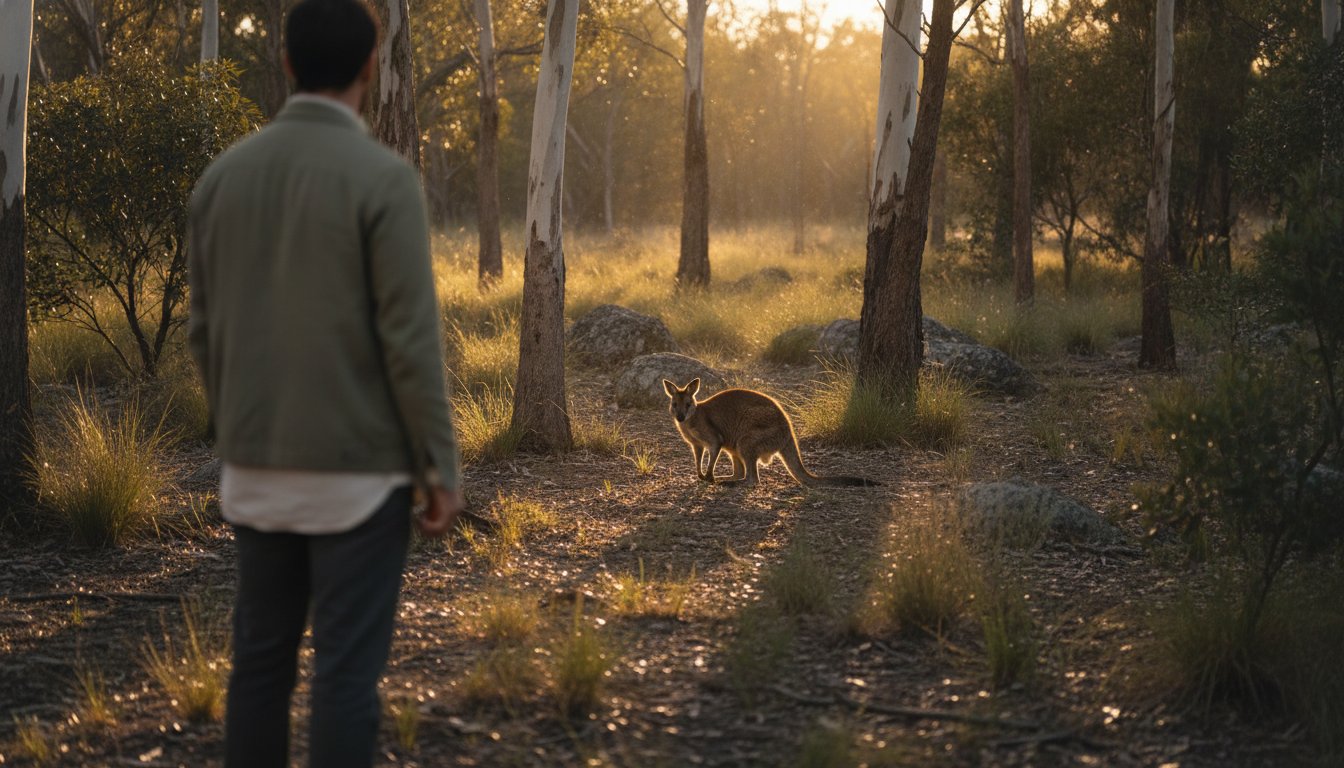
The most profound wildlife encounter isn't found in the reach of a hand or the flash of a lens, but in the quiet space where an animal simply chooses to coexist with you. It's a rare, fragile moment that many travellers seek but few truly find without the nagging doubt of hidden exploitation. With an estimated 110 million people still visiting cruel wildlife attractions annually, the challenge of identifying genuine ethical wildlife encounter tours has never been more pressing. You want the intimacy of the wild without the heavy cost of its disruption.
I understand the frustration of deciphering greenwashed marketing or finding yourself in a crowd of idling engines that scatter the very species you came to admire. You deserve the confidence that your presence actively heals the landscape rather than depleting it. This guide clarifies the complexities of modern conservation travel, from the new 2026 polar bear distance regulations in Svalbard to Kenya's elevated tourism standards. We will explore how to identify expertly vetted itineraries that prioritise animal autonomy, ensuring your journey supports local stewardship and offers the deep, restorative connection only an untouched wilderness can provide.
Key Takeaways
- Shift your perspective from mere sightseeing to active stewardship, where the most meaningful luxury is found in an animal’s undisturbed autonomy.
- Learn to identify genuine ethical wildlife encounter tours by applying the 'No-Touch' protocol, a non-negotiable standard that prioritises animal welfare over a photograph.
- Distinguish between true conservation efforts and 'greenwashed' marketing by recognising the critical red flags found in facilities that permit direct human interaction.
- Explore the world’s most successful conservation blueprints, from the managed wilderness of the Okavango Delta to the strictly regulated trails of the Galápagos Islands.
- Understand why personal validation and human-to-human connections remain the only reliable ways to vet the complex ethics of remote safari camps and lodges.
The Evolution of Presence: Why Ethical Encounters Define Modern Luxury
Luxury has undergone a quiet, necessary revolution. It's no longer measured by the height of a thread count or the sparkle of a chandelier; true sophistication now lies in the quality of one's presence within the world. We've moved past the era of the passive spectator. Today, the most discerning travellers seek stewardship over sightseeing, understanding that their very presence has a weight and a consequence. These journeys are rooted in the principles of ecotourism, where the focus shifts from consumption to conservation. Engaging with ethical wildlife encounter tours is a deliberate choice to prioritise the animal's world over our own schedule. It requires a departure from the transactional checklist mentality that often plagues traditional travel. Instead of demanding a performance, we find value in the role of the quiet observer.
This evolution is defined by patience. It's the willingness to sit in a silent vehicle for an hour, watching the subtle twitch of a leopard's ear rather than rushing to the next coordinate. This commitment to conservation and local community empowerment ensures that the environments we admire remain resilient long after we've returned home. It's travel with a conscience, where the ultimate luxury is the knowledge that your visit contributed to the protection of a species rather than its disturbance.
Refined by Experience: The Move Away from Mass Tourism
A dozen idling engines surrounding a single cheetah is not an experience; it's an intrusion. Mass tourism often ignores the subtle biological costs of human presence. Research indicates that overcrowding can disrupt animal thermoregulation and critical hunting patterns, essentially turning a sanctuary into a high-stress stage. When we design ethical wildlife encounter tours, we swap the noise of the crowd for the nuanced observations of a master naturalist. Exclusivity here isn't about snobbery. It's about the biological necessity of space. Fewer vehicles mean lower stress for the animals, which in turn leads to more authentic, relaxed behaviours that the "Instagram crowd" will never witness.
Defined by Connection: The Emotional ROI of Ethical Travel
The emotional return on investment in a conservation-led journey is profound. It moves you beyond the desire to simply tick off the famous species and invites you to appreciate the intricate, interconnected pulse of an entire ecosystem. You begin to notice the scent of the rain on red earth, the specific warning call of a bird, and the complex social dynamics of a pride. This sensory immersion creates a deep sense of purpose and peace. There is a restorative power in knowing you are part of a solution, witnessing the wild exactly as it should be: wild, autonomous, and utterly indifferent to your camera lens.
The Vetting Process: How We Identify Genuine Stewardship
A logo on a website is a start, but it isn't a guarantee. In the complex world of ethical wildlife encounter tours, the difference between genuine conservation and clever marketing is often found in the details that don't make it into a glossy brochure. I personally vet our partners because true stewardship is witnessed on the ground, not just read in a policy document. It’s found in the way a guide positions a vehicle to respect an animal’s line of sight, or how a lodge manages its greywater in a parched landscape. We look for a commitment that goes beyond the superficial.
Our 'No-Touch' protocol is a non-negotiable standard. If an experience involves hand-feeding, forced interaction, or 'sanctuary' selfies, it fails our audit immediately. Beyond the physical, we scrutinise the financial trail. We prioritise partners where revenue stays within the local ecosystem, funding anti-poaching units or community-led habitat restoration. We also evaluate the guides themselves. Are they merely drivers, or are they naturalists who can interpret the subtle flick of a tail or a change in scent? High-level training ensures the encounter is led by the animal’s comfort, not the traveller’s impatience. If you're ready to explore these vetted landscapes, our bespoke travel design service can help curate an itinerary that aligns with your values.
The Anatomy of a Vetted Lodge
A lodge should be a seamless extension of its environment. We look for sophisticated waste management systems and water recycling programmes that protect fragile watersheds. Community partnerships are equally vital. By ensuring local residents benefit directly from tourism, lodges help reduce human-wildlife conflict. We also favour 'quiet' technology. Electric safari vehicles allow for a near-silent approach that doesn't disrupt the acoustic landscape of the bush, providing a more intimate experience for both the observer and the observed.
Expedition Cruising and Marine Ethics
In the marine world, vessel size is a critical ethical factor. Smaller ships create less acoustic disturbance, which is vital for the communication and navigation of marine mammals—a principle demonstrated by Discovery One through their small-ship cruises along the Kimberley Coast. We strictly align with partners who adhere to IAATO and AECO guidelines, particularly with the 2026 regulations mandating increased distances of 300 to 500 metres from polar bears in Svalbard. Many of our preferred expeditions also integrate citizen science programmes, allowing you to contribute to real-world data collection alongside marine biologists and naturalists.
The Sanctuary Paradox: Distinguishing Conservation from Performance
The term 'sanctuary' is one of the most evocative words in travel. It suggests safety, healing, and a return to the natural order. However, in the context of ethical wildlife encounter tours, it is also one of the most frequently misused. For the discerning traveller, the paradox lies in the fact that a true sanctuary often provides the least 'visible' entertainment. If a facility prioritises your photo over the animal's autonomy, it isn't a sanctuary; it's a stage. We use the 'Five Freedoms'—an internationally recognised benchmark for animal welfare—to strip away the marketing veneer. These freedoms ensure animals are free from hunger, discomfort, pain, fear, and, most importantly, free to express normal behaviour.
When we evaluate these environments, any invitation to touch, feed, or pose with an animal is a definitive disqualifier. Genuine conservation requires a distance that allows for dignity. Rehabilitation centres that are truly committed to reintroduction will limit human-animal interaction to the absolute minimum required for care. If an animal is too comfortable with humans, it can never safely return to the wild. This is the hard truth of stewardship: sometimes the best way to support a species is to remain a silent, distant observer. By avoiding these 'performance' environments, you ensure your travel investment supports actual recovery rather than exploitation.
The Myth of the 'Tame' Wild Animal
There is no such thing as a tame wild animal; there are only animals that have been conditioned to tolerate human proximity. Activities like 'walking with lions' or 'washing elephants' are often presented as bonding experiences, but they frequently hide a reality of early maternal separation and coercive training. We look for subtle signs of distress that an untrained eye might miss. Stereotypical behaviours, such as repetitive swaying, pacing, or head-bobbing, are clear indicators of psychological trauma. A truly ethical encounter recognises that a wild animal’s most beautiful state is one of complete indifference to your presence.
When Captivity is Necessary: Legitimate Rehabilitation
Of course, captivity is sometimes a tragic necessity for injured or orphaned wildlife. Legitimate centres focus on a clear 'end game': reintroduction. We look for programmes that have transparent protocols for release and that prioritise habitat protection over permanent display. You can support these vital efforts through donations or by visiting centres that offer educational tours from a respectful distance. The goal is to provide the resources for the animal to thrive without turning their recovery into a performance. Connection, in this sense, is felt through the success of a release, not the touch of a trunk.
Global Frontiers: Where Conservation Meets Curated Exploration
The geography of conservation is as diverse as the species it protects. In the Okavango Delta or the vast Serengeti, the most effective ethical wildlife encounter tours are often those operating within private concessions. These areas allow for a level of management that is frequently impossible in public national parks. By strictly limiting vehicle numbers and prohibiting off-road driving, these concessions preserve the integrity of the soil and the silence of the hunt. It is a model where high-value, low-volume tourism directly funds anti-poaching units and habitat restoration, proving that exclusivity can be a powerful engine for protection.
The Galápagos Islands offer a different, yet equally rigorous, blueprint. Here, every movement is dictated by the National Park Service. You don't just visit the Galápagos; you enter a strictly regulated sanctuary where every path is prescribed and every group is accompanied by a certified naturalist. This level of control ensures that the islands' unique biodiversity remains unbothered by the human footprint. Similarly, on our own shores, Australia’s ancient frontiers offer marine encounters in Ningaloo or terrestrial journeys through Kangaroo Island that rival any global destination for their commitment to authenticity and local stewardship.
African Safaris: The Gold Standard of Vetted Luxury
In Africa, the link between luxury tourism and conservation is tangible. Many of the continent's most prestigious camps were founded by conservationists who recognised that sustainable travel was the only way to protect vast tracts of wilderness from agriculture or poaching. Choosing a camp with a deep-rooted community partnership ensures that your presence provides a viable alternative to the illegal wildlife trade. To understand the nuances of these partnerships, explore The Art of the Bespoke Safari, where we detail the selection process for the continent's most ethical camps.
Polar Expeditions: Fragile Frontiers
Witnessing a blue whale breach in the Southern Ocean is a sensory experience that defies description. It is a moment defined by scale, silence, and a profound sense of humility. In the Arctic and Antarctica, the balance is incredibly fragile. We prioritise small-ship cruising because it allows for respectful, distant observation without the overwhelming presence of a massive vessel. These expeditions adhere to the highest standards of marine ethics, ensuring that our curiosity never becomes a burden to the species we admire. You can learn more about these intentional journeys in our guide to The Silent Frontier: Antarctica Cruises.
If you are ready to witness these frontiers for yourself, I invite you to curate your next conservation-led journey with us, ensuring every detail aligns with the highest ethical standards.
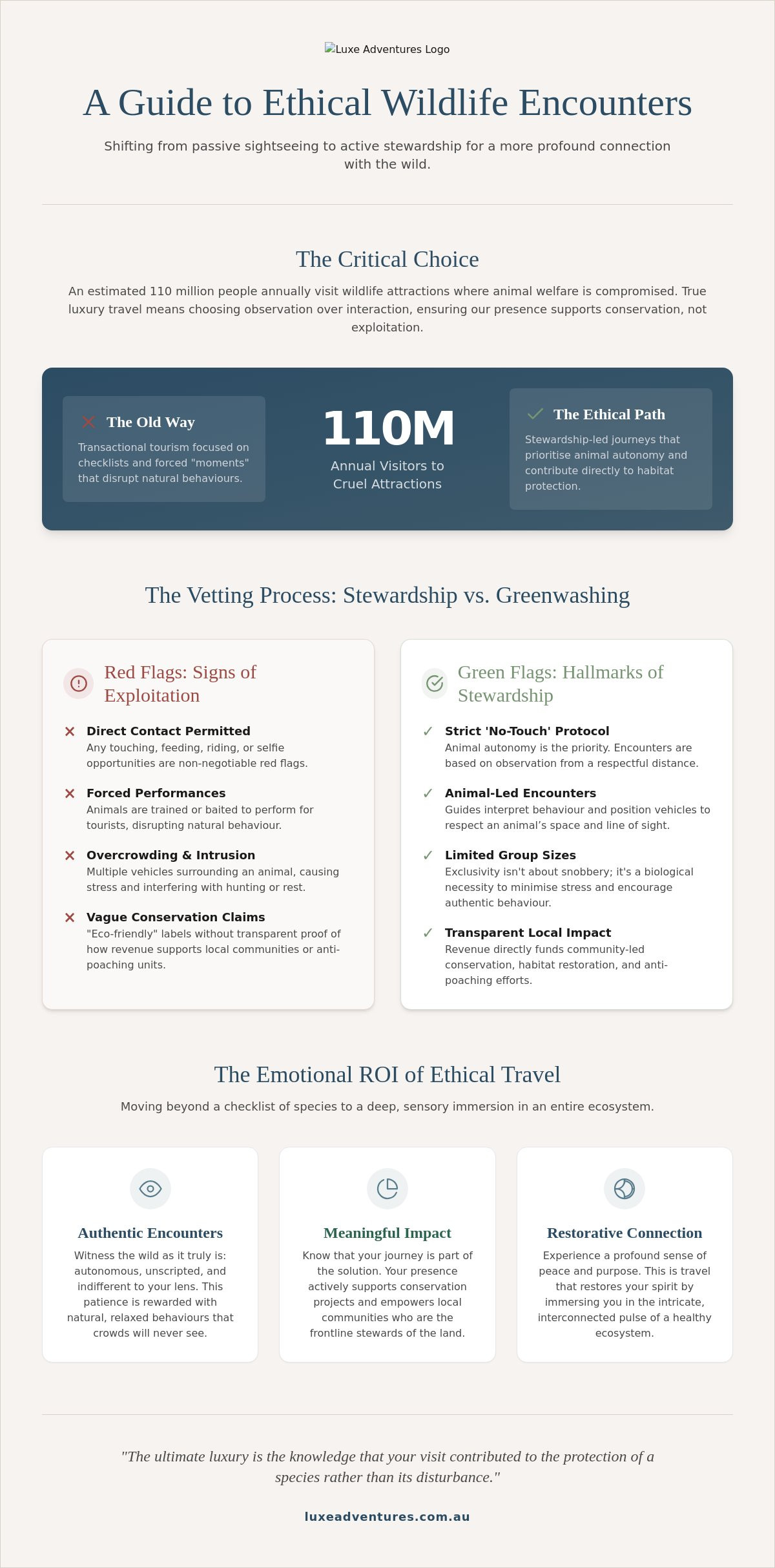
The Role of the Travel Designer in Ethical Exploration
An algorithm can cross-reference prices and availability with clinical precision, but it cannot vet the soul of a remote camp. It doesn't know if the revenue from your ethical wildlife encounter tours actually reaches the anti-poaching unit on the ground or if it vanishes into a corporate ledger. My work is built on the strength of human-to-human connections. It involves having the direct number of the lodge owner and understanding the head ranger's philosophy on animal habituation. This level of intimacy ensures that your journey isn't just a transaction, but a meaningful contribution to a living, breathing ecosystem.
Being part of the Virtuoso network provides a significant advantage, offering access to a curated circle of global partners who share a baseline commitment to sustainable travel. However, the true value lies in the bespoke curation. We don't simply book a room; we align the entire itinerary with your personal values. If you're particularly passionate about marine biology or reforestation, we find the specific naturalists and projects that make your journey feel deeply personal. It’s about crafting a narrative where you are a welcome guest in the animal’s home, not an intruder.
Beyond the Itinerary: A Holistic Approach
While we handle the complex logistics of remote wilderness travel, our focus remains on the emotional texture of the experience. We believe that an ethical traveller is an informed one, which is why we provide detailed pre-departure insights to ensure you arrive with a nuanced understanding of the local environment. This is why a bespoke travel designer is your most critical asset; we translate the "why" behind the rules, turning a list of restrictions into a shared commitment to stewardship. We manage the noise so you can appreciate the silence.
Your Journey as a Catalyst for Change
Ultimately, your travel choices act as a direct catalyst for change. By choosing ethical wildlife encounter tours, you are funding habitat restoration and supporting community-led initiatives that provide a viable alternative to poaching. Your investment creates a tangible incentive for local populations to protect their natural heritage. Travel, when executed with intentionality and discernment, becomes a profound force for good in the natural world. It is a way to see the world while ensuring that the world remains worth seeing for the next generation. It’s a quiet, powerful legacy left behind in every footprint that chooses to walk softly.
Defining Your Legacy in the Wild
The transition from a passive observer to a conscious steward is the ultimate evolution in high-end travel. We've explored how the most profound connections are found in silence and distance, and why the 'No-Touch' protocol remains the only reliable benchmark for animal welfare. By navigating the sanctuary paradox and choosing vetted frontiers like the Okavango or the Galápagos, you ensure your presence is a catalyst for restoration rather than a cause for disruption. True luxury is the peace of mind that comes from knowing every detail of your journey has been validated by an expert who has walked the ground before you.
As a Virtuoso Sustainability Partner, Luxe Adventures brings intimate expertise to every itinerary, from personally vetted global lodges to low-impact expedition cruising in the world's most fragile regions. We handle the complexities of ethical wildlife encounter tours so you can focus on the texture of the experience. If you are ready to move beyond the superficial and embrace a journey defined by depth and connection, I invite you to design your ethical wildlife journey with Luxe Adventures. The wild is waiting, exactly as it should be: untouched, autonomous, and utterly magnificent.
Frequently Asked Questions
What is the most ethical way to see elephants in the wild?
The most ethical way to see elephants is in their natural habitat within protected national parks or private concessions. Observing them from a distance in a vehicle or a submerged hide allows you to witness their complex social structures without causing stress. You should avoid any facility that permits riding, bathing, or hand-feeding, as these activities require coercive training. Instead, seek out destinations like Amboseli in Kenya, where elephants roam freely under the protection of dedicated anti-poaching units.
How do I know if a wildlife sanctuary is actually ethical?
You can identify an ethical sanctuary by its strict 'no-interaction' policy. If a facility allows visitors to touch, feed, or take selfies with the animals, it is likely prioritising profit over welfare. A legitimate sanctuary focuses on rehabilitation and, where possible, reintroduction to the wild. Look for transparent reporting on their conservation impact and accreditation from reputable bodies such as Global Humane or the Global Federation of Animal Sanctuaries.
Is it ethical to go on a safari in Africa?
Safaris in Africa are highly ethical when they are managed through conservation-led lodges and private concessions. These high-end ethical wildlife encounter tours provide the essential funding required to protect vast wilderness areas from poaching and agricultural encroachment. By choosing operators who lease land from local communities, you ensure that your travel investment directly supports both habitat preservation and local livelihoods, turning your journey into a powerful act of stewardship.
What are the 'Five Freedoms' of animal welfare in tourism?
The 'Five Freedoms' are the global gold standard for assessing animal welfare. They include freedom from hunger and thirst; freedom from discomfort; freedom from pain, injury, and disease; freedom to express normal behaviour; and freedom from fear and distress. When vetting a tour, ensure the animals have the space and autonomy to move away from human presence. Any environment that restricts these natural impulses for the sake of tourist entertainment fails this critical ethical test.
Can I take photos of wildlife during an ethical tour?
Photography is perfectly acceptable provided it doesn't disrupt the animal's natural behaviour. Ethical photography means using long lenses to maintain a respectful distance and avoiding the use of flashes or drones that can cause panic. The goal is to capture a moment of authentic wildness, not a staged interaction. Always follow your naturalist guide's instructions regarding positioning, as they are trained to read the subtle body language that indicates an animal is becoming stressed.
Why is touching or feeding wild animals considered unethical?
Touching or feeding wild animals is unethical because it habituates them to human presence, which is often fatal for the animal. When a creature loses its natural fear of humans, it becomes an easy target for poachers or may wander into local villages, leading to human-wildlife conflict. Feeding also disrupts their natural diet and social foraging patterns. True connection is found in witnessing their autonomy, not in forcing a physical interaction that compromises their survival.
How does luxury travel contribute to wildlife conservation?
Luxury travel supports conservation through a high-value, low-impact model that prioritises the environment over mass footfall. By charging higher fees for fewer guests, these ethical wildlife encounter tours generate significant revenue for land leases, anti-poaching patrols, and community education programmes. This model proves that wilderness is more valuable when left intact. It allows for a more intimate, quiet experience while ensuring the financial burden of conservation is met by those who value it most.
Are there any ethical whale watching tours in Australia?

Article by
Rachel Cleary
Rachel Cleary is the founder of Luxe Adventures and an endlessly curious explorer with a passion for meaningful, experience-led travel. Having visited every continent and travelled to more than 100 countries — and counting — she believes travel is one of the greatest educations for both children and adults alike.
Rachel is addicted to scuba diving and gets underwater at every opportunity. When she isn't in the office you'll find her exploring remote reefs in Fiji, drift diving in the Maldives, or scuba cruising Raja Ampat or French Polynesia.
Her second home is Fiji where she has explored all the island groups and has favourite boutique resorts she returns to every year, for the diving and the authentic Fijian hospitality.
Get her talking about kayaking in Antarctica or the Arctic, African safaris and where to find the highest density of big cats, underwater adventures, remote expedition destinations, or the science and magic behind the Northern Lights — including when and where they are most likely to dance — and you may be there a while.
Through Luxe Adventures, Rachel combines firsthand experience, global industry connections, and a deep appreciation for nature, culture, food, wildlife, and human connection to help curious travellers explore the world in a way that feels seamless, personal, and unforgettable.
Refined by experience. Defined by connection.
Disclaimer
The information in this article is intended as general travel inspiration and guidance only. Travel requirements, hotel standards, airline schedules, entry regulations, weather conditions, pricing, and experiences can change without notice.
While every effort is made to ensure accuracy at the time of publishing, Luxe Adventures recommends confirming all details relevant to your personal travel plans before booking or travelling.
Opinions, recommendations, and destination insights shared in this article are based on firsthand experience, industry knowledge, and research at the time of writing. Experiences may vary depending on season, supplier changes, local conditions, and individual travel preferences.
Some articles may reference luxury travel affiliations, preferred partner programs, or value-added amenities available through Luxe Adventures. Benefits and inclusions are always subject to availability and supplier terms at the time of booking.
Luxe Adventures strongly recommends comprehensive travel insurance for all international travel.
For personalised travel advice, tailored itinerary design, or the latest destination updates, please contact Luxe Adventures directly.


