
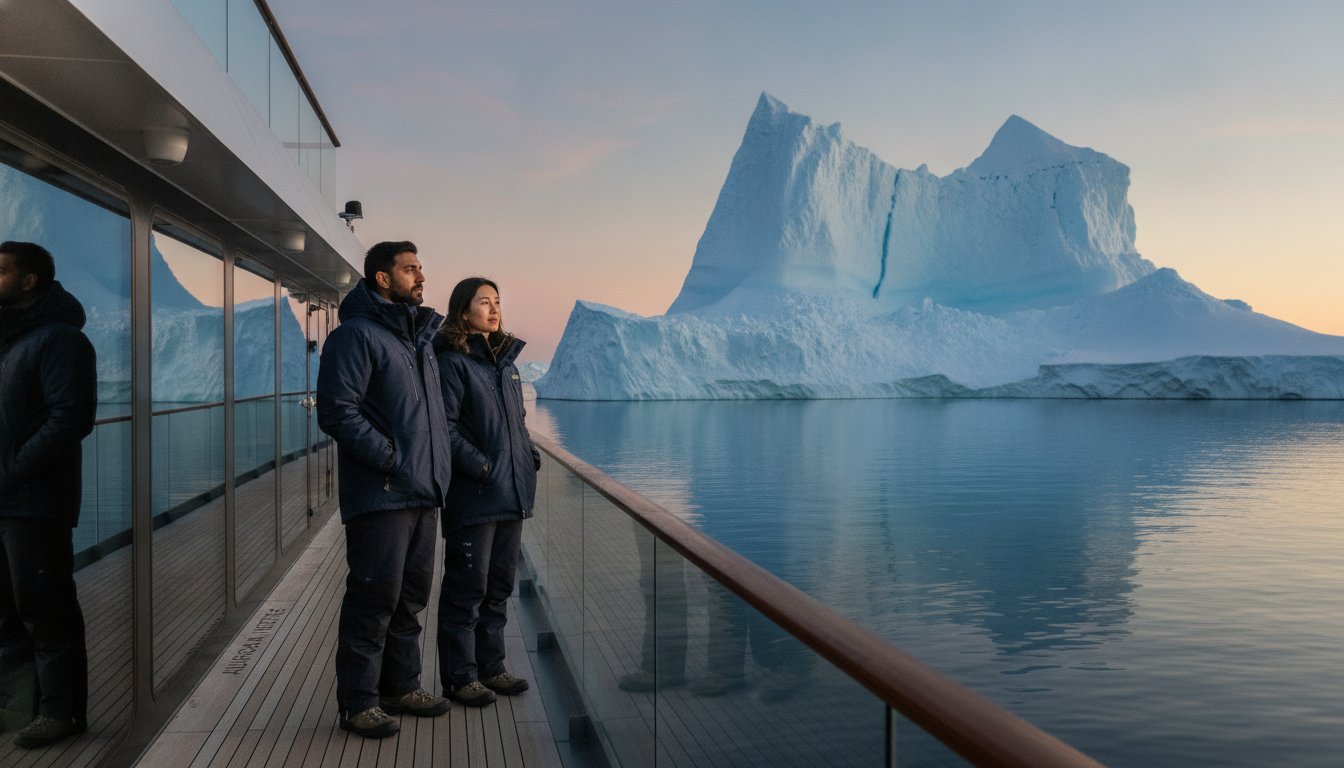
What if the most expensive suite on the Southern Ocean is actually the wrong choice for your journey? It’s a common paradox in polar travel. You seek the refined comfort of a high-end vessel, yet you don't want to be a spectator on a floating hotel that cannot actually put you on the ice. With dozens of vessels now sailing these waters, choosing the right Antarctica cruise ship has become a complex exercise in balancing quiet luxury with genuine expedition depth.
I understand the hesitation. The technical jargon of ice classes and the fear of missing out on landings due to restrictive passenger numbers are enough to stall any planning. This guide distils my personal research and years of vetting vessels to help you find that elusive sweet spot. You will learn how to manage the 100-person landing limit, decode the nuances of 2026 vessel technology, and ensure your choice translates into maximum time spent among the penguins and icebergs rather than just viewing them through a window.
Key Takeaways
- Understand why the 100-guest landing rule makes vessel size the most critical factor for maximising your physical time on the ice.
- Learn how choosing the right antarctica cruise ship requires balancing sophisticated onboard amenities with the technical depth of an authentic expedition vessel.
- Discover why the ratio and lived experience of the expedition team are the true indicators of a high-quality journey beyond the cabin décor.
- Identify your 'Polar Tempo' to ensure the ship’s daily rhythm and deck layout align with your preference for either active adventure or quiet reflection.
- Recognise the value of expert curation and Virtuoso benefits in navigating the complex logistics and high stakes of a 2026 Southern Ocean voyage.
The Architecture of Choice: Why Vessel Size is Your Most Critical Decision
In the Southern Ocean, the dimensions of your ship dictate the depth of your experience. It's a simple equation of physics and regulation that many travellers overlook until they're watching a colony of Adélie penguins through binoculars from a distant deck. When choosing the right antarctica cruise ship, the first question isn't about the thread count of your linens; it's about the number of souls on board. The history of tourism in Antarctica reveals a shift from rugged, utilitarian vessels to a tiered fleet where size has become the ultimate arbiter of access.
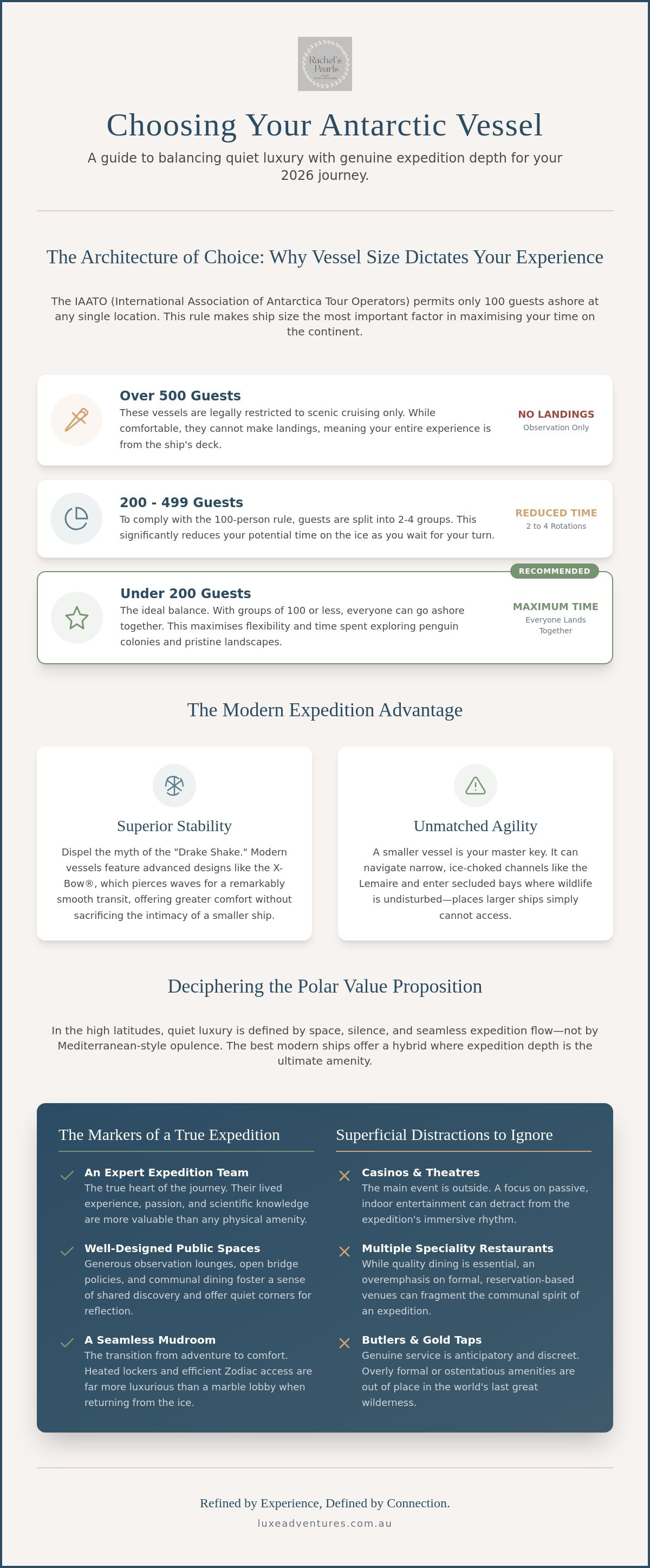
Ships carrying more than 500 passengers are legally restricted to scenic cruising only. They cannot land. For the discerning traveller, this is the first filter. If you want to feel the crunch of ancient snow beneath your boots or sit quietly as a curious gentoo penguin approaches, you must look at ships with fewer than 500 guests. Even then, the experience changes dramatically as you move from 400 guests down to 100. On a smaller vessel, the atmosphere shifts from a commercial voyage to a shared expedition. The crew learns your name by the second day. The bridge is often open, inviting you to watch the officers navigate through growlers and bergy bits. It's an intimate, unhurried tempo that larger ships simply cannot replicate.
The IAATO Landing Framework
The International Association of Antarctica Tour Operators (IAATO) enforces a strict "Golden Rule": only 100 people are permitted on shore at any single location at one time. This regulation is the primary factor in polar immersion. If you're on a ship with 200 guests, the expedition team must split the group into two shifts. While one group explores the ice, the other might be on a Zodiac cruise or waiting on board. On a ship with 400 guests, that rotation becomes a four-way split, significantly reducing your actual time on the continent. Choosing a vessel closer to the 100-guest mark ensures you're always in the first wave, maximising every precious minute of Antarctic sunlight.
Stability vs. Agility
There's a persistent myth that smaller ships are inherently less stable in the notorious "Drake Shake." Modern naval architecture has largely solved this. Many of the newer, smaller expedition vessels now feature X-Bow technology. This inverted bow design pierces waves rather than slamming into them, providing a remarkably smooth transit across the Drake Passage.
Agility is the second half of that coin. A smaller ship can slip into narrow, ice-choked channels like the Lemaire or the Neumayer that larger vessels must bypass. They can tuck into secluded bays where the wildlife is undisturbed. In Antarctica, the best moments often happen in the tightest spaces; a small ship is your master key to those locked rooms.
Luxury vs. Expedition: Deciphering the Polar Value Proposition
Luxury in the White Continent isn't about gold leaf or casinos. Those belong in the Mediterranean. In the high latitudes, quiet luxury is defined by space, silence, and a deep commitment to stewardship. If you're choosing the right antarctica cruise ship, you're deciding on the texture of your daily life. Do you want the refined hush of a vessel designed for contemplation, or the high-energy clatter of a ship built for raw science?
We've entered a hybrid era where you no longer have to choose between a butler and a state-of-the-art mudroom. The best modern ships offer both. These vessels adhere strictly to IAATO's environmental guidelines, ensuring that while you enjoy a glass of vintage champagne, the ship’s footprint remains as delicate as possible. It's about finding a vessel where the thread count is high, but the expedition depth is higher.
The Atmosphere Onboard
The social pulse of your ship dictates the trip's rhythm. Some vessels maintain a formal air with assigned seating and gala nights. Others favour communal expedition tables where you'll swap stories with glaciologists over a shared bottle of wine. If you're wondering what is expedition cruising in its truest sense, look to the mudroom. This is the heart of the ship. It’s where the transition from luxury to adventure happens. A well-designed mudroom, with individual heated lockers and easy Zodiac access, is far more luxurious than a marble lobby when you're returning from a snowy landing.
Vetted Amenities that Matter
I've found that a 270-degree observation lounge is the most valuable real estate on any polar ship. It allows you to track a breaching humpback without leaving the warmth of the interior. Similarly, an open-bridge policy is a hallmark of a quality operator. Standing alongside the captain as they nudge through pack ice offers a level of connection that no lecture can match. After a day of sensory overload on the ice, a spa isn't just a perk; it’s a tool for restoration. A sauna with a floor-to-ceiling window onto the icebergs provides a moment of reflection that defines the 'quiet' in quiet luxury.
Selecting the right vessel is a high-stakes design process that requires an insider's eye. If you're ready to move beyond the brochures, let's discuss curating your specific polar itinerary.
The Expedition Team: The Invisible Engine of a Great Journey
The people on the bridge and in the Zodiacs are the true architects of your experience. When choosing the right antarctica cruise ship, many travellers get caught up in the aesthetics of the observation lounge or the size of the suites. While a beautiful ship is a joy, it’s the calibre of the expedition team that transforms a scenic voyage into a profound encounter with the wilderness. The best ships operate like a floating university where the naturalists are as much a part of the social fabric as the guests, fostering an environment of curiosity rather than just passive consumption.
Antarctica is a place of sudden, dramatic shifts. A katabatic wind can close a landing site in minutes, requiring an immediate change in plans. This is where lived experience becomes the ship's most valuable asset. A seasoned expedition leader doesn't just cancel a landing; they pivot. They know the secondary bays and the hidden inlets that remain calm when the main channels are rough. They turn a "miss" into a unique discovery, ensuring the journey's rhythm never falters even when the weather does. This level of expertise is a vital consideration when comparing Antarctic cruise options for your 2026 departure.
Specialist Expertise
There is a vast difference between a generalist guide and a PhD-level glaciologist who has spent decades studying the retreat of the Larsen Ice Shelf. A great team serves as the vital bridge between merely seeing the continent and truly understanding its complexity. High-end vessels often feature Citizen Science programmes, allowing you to contribute to actual research by tracking whale migrations or sampling phytoplankton. Engaging with these programmes provides a sense of purpose, ensuring your presence on the ice contributes to the continent's future through meaningful data collection.
The Guest-to-Staff Ratio
A 1:10 ratio of naturalists to guests is the benchmark for high-end polar travel. This isn't just a vanity metric. It ensures that when you're on a Zodiac cruise, your guide has the time to answer every nuanced question about the blue ice or the leopard seal's hunting habits. On ships with a poor ratio, you're often just a passenger in a boat. On a vetted vessel, you're an active participant in a discovery. Many of the ships I personally research also include a professional photographer on the team. Their role isn't just to document your journey, but to teach you how to capture the impossible, ethereal light of the Antarctic Peninsula without the distraction of a crowd.
Beyond the Deck: Matching Onboard Tempo to Your Personal Style
Every vessel has a heartbeat, a specific rhythm that either energises or exhausts you. When choosing the right antarctica cruise ship, it's essential to identify your own "Polar Tempo." Some travellers are dawn-to-dusk adventurers, eager to be in the first Zodiac for every landing and the last to return from a kayaking excursion. Others find their greatest connection in the quiet observation of the landscape from a secluded corner of the deck. The ship you choose should mirror your preferred pace, providing the infrastructure for high-octane exploration or the sanctuary required for deep reflection.
Deck space is an often-overlooked luxury. On smaller, well-vetted vessels, you'll find expansive, uncrowded outdoor areas that allow you to track a pod of orca in near-total silence. This sense of space is particularly relevant for those exploring The Silent Frontier: Antarctica Cruises from Australia, where the journey itself is a grand narrative of distance and discovery. For those who find the two-day transit of the Drake Passage daunting, the fly-cruise option is gaining significant momentum for the 2026 season. By flying to King George Island to meet your ship, you bypass the potentially rough seas and arrive directly in the heart of the Antarctic Peninsula, a choice that prioritises time on the ice over time at sea.
Activity Curation
The best expedition ships offer a robust menu of activities that go beyond simple shore walks. Kayaking, paddleboarding, and even overnight camping on the ice are now staples of the modern polar programme. However, it's important to distinguish between "soft adventure" and "extreme expedition." Soft adventure provides a sensory connection to the landscape, like the ritual of a polar plunge, without requiring elite levels of physical fitness. When vetting a ship, I look for how seamlessly these activities are integrated into the daily schedule, ensuring they enhance rather than distract from the primary goal of immersion.
Culinary Refinement at Sea
Dining in the high latitudes should be an extension of the ship’s commitment to quality. Gourmet dining in such a remote location requires exceptional logistics and a focus on international standards. The modern polar galley balances sophisticated flavours with the need for comfort after a day in sub-zero temperatures. In this context, "all-inclusive" is more than just a pricing model; it’s a form of mental space. Knowing that every meal, wine pairing, and shore excursion is accounted for allows you to focus entirely on the horizon. If you're ready to find a vessel that aligns with your personal style, enquire about a bespoke polar consultation to narrow down your 2026 options.
The Bespoke Advantage: Navigating the Drake with a Vetted Advisor
As a CLIA Master and Virtuoso advisor, I provide more than just a booking service. The value of this affiliation manifests in tangible perks, such as shipboard credits, private transfers, or room upgrades, but the true advantage is the depth of our vetted database. We don't rely on brochures; we rely on lived experience and direct feedback from the field. This insider perspective is why a bespoke travel designer is your most critical travel asset. We match you to a specific hull based on its technical capabilities and its onboard culture, ensuring your 2026 expedition is as seamless as it is profound.
The Luxe Adventures Curation Process
Our curation process is rooted in a commitment to stewardship. We prioritise operators who maintain the highest environmental standards and demonstrate a genuine respect for the fragile ecosystems they visit. When we select a ship for you, we're looking for atmosphere, access, and authenticity. We also handle the intricate logistics of getting from Australia to the end of the world, managing the layered connections through South America so you can focus entirely on the journey ahead. It’s about creating a frictionless transition from your daily life to the raw beauty of the Antarctic wilderness.
Your Polar Legacy
I often encourage my clients to reframe this journey as an investment in perspective. Antarctica has a way of stripping away the superficial, leaving you with a profound sense of connection to the natural world and your fellow travellers. It is a place that demands presence and rewards curiosity. While the continent itself remains timeless and unchanging, the way you perceive its scale and its silence depends entirely on the vessel you choose. Choosing the right antarctica cruise ship is the final, most important step in defining your polar legacy. Let’s ensure the ship you board is the one that allows you to see the ice exactly as you've imagined it.
Defining Your 2026 Southern Ocean Perspective
Antarctica remains a place of profound stillness and sudden drama. As we've explored, the technical nuances of vessel size and the expertise of the expedition team are not merely details; they are the filters through which you'll witness the ice. Choosing the right antarctica cruise ship is about finding that rare alignment between physical access to the continent and the refined comfort that allows for true reflection. Whether you value the agility of a 100-guest hull or the restored wellness of a modern hybrid vessel, your choice dictates the depth of your connection to this wilderness.
As a CLIA Master and Virtuoso advisor, I specialise in navigating these complexities for you. My advice is grounded in a database of personally vetted expedition partners and a career spent designing journeys that prioritise substance over noise. The Southern Ocean doesn't offer second chances for a first impression. Let’s curate your polar journey together—Contact Luxe Adventures to ensure your 2026 expedition is as meaningful as the landscape itself. This is your moment to step into the quiet authority of the great white south.
Frequently Asked Questions
What is the best size ship for an Antarctica cruise if I want to land often?
Vessels carrying fewer than 200 passengers offer the most frequent landing opportunities. Because IAATO regulations limit shore presence to 100 people at a time, smaller ships avoid the complex "shift-work" rotations required by larger vessels. When choosing the right antarctica cruise ship, prioritising a vessel in the 100 to 140 guest range ensures you spend more time on the ice and less time waiting in the lounge for your turn.
Is a luxury Antarctica cruise worth the extra cost compared to an expedition ship?
A luxury ship is worth the investment if it balances refined amenities with high-level expedition capabilities. You're paying for more than just champagne; you're securing superior deck space, larger suites for gear storage, and often a higher staff-to-guest ratio. The key is ensuring the "luxury" tag doesn't come with a passenger count that restricts your access to the shore. It's about refined restoration after a day of raw exploration.
Can I skip the Drake Passage if I am prone to seasickness?
You can skip the Drake Passage entirely by choosing a fly-cruise itinerary. These programmes involve flying from Punta Arenas to King George Island, where you board your vessel directly in Antarctic waters. This saves roughly four days at sea and is the preferred choice for those who want to avoid the potential turbulence of the passage. It allows you to start your journey already immersed in the polar landscape without the transit days.
What is the difference between a 'luxury' ship and an 'expedition' ship in Antarctica?
Traditionally, luxury ships prioritised white-glove service and formal dining, while expedition ships focused on rugged functionality and scientific lectures. However, the 2026 fleet features many hybrid vessels that merge these worlds. A true expedition ship will always have a robust mudroom and a fleet of Zodiacs, while a luxury vessel adds spacious observation lounges and high-end spas. The distinction now lies more in the ship’s "tempo" and social atmosphere.
How far in advance should I book my Antarctica cruise for 2026?
I recommend booking your 2026 expedition at least 12 to 18 months in advance. The most desirable small ships and specific suite categories often sell out shortly after dates are released. Booking early not only secures your preferred vessel but also allows us to leverage Virtuoso benefits and early-booking incentives. For the peak season of December to February, a longer lead time is essential to ensure your choice of itinerary.
Are there specific Antarctica ships that are better for wildlife photography?
The best ships for photography feature low-to-the-water observation decks and an open-bridge policy. These design elements allow for more intimate angles when capturing whales or seals from the vessel. Look for ships that carry professional photography guides who offer workshops and help with equipment settings. Some modern vessels even feature dedicated "media labs" for editing your images alongside experts, ensuring you return with a gallery that reflects the continent's ethereal light.
What should I look for in an expedition team's credentials?
Look for a team comprised of specialists with advanced degrees in glaciology, marine biology, or polar history. Beyond academic titles, their "years on the ice" is a critical metric of quality. A seasoned team can read the weather and ice conditions to pivot schedules effectively. You should also verify the staff-to-guest ratio; a 1:10 benchmark ensures you have direct access to these experts during every Zodiac cruise and shore landing.
Do all Antarctica ships offer kayaking and camping?
Not all ships offer these activities, and they almost always require pre-booking due to limited equipment and permits. Kayaking and camping are typically found on smaller expedition-focused vessels rather than larger scenic cruisers. If these rituals of connection are important to you, we must verify their availability during the vessel selection process. Some operators also offer paddleboarding or citizen science programmes as alternatives for those seeking a different level of engagement.

Article by
Rachel Cleary
Rachel Cleary is the founder of Luxe Adventures and an endlessly curious explorer with a passion for meaningful, experience-led travel. Having visited every continent and travelled to more than 100 countries — and counting — she believes travel is one of the greatest educations for both children and adults alike.
Rachel is addicted to scuba diving and gets underwater at every opportunity. When she isn't in the office you'll find her exploring remote reefs in Fiji, drift diving in the Maldives, or scuba cruising Raja Ampat or French Polynesia.
Her second home is Fiji where she has explored all the island groups and has favourite boutique resorts she returns to every year, for the diving and the authentic Fijian hospitality.
Get her talking about kayaking in Antarctica or the Arctic, African safaris and where to find the highest density of big cats, underwater adventures, remote expedition destinations, or the science and magic behind the Northern Lights — including when and where they are most likely to dance — and you may be there a while.
Through Luxe Adventures, Rachel combines firsthand experience, global industry connections, and a deep appreciation for nature, culture, food, wildlife, and human connection to help curious travellers explore the world in a way that feels seamless, personal, and unforgettable.
Refined by experience. Defined by connection.
Disclaimer
The information in this article is intended as general travel inspiration and guidance only. Travel requirements, hotel standards, airline schedules, entry regulations, weather conditions, pricing, and experiences can change without notice.
While every effort is made to ensure accuracy at the time of publishing, Luxe Adventures recommends confirming all details relevant to your personal travel plans before booking or travelling.
Opinions, recommendations, and destination insights shared in this article are based on firsthand experience, industry knowledge, and research at the time of writing. Experiences may vary depending on season, supplier changes, local conditions, and individual travel preferences.
Some articles may reference luxury travel affiliations, preferred partner programs, or value-added amenities available through Luxe Adventures. Benefits and inclusions are always subject to availability and supplier terms at the time of booking.
Luxe Adventures strongly recommends comprehensive travel insurance for all international travel.
For personalised travel advice, tailored itinerary design, or the latest destination updates, please contact Luxe Adventures directly.


